A restaurant owner or kitchen manager shopping for a combi oven faces a deceptively wide market. At one end sit countertop convection units under six hundred dollars; at the other, full-size Rational systems that cost more than a used delivery van. Somewhere in that spread, the wrong purchase either starves your line on peak nights or locks capital into capacity you never fill. The goal is matching pan capacity, steam generation, and control complexity to your actual menu volume and staff skill level.
What separates a strong combi oven from a regrettable one is less about brand prestige and more about whether the unit’s feature set matches your kitchen’s workflow. A bakery running laminated dough on convection cycles needs different engineering than a banquet kitchen steaming vegetables and roasting proteins in the same cabinet. We compared published specifications, list prices, and recurring owner feedback across the models below to map which ovens serve which operation best in 2026.
Our top picks
 Axis AX-CL06M Full-Size Combi Oven
- Category: Combi Oven, Electric | Dimensions (LWH, Wt.):…
 Kratos 29Y-057 Single Deck Full Size Electric
- {ENERGY EFFICIENT} The Kratos 29Y-057 electric convection oven…
- {POWERFUL} Full size single deck electric convection oven…
- {EASY TO OPERATE} Easy to use controls ensures…
 AXIS AX-CL06D Full-Size Combi Oven
- Full Size Combi Oven, accommodates (6) full size…
| Product | Key specs | |
|---|---|---|
| Axis AX-CL06M Full-Size Combi Oven | Category: Combi Oven, Electric | Dimensions (LWH, Wt.):… | Check price |
| Kratos 29Y-057 Single Deck Full Size Electric | {ENERGY EFFICIENT} The Kratos 29Y-057 electric convection oven… {POWERFUL} Full size single deck electric convection oven… {EASY TO OPERATE} Easy to use controls ensures… | Check price |
| AXIS AX-CL06D Full-Size Combi Oven | Full Size Combi Oven, accommodates (6) full size… | Check price |
 Blodgett BCX-14E SINGL Electric Combi Oven Blodgett BCX-14E SINGL Electric Combi Oven | Blodgett Cooking Equipment>Commercial Ovens>Combi Ovens BCX-14E SINGL | Check price |
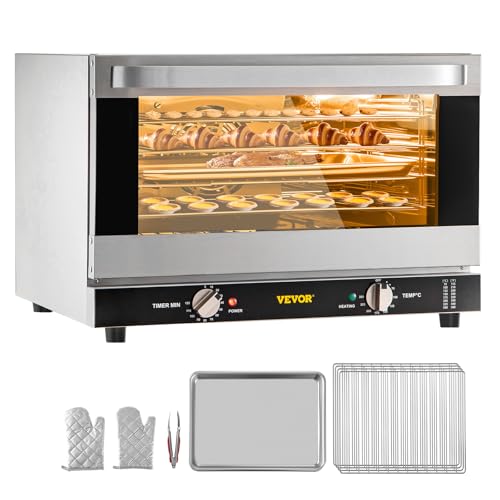 VEVOR Commercial Convection Oven VEVOR Commercial Convection Oven | 43Qt/47L Spacious Interior: Despite its compact structure, our… All-Round Hot Air Circulation: Compared with deep-frying, baking… Stainless Body & Tempered Glass Door: The rugged… | Check price |
 Rational SelfCookingCenter 5 Senses Model 62 A628206.19E Rational SelfCookingCenter 5 Senses Model 62 A628206.19E | Stainless steel exterior and interior Natural Gas Holds up to (6) full size sheet pans… | Check price |
 Rational Combination Steam Ovens User Guide: Mastering Rational Combination Steam Ovens User Guide: Mastering | Check price | |
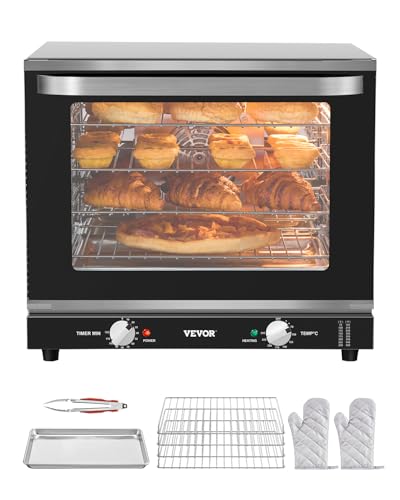 VEVOR Commercial Countertop Oven VEVOR Commercial Countertop Oven | 4-Layer Large Capacity: This AC208~240V commercial countertop oven… Efficient Fast Heating: With a powerful 2800W heating… Premium Material: The oven body is made of… | Check price |
As an Amazon Associate we earn from qualifying purchases at no extra cost to you.
Quick Picks
| Product | Best for | Price |
|---|---|---|
| Axis AX-CL06M | Small kitchens needing manual control | under $7,200 |
| Kratos 29Y-057 | Convection-only baking on a budget | $2,929 |
| Axis AX-CL06D | Digital repeatability at mid-range cost | under $9,700 |
| Blodgett BCX-14E | High-volume single-rack operations | $26,688 |
| VEVOR 47L | Home bakers entering commercial use | under $600 |
| Rational SelfCookingCenter 62 | Peak performance with AI assistance | under $27,000 |
| Rational User Guide | Operators maximizing an existing Rational unit | under $20 |
| VEVOR 66L | Small-batch baking with 208-240V power | under $600 |
How We Picked
We evaluated each unit on four criteria: pan capacity relative to footprint (how much production you get per cubic foot of kitchen real estate), control sophistication versus staff training burden (digital programmability saves consistency but adds cost), steam generation method and reliability (built-in boiler versus external water injection determines how quickly you recover between loads), and long-term parts availability backed by owner forum threads and service-network coverage in North America.
The 8 Best Restaurant Combi Ovens in 2026
Axis AX-CL06M Full-Size Combi Oven
This manual-control combi suits a kitchen with experienced cooks who prefer turning dials to pressing touchscreens. It holds six full-size pans across three stainless steel wire shelves, providing steady convection and steam at a price well below digital equivalents. Owners appreciate the straightforward plumbing hookup and the tactile feedback that lets a head chef adjust humidity mid-service without navigating menus. The primary trade-off is repeatability across shift changes: different operators produce different results. Skip this model if your staff rotates frequently or if your menu relies on precise, multi-stage cook programs that demand digital memory.
Kratos 29Y-057 Single Deck Electric Convection Oven
The Kratos is not a combi oven; it is a single-deck electric convection unit running on 240V, single phase. It earns a place here because some buyers searching for a “combi” actually need a reliable convection-only deck for breads and roasted proteins without steam cycles. At $2,929 it undercuts every true combi on this list while delivering consistent airflow for sheet-pan baking. The limitation is obvious: no steam means you cannot braise, poach, or finish steamed vegetables. Skip it if your menu includes any dish requiring humidity control during cooking.
Axis AX-CL06D Full-Size Combi Oven
The digital sibling of the CL06M adds programmable controls to the same six-pan, three-shelf stainless chassis. For operations that need repeatable results across multiple shifts without retraining, the digital interface removes operator variability. Pricing sits roughly $2,500 above the manual version, a gap that pays for itself quickly if labor turnover is high. Owners note the learning curve is gentler than expected for line cooks with basic kitchen-experience. The downside is the higher entry cost and the dependency on a functioning touchscreen; if the display fails, you lose programmability until service. Skip it if your kitchen already has seasoned staff comfortable with manual controls and budget is tight.
Blodgett BCX-14E Single Electric Combi Oven
The BCX-14E is a premium single-rack combi built for kitchens that prioritize throughput per cycle over cabinet count. Its construction and steam-generation system target banquet and catering operations where a single large load must come out perfectly every time. At $26,688 it competes directly with Rational on build quality, and owners frequently praise the service-network responsiveness. The con is capacity: as a single-rack unit it handles fewer pans per cycle than multi-rack cabinets, so you compensate with more frequent loading. Skip it if your kitchen runs many small, simultaneous menu items rather than large single-protein volumes.
VEVOR Commercial Convection Oven, 47L
For under $600 this countertop unit is not a combi oven and not a full-size appliance, but it addresses a real buyer question: can a small catering outfit or food-truck operator bake on a four-tier, 47-liter convection platform without a $7,000 commitment? The answer is yes, for limited scope. It runs on 120V, ships with trays and racks, and heats via 1,600 watts. The constraint is thermal recovery between loads and the absence of steam injection. Skip it if your production volume exceeds a few dozen items per hour or if your menu requires steaming at all.
Rational SelfCookingCenter 5 Senses 62
The A628206.19E represents the ceiling of combi-oven engineering: six full-size pans, natural gas connectivity, and the 5 Senses AI system that automatically adjusts humidity, airflow, and core-temperature probing during the cook. For fine-dining or hotel operations with complex menus, it eliminates nearly all guesswork. Owners report meaningful labor savings and reduced food waste. The under-$27,000 price is the obvious barrier, and the system demands proper water treatment and regular calibration to keep the intelligent functions accurate. Skip it if your menu is narrow and consistent enough that a manual or programmable combi achieves the same plate quality at a fraction of the cost.
Rational Combination Steam Ovens User Guide
This under-$20 guidebook is included because many owners purchase a Rational unit and then underutilize it, running only basic convection cycles. The guide walks through intelligent cooking modes, climate settings, and multi-stage programs specific to Rational hardware. For anyone who already owns a SelfCookingCenter or older iCombi, this reference material unlocks features buried in the touchscreen hierarchy. It is not a replacement for factory training but fills the gap between installation day and true fluency. Skip it if you already have Rational-certified training documentation or if your team includes a dedicated equipment specialist.
VEVOR Commercial Countertop Oven, 66L
The 66-liter VEVOR steps up from its smaller sibling with 2,800 watts of heating power, tempered glass door, and four-tier rack capacity. It operates on 208-240V, making it compatible with commercial circuits without dedicated 240V-only wiring concerns. For a small bakery, cafe, or ghost kitchen producing pastries and sheet cakes in batches, it offers genuine value under $600. The lack of steam functionality and limited internal volume mean it cannot replace a full-size combi. Skip it if your kitchen requires any humidity-controlled cook or if output exceeds roughly two full-size sheet pans per cycle.
Buying Guide
Pan Capacity and Physical Footprint
Full-size GN or sheet-pan capacity is the single most direct measure of throughput. A six-pan combi produces roughly three times the output of a countertop unit per cycle, but it also demands floor space, a dedicated 208-240V or 480V circuit (or a gas line), and a drainage connection. Measure your available floor before committing to a spec; the difference between a countertop and a floor-standing combi is often the difference between fitting your kitchen and losing a prep station.
Steam Generation: Boiler Versus Injection
True combi ovens either generate steam internally via a boiler or inject water onto heating elements. Boiler systems recover faster between loads and maintain more consistent humidity, which matters when you steam and roast in the same cabinet hour after hour. Injection systems are simpler and cheaper but can leave you waiting 40-60 seconds for humidity to rebuild. If your service model involves back-to-back steaming cycles, prioritize boiler-based units even at a higher sticker price.
Control Complexity and Staff Training Cost
Digital programmability converts your best cook’s technique into a repeatable recipe file, reducing variance across shifts. But each added layer of software introduces a training requirement and a potential failure point. Manual-control units keep costs lower and repairs simpler. Decide based on turnover: if your kitchen sees more than one operator rotation per week, digital programs protect consistency and justify the premium.
Our Verdict
The Rational SelfCookingCenter 62 is the top pick for any operation where menu complexity and labor savings justify the investment. For buyers who need genuine combi capability without premium-brand pricing, the Axis AX-CL06D for under $9,700 offers the best balance of digital repeatability and full-size capacity. If budget is your absolute constraint and you only need convection baking, the Kratos 29Y-057 delivers consistent results at less than one-third the price of any true combi on this list.
FAQ
What is the difference between a combi oven and a convection oven?
A convection oven circulates dry hot air to cook food, while a combi oven adds steam generation, allowing you to roast, braise, poach, and bake in the same cabinet. Combi ovens offer greater menu flexibility but cost more and require a water connection and drainage.
How many pans does a typical full-size combi oven hold?
Most full-size combi ovens in this comparison hold six full-size sheet pans across three shelves. Single-rack premium units like the Blodgett BCX-14E prioritize even heat distribution across fewer pans, while countertop units typically accommodate two to four half-size trays.
Do I need a water treatment system for a combi oven?
Yes. Mineral-heavy tap water causes scale buildup in boilers and steam generators, reducing performance and triggering error codes on digital units. A reverse-osmosis or dedicated water-softening system protects the appliance and is a standard requirement for most manufacturer warranties.
Can a countertop oven substitute for a full-size combi in a small restaurant?
Only if your menu requires convection baking or roasting without steam. Countertop units like the VEVOR 66L lack humidity control and internal volume, so they cannot produce steamed vegetables, braised proteins, or steam-baked breads that a full-size combi handles easily.