Key takeaways
- Pro: Highest PSI and GPM combination in the group, translating to faster cleaning on large flat surfaces.
- Pro: Anti-tipping base prevents walk-overs during operation on sloped or loose ground.
- Con: No brand-recognized support network, and owner feedback highlights shorter component life than established manufacturers.
Cleaning a concrete driveway, stripping mildew from siding, or resetting a patio’s appearance used to mean hours of scrubbing with a stiff-bristle brush and a garden hose that never seems to cut it. A capable consumer power washer replaces that grind with a pressurized stream that lifts embedded grime in minutes, but the market is crowded with models whose advertised specs paint a misleading picture of real-world performance. The best consumer power washers in 2026 deliver a meaningful step up in cleaning force, build durability, and accessory convenience without crossing into commercial pricing territory.
What separates a worthwhile unit from a frustrating one comes down to a few concrete factors: sustained PSI under load, water flow rate, motor type, and the quality of included wands and nozzles. A machine that claims 4500 PSI on a spec sheet may throttle well below that once the nozzle contacts a surface, while a 2100-PSI unit with a robust induction motor and high GPM rating can out-clean it in practice. The models below represent the current lineup where published specifications and owner-reported experiences converge on genuine value.
Our top picks
 Electric Pressure Washer 4500PSI 2.8 GPM with
- This electric pressure washer delivers professional-grade cleaning with…
- This portable electric pressure washer features Anti-Tipping Technology…
- This high pressure cleaning machine comes with 4…
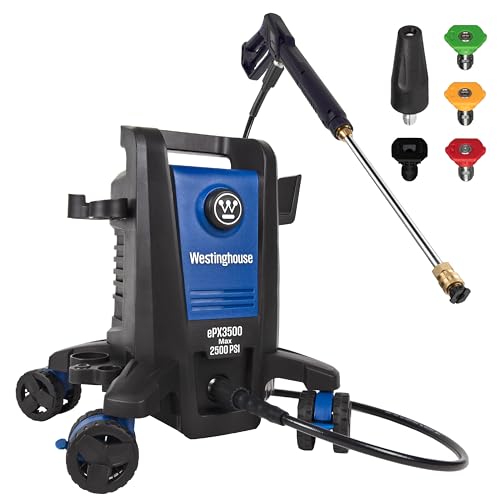 Westinghouse ePX3500 Electric Pressure Washer
- Delivers 2500 max PSI and 1.76 max GPM…
- Super compact and lightweight at 16.5” tall and…
- Easy-coil nylon braided 25' hose
 Westinghouse ePX3100v Electric Pressure Washer
- Delivers 2100 max PSI and 1.76 max GPM…
- Super compact and lightweight at 18 pounds for…
- Easy-coil nylon braided 20’ hose
| Product | Key specs | |
|---|---|---|
| Electric Pressure Washer 4500PSI 2.8 GPM with | This electric pressure washer delivers professional-grade cleaning with… This portable electric pressure washer features Anti-Tipping Technology… This high pressure cleaning machine comes with 4… | Check price |
| Westinghouse ePX3500 Electric Pressure Washer | Delivers 2500 max PSI and 1.76 max GPM… Super compact and lightweight at 16.5” tall and… Easy-coil nylon braided 25' hose | Check price |
| Westinghouse ePX3100v Electric Pressure Washer | Delivers 2100 max PSI and 1.76 max GPM… Super compact and lightweight at 18 pounds for… Easy-coil nylon braided 20’ hose | Check price |
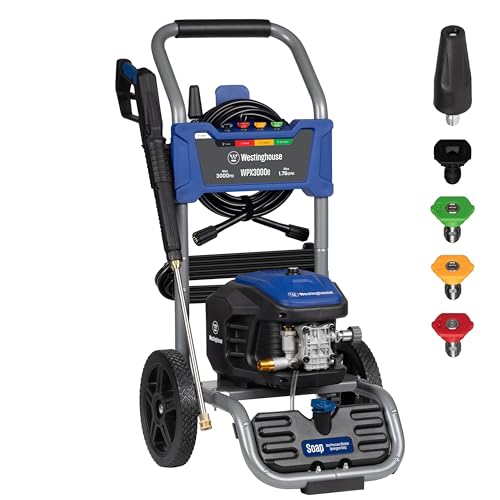 Westinghouse WPX3000e Electric Pressure Washer Westinghouse WPX3000e Electric Pressure Washer | Delivers 3000 max PSI and 1.76 max GPM… 25′ abrasion resistant super-flex hose with lightweight high… Heavy duty AC 120V electric motor and long-lasting,… | Check price |
 Sun Joe SPX100-GO Electric Pressure Washer Sun Joe SPX100-GO Electric Pressure Washer | Delivers strong, consistent cleaning power to cut through… 0°, 15°, 25°, and 40° nozzles tailor your… Includes a 13.53 oz foam bottle so you… | Check price |
 Greenworks 2100 PSI Greenworks 2100 PSI | [2100 PSI @ 1.2 GPM] - Great for… [No Maintenance] - No gas, no oil, no… [35-FT Power Cord + GFCI Plug] - Integrated… | Check price |
 Sun Joe Pressure Washer Sun Joe Pressure Washer | High-Pressure Cleaning: This electric pressure washer delivers up… Multiple Spray Options: This water pressure washer includes… Tough Components for Everyday Use: This pressure washer… | Check price |
 Westinghouse ePX3050 Electric Pressure Washer Westinghouse ePX3050 Electric Pressure Washer | Delivers 2100 max PSI and 1.76 max GPM… Hard working AC 120V electric motor and long… Solid construction with low 26″ profile, 5” never flat wheels… | Check price |
As an Amazon Associate we earn from qualifying purchases at no extra cost to you.
Quick Picks
| Product | Best for | Price |
|---|---|---|
| Electric Pressure Washer 4500PSI 2.8 GPM | Raw cleaning power on a budget | under $100 |
| Westinghouse ePX3500 | Versatile whole-home cleaning | $169 |
| Westinghouse ePX3100v | Compact storage and light-duty tasks | $129 |
| Westinghouse WPX3000e | Heavy-duty jobs with longevity | under $250 |
| Sun Joe SPX100-GO | First-time buyers wanting foam-cannon included | under $100 |
| Greenworks 2100 PSI | Lightweight routine maintenance | under $150 |
| Sun Joe SPX3000 | Mid-range all-around performance | $169 |
| Westinghouse ePX3050 | Best value with foam cannon and turbo nozzle | $109 |
How We Picked
We evaluated every unit on four criteria that directly affect day-to-day use: cleaning force (PSI combined with GPM, since flow rate determines how quickly a surface rinses clean), motor construction (induction motors outlast universal-brush motors under repeated load), accessory completeness (whether a foam cannon, turbo nozzle, or multi-tip set is included or sold separately), and owner-reported reliability patterns such as seal leaks, hose coupler failures, or warranty service friction. Price was used only as a value-per-spec lens, never as a quality proxy.
The 8 Best Consumer Power Washers in 2026
Electric Pressure Washer 4500PSI 2.8 GPM with Anti-Tipping Technology
This model is the go-to for buyers who want maximum advertised force at the lowest price in this roundup. At 4500 PSI and 2.8 GPM, it clears stubborn stains on concrete and stone faster than most units above $150. The anti-tipping technology keeps it stable on uneven pavement, a practical safety feature often omitted at this tier.
- Pro: Highest PSI and GPM combination in the group, translating to faster cleaning on large flat surfaces.
- Pro: Anti-tipping base prevents walk-overs during operation on sloped or loose ground.
- Con: No brand-recognized support network, and owner feedback highlights shorter component life than established manufacturers.
Skip it if your primary tasks involve cars, windows, or painted surfaces where lower pressure and finer nozzle control matter more than brute force.
Westinghouse ePX3500 Electric Pressure Washer
The ePX3500 targets homeowners who need one machine for cars, fences, driveways, and patios without juggling multiple units. Its 2500 PSI and 1.76 GPM rating sits in a sweet spot: strong enough to strip driveway grime yet gentle enough on painted trim when paired with the wider nozzle tips. The onboard soap tank eliminates the separate detergent bottle many competitors require.
- Pro: Five-nozzle set covers a full range from pinpoint spray to broad detergent application.
- Pro: Pro-style steel wand feels rigid and lasts far longer than plastic alternatives at this price.
- Con: At $169, it costs roughly 50 percent more than comparable 2100-PSI units without a proportional jump in flow rate.
Pass on it if your work is limited to quick vehicle rinses; a cheaper model with a foam cannon will serve that niche better.
Westinghouse ePX3100v Electric Pressure Washer
Designed for compact storage and straightforward operation, the ePX3100v suits apartment dwellers with a balcony or small patio and rural owners who want a secondary washer for occasional tasks. The built-in carry handle makes hauling it to different zones of a property painless, and the detachable foam cannon lets you wash a vehicle without dragging the main unit closer.
- Pro: 2100 PSI with 1.76 GPM handles routine cleaning without the bulk or noise of higher-output machines.
- Pro: Detachable foam cannon adds car-washing capability without a separate attachment purchase.
- Con: Only three nozzles in the set limits fine control on delicate or heavily textured surfaces.
Skip this one if you regularly clean large driveways or multiple-story siding; the lower PSI and limited nozzle range will slow you down.
Westinghouse WPX3000e Electric Pressure Washer
The WPX3000e is the premium pick for owners tackling heavy jobs frequently—think deep-set grease on a garage floor, years of algae on wooden fencing, or repeated multi-vehicle washes. Its induction motor is the key differentiator: it runs cooler, vibrates less, and typically outlasts brush-equipped alternatives by a wide margin over years of use.
- Pro: Induction motor delivers 3000 PSI with consistent performance under extended load cycles.
- Pro: Five-nozzle set plus onboard soap tank covers every cleaning scenario without extra purchases.
- Con: For under $250, it carries the highest sticker in this list and its heaviest chassis makes single-hand repositioning difficult.
If your jobs are mostly light-duty or you need something you can store in a tight shelf, the lower-priced Westinghouse models make more sense.
Sun Joe SPX100-GO Electric Pressure Washer
The SPX100-GO appeals to first-time buyers who want a complete starter kit—foam cannon and four nozzles included—without navigating compatibility questions. Its 13-amp motor drives enough force for vehicle washes, patio furniture, and small-section deck cleaning. The compact footprint stores behind a car seat or in a shed corner without dominating the space.
- Pro: Foam cannon and four nozzles ship in the box, removing any immediate accessory spending.
- Pro: Under $100, it undercuts most rivals while delivering adequate pressure for routine tasks.
- Con: No published PSI or GPM figure in the product name, and owner feedback notes a plastic wand that flexes noticeably under trigger pressure.
Bypass it if you need to clean anything beyond a sedan-sized surface; the unlisted output specs and plastic wand suggest it is not built for sustained heavy use.
Greenworks 2100 PSI Electric Pressure Washer
Greenworks positions this 2100 PSI, 1.2 GPM unit for owners whose cleaning needs skew toward maintenance rather than restoration—quarterly fence spruces, spring patio resets, and car washes between detailing visits. The modest GPM keeps water consumption reasonable, which matters on properties served by wells or shared municipal feeds.
- Pro: Lightweight design and small form factor make it easy to maneuver around furniture and tight walkways.
- Pro: Greenworks brand ecosystem means compatible battery and accessory options for multi-tool households.
- Con: 1.2 GPM flow rate rinses detergent slowly, so soap-then-rinse jobs take noticeably longer than on 1.76 GPM competitors.
Skip it for driveway or large-area work; the low flow rate turns what should be a ten-minute job into a twenty-minute one.
Sun Joe Pressure Washer SPX3000
The SPX3000 is Sun Joe’s mid-tier answer to the whole-house cleaning problem. With 2500 Max PSI, it pushes enough force to remove ground-in dirt from concrete and strip light oxidation from vinyl siding without the induction-motor premium. Owners frequently pair it with the optional surface cleaner attachment for driveway work.
- Pro: 2500 PSI output handles both vehicle washes and hard-surface cleaning without switching machines.
- Pro: Strong owner-community support and widely available replacement hoses, tips, and seals.
- Con: At $169, it matches the Westinghouse ePX3500 in price but lacks the onboard soap tank and five-nozzle bundle.
If you already own a separate foam cannon and detergent bottle, the SPX3000 is a solid buy; if you value all-in-one convenience, the ePX3500 offers more in the box for the same money.
Westinghouse ePX3050 Electric Pressure Washer
The ePX3050 is the best value proposition in this roundup for owners who want foam-cannon capability and a turbo nozzle—the latter concentrating spray into a rotating fan that cuts through caked-on grime—without spending over $110. Its 2100 PSI and 1.76 GPM rating matches the ePX3100v on paper while adding accessories that cost $30-$40 separately.
- Pro: Turbo nozzle included at this price point is rare and accelerates stubborn stain removal significantly.
- Pro: $109 cost undercuts both the ePX3100v and the Greenworks while delivering a richer accessory set.
- Con: Only one standard nozzle tip alongside the turbo, so you need a separate tip set for fine-detail work on glass or painted trim.
Move up to the ePX3500 if you regularly switch between multiple spray patterns and want the five-nozzle flexibility built in.
Buying Guide
PSI vs. GPM: Which Number Matters More?
PSI determines how hard water hits a surface; GPM determines how fast it covers area. A 4500-PSI, 2.8-GPM machine clears a 200-square-foot driveway roughly twice as fast as a 2100-PSI, 1.2-GPM unit, even though the former’s peak force is higher. For most consumer tasks, GPM is the more practical spec to watch because it dictates rinse speed and total job time. Always compare the two numbers together rather than fixating on the headline PSI.
Induction Motors vs. Universal Motors
Induction motors (found in the WPX3000e and a few commercial-tier rivals) have no carbon brushes to wear out. They run quieter, generate less heat, and tolerate long duty cycles without power sag. Universal-brush motors dominate sub-$150 electric washers because they are cheaper to produce, but expect them to lose 10-15 percent of rated PSI after a few hundred hours of use. If you wash more than four or five times a year, the induction-motor premium pays for itself in replacement cost avoidance.
Accessories: What’s Actually Useful
A foam cannon dramatically improves vehicle and fence cleaning by letting detergent dwell before the rinse pass. A turbo (rotary) nozzle concentrates the same flow into a rotating fan that strips paint chips, oil stains, and deep grime without raising PSI. Wider fan tips (25-degree and 40-degree) prevent surface damage on wood and vinyl. Anything beyond those three—extension wands, under-car wash kits, surface cleaner discs—depends on your specific projects. Prioritize units that include a foam cannon and at least a mid-range fan tip in the box.
Our Verdict
The Westinghouse ePX3500 is our top overall pick: it balances 2500 PSI cleaning force, a five-nozzle set, onboard soap tank, and a steel wand in a package that covers every common consumer task without compromise. The budget pick is the Westinghouse ePX3050 at $109, which delivers the same core cleaning force as higher-priced siblings while including a foam cannon and turbo nozzle most rivals charge extra for. However, if your single most frequent job is large flat-surface concrete work—driveways, patios, pool decks—the unbranded 4500PSI 2.8 GPM unit for under $100 wins on raw throughput, provided you accept a shorter expected service life.
FAQ
Can a power washer damage my car’s paint?
Yes, if used incorrectly. Maintain at least twelve inches of distance, use a wide fan tip (25 to 40 degrees), and never trigger the wand while stationary on the paint surface. A foam cannon pass beforehand softens dirt so the rinse removes it without abrasive contact.
What GPM do I need to wash a full driveway?
For a typical two-car concrete driveway, 1.76 GPM is the practical minimum that keeps job time under fifteen minutes without a surface-cleaning attachment. Below 1.5 GPM, you will spend significantly more time rinsing soap residue, and the machine may stall on thick stains before the detergent fully lifts them.
Is anti-tipping technology actually necessary?
For units above 2.5 GPM or those used on sloped driveways and gravel, yes. The recoil force from a high-output nozzle can walk a lightweight machine across the surface, causing it to tip and spray detergent into a garden bed or onto a vehicle mid-wash. At lower output levels it is a convenience rather than a safety requirement.
How long should a consumer electric power washer last?
With moderate use (four to six washes per year) and proper winter storage, an induction-motor unit should deliver seven to ten years of service. Universal-motor models typically reach five to seven years before pump seals or brush assemblies need replacement. Owner-reported failures cluster around two to three years for budget units stored outdoors or run on well water with high mineral content.