Key takeaways
- Fill to 2/3 max: For a 2-quart bowl, pour 1.25 to 1.5 quarts of base. You will get about the same volume out, since overrun is only 10 to 20% for Italian ice versus 30 to 50% for ice cream.
- Pre-chill the base: Chill syrup and puree to 35 to 40°F before churning. This cuts 10 to 15 minutes off churn time on both types and is the single biggest improvement for freezer bowls, which have limited cold to give.
- Watch the end point: Italian ice is done when it looks like thick, wet snow and mounds on the dasher but still flows. If the motor strains or the dasher stops, you have gone too far and it will freeze solid in the freezer.
The best italian ice maker machines for smooth slush are compressor models like the Whynter ICM-200LS and Lello 4080 Musso Lussino if you want consecutive batches and fine, dry snow-like crystals, while freezer-bowl models like the Cuisinart ICE-30BC and Cuisinart ICE-21P1 are the better value if you only make 1 to 1.5 quarts occasionally and can pre-freeze the bowl for 24 hours.
Italian ice needs a different churn than ice cream. You are freezing a high-water, low-fat sugar syrup and fruit puree, so the machine must freeze fast enough to keep crystals tiny, scrape the barrel constantly to prevent an icy block, and then release a soft, scoopable slush at around 22 to 25°F. How the machine creates that cold, and how its dasher is built, determines texture, batch size, and cleanup more than any preset program.
Our top picks

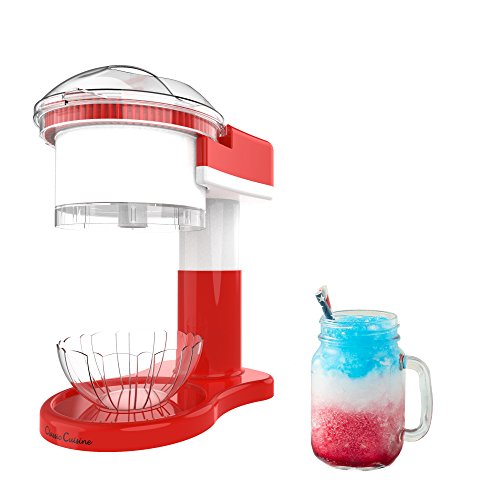

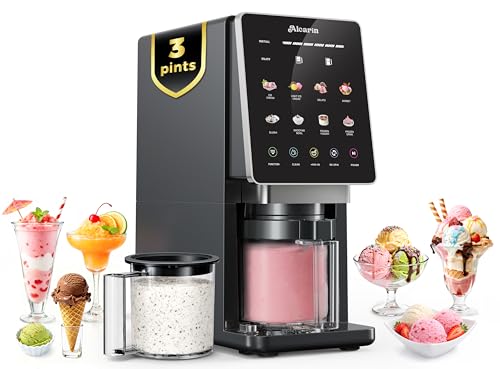
As an Amazon Associate we earn from qualifying purchases at no extra cost to you. Ratings are shown as listed on Amazon.
Compressor vs. Freezer-Bowl: The Core Trade-Off for Italian Ice
Both types use a dasher to churn, but they create cold very differently.
Compressor Models
These have a built-in refrigeration compressor like a small freezer. You pour room-temperature syrup in and the machine freezes as it churns. No pre-freezing. You can make back-to-back batches because the compressor recovers in 10-15 minutes. The trade-off is size, weight, noise, and price. Most are 28 to 38 lbs and need 12 inches of counter space for ventilation.
Freezer-Bowl Models
These use a double-walled bowl filled with refrigerant solution. You freeze the bowl itself in your freezer for 18 to 24 hours, then churn. The bowl starts at about 0°F and loses cold as it churns. You get one batch per freeze, and if your freezer is warmer than 0°F or the bowl is not fully frozen, your Italian ice will be coarse and slushy instead of smooth. They are lighter, cheaper, and much easier to store.
For Italian ice specifically, freeze speed matters more than for ice cream. Dairy fat hides large ice crystals; water and sugar do not. A compressor that holds the barrel at -5 to 5°F throughout the churn will produce noticeably smoother results than a freezer bowl that slowly warms from 0°F to 20°F.
Spec Comparison: Batch Size, Churn Time, and Cleaning
This is where buying decisions are made. Italian ice expands very little compared to ice cream, so usable capacity is close to the bowl size, but overfilling prevents the dasher from scraping properly.
| Model / Type | Bowl Capacity | Real Italian Ice Batch | Typical Churn Time to Slush | Machine Weight | Bowl & Dasher Material | Dasher Assembly Parts to Clean |
|---|---|---|---|---|---|---|
| Lello 4080 Musso Lussino (Compressor) | 1.5 Quart / 1.4L Stainless | 1.2 – 1.4 qt | 25 – 35 minutes | 38 lbs | Stainless steel bowl, stainless dasher and blade | 3: dasher, blade, lid with gasket |
| Whynter ICM-200LS (Compressor) | 2.1 Quart / 2.0L Stainless | 1.5 – 2.0 qt | 30 – 40 minutes | 32 lbs | Aluminum bowl with stainless interior, plastic dasher | 3: dasher, transparent lid, drip tray |
| Breville Smart Scoop BCI600 (Compressor) | 1.5 Quart / 1.4L Stainless | 1.0 – 1.25 qt | 35 – 45 minutes | 31 lbs | Stainless bowl, plastic dasher with scraper blades | 4: dasher, 2x scraper blades, lid |
| Cuisinart ICE-100 (Compressor) | 1.5 Quart / 1.4L Stainless | 1.0 – 1.25 qt | 35 – 50 minutes | 28 lbs | Stainless bowl, plastic paddle | 3: paddle, lid, splash guard |
| Cuisinart ICE-30BC / ICE-21P1 (Freezer-Bowl) | 2.0 Quart / 1.9L (ICE-30BC) / 1.5 Quart (ICE-21P1) | 1.25 – 1.5 qt (ICE-30BC) / 0.9 – 1.2 qt (ICE-21P1) | 20 – 30 minutes (if bowl fully frozen) | 10 – 12 lbs | Double-wall freezer bowl, plastic paddle | 2: paddle, lid |
| KitchenAid KICA0WH Attachment (Freezer-Bowl) | 2.0 Quart / 1.9L | 1.25 – 1.6 qt | 20 – 25 minutes | 7.5 lbs (bowl + dasher only, requires stand mixer) | Double-wall freezer bowl, plastic dasher | 2: dasher, drive assembly |
Key takeaway on cleaning: Compressor stainless bowls do not go in the freezer and must be hand-washed in place or removed and washed. Most are not dishwasher safe because of the refrigerant lines. Freezer bowls cannot be put in a dishwasher either – the heat can rupture the sealed refrigerant solution – but they have simpler two-piece dasher assemblies with fewer crevices where sugary syrup can dry.
Decision Matrix: Which Type Fits Your Situation
Use this to match your kitchen and how you will actually use it in 2026.
| Your Situation | Best Fit | Why |
|---|---|---|
| Make Italian ice 1-2 times per month, limited storage, budget under $150 | Freezer-bowl 1.5 to 2.0 qt (Cuisinart ICE-21P1 or ICE-30BC) | Low upfront cost in the general market range of $70 to $150, light to store on a shelf, easy 2-piece paddle to rinse |
| Make Italian ice weekly for family of 4+, want 2+ flavors per night | Compressor 2.0 qt (Whynter ICM-200LS) | Can churn 2 to 3 consecutive batches without re-freezing; larger bowl prevents overflow from foamy fruit purees |
| Prioritize the smoothest, driest texture and precise control | Compressor stainless dasher (Lello 4080 Musso Lussino) | Stainless dasher and stronger motor scrape ice off the wall more aggressively, creating smaller crystals; manual control lets you stop at slush instead of a hard freeze |
| Small apartment freezer or freezer runs at 10°F or warmer | Compressor (any 1.5 qt model) | Freezer-bowl models will never fully freeze in a warm freezer and will churn coarse, watery ice |
| Already own a KitchenAid stand mixer and make Italian ice occasionally | KitchenAid freezer-bowl attachment | No extra motor or counter space needed; same pros/cons as other freezer bowls but leverages what you own |
| Easy cleaning is top priority | Freezer-bowl with simple paddle | Fewer parts and no fixed refrigeration unit to wipe around; paddle and lid rinse in under 60 seconds if washed before syrup dries |
How Batch Size and Churn Time Affect Smoothness
Do not fill any machine to its marketing capacity with Italian ice base. Sugar lowers the freezing point, so the base must get colder than ice cream to set. An overfilled bowl insulates the center and the dasher cannot turn properly.
- Fill to 2/3 max: For a 2-quart bowl, pour 1.25 to 1.5 quarts of base. You will get about the same volume out, since overrun is only 10 to 20% for Italian ice versus 30 to 50% for ice cream.
- Pre-chill the base: Chill syrup and puree to 35 to 40°F before churning. This cuts 10 to 15 minutes off churn time on both types and is the single biggest improvement for freezer bowls, which have limited cold to give.
- Watch the end point: Italian ice is done when it looks like thick, wet snow and mounds on the dasher but still flows. If the motor strains or the dasher stops, you have gone too far and it will freeze solid in the freezer.
Compressor models take slightly longer per batch but hold texture. Freezer-bowl models churn faster at first, then stall as the bowl warms. If your Italian ice is still liquid after 30 minutes in a freezer bowl, the bowl was not frozen solid. Shake it – you should hear no sloshing.
Worked Calculation: Cost Per Batch and Freezer Space Cost
Understanding true cost helps choose capacity.
Example 1.5-quart batch of lemon Italian ice: 4 cups water, 1.5 cups granulated sugar, 3/4 cup lemon juice, zest. At typical 2026 grocery prices in the general range, sugar and lemons drive the cost.
- Ingredients: about $4 to $7 per 1.5-quart batch depending on fresh fruit vs. juice concentrate
- Energy: Compressor models use roughly 150 to 200 watts for 40 minutes, about $0.02 to $0.04 in electricity per batch; freezer-bowl models use no electricity to churn beyond the freezer running to freeze the bowl (about 18-24 hours at ~30-40 watts average to keep the bowl at 0°F)
- Over a summer of 20 batches: Ingredients $80 to $140, plus the machine cost amortized. A freezer-bowl model in the $70 to $150 range costs $3.50 to $7.50 per batch in the first year; a compressor model in the $250 to $550 range costs $12.50 to $27.50 per batch in the first year but drops sharply if you make 40+ batches or keep the machine 3 to 5 years.
Space check before you buy: Measure your freezer. A 2-quart freezer bowl is about 8.5 inches wide x 7.5 inches tall. It must sit flat and level for 24 hours. In side-by-side freezers or freezer drawers with an ice maker hump, it often does not fit. Compressor models need no freezer space but need 6 inches of clearance on the sides and back while running.
Durability and Ownership Realities
Italian ice is hard on machines because sugar syrup is sticky and water freezes harder than cream.
- What wears first: On freezer bowls, the inner seal. Dropping a frozen bowl or using a knife to pry out hard ice can dent the wall and break the seal, leaking blue refrigerant solution. On compressors, the rubber gasket on the lid and the plastic bushings where the dasher meets the motor. Sugar dries like cement in that bushing and creates squealing.
- Dasher cleaning: The cleanest dasher is a one-piece stainless or solid plastic paddle. Models with clip-on silicone scraper blades (like the Breville Smart Scoop) make smoother ice but have seams where puree hides. Rinse immediately after churning with warm water before the sugar sets. Do not soak a freezer bowl in hot water to melt residue; extreme temperature shock can stress the seal.
- Common mistakes that ruin texture: Pouring warm base into a freezer bowl, using too much sugar (over 30° Brix makes it never freeze firm), and storing finished Italian ice uncovered. Italian ice needs an airtight shallow container with plastic wrap pressed on the surface to prevent large surface crystals. Temper 5 to 10 minutes at room temperature before scooping.
- Consumables and storage: Freezer bowls lose efficiency after 3 to 5 years if stored in a warm garage; keep them in the freezer year-round if you have space, inside a bag to prevent freezer burn odor transfer. Compressor models need the dust filter and condenser coils vacuumed every 6 months – clogged coils make churn time creep from 30 to 60 minutes.
Which Should You Buy for Smooth Slush?
If you want the best italian ice maker machines for true Italian ice houses texture and you have the counter space, a 1.5 to 2.1 quart compressor with a stainless bowl is the long-term answer. The Whynter ICM-200LS offers the largest practical batch for parties, while the Lello 4080 Musso Lussino provides the most durable stainless dasher assembly and easiest scraping action for the smoothest slush.
If you make Italian ice as an occasional summer treat and want fast cleanup, a freezer-bowl model like the Cuisinart ICE-30BC or ICE-21P1 delivers excellent slush when you pre-chill the base and fully freeze the bowl. Pair it with a second freezer bowl (often sold separately in the $30 to $60 range) if you want two flavors in one night without waiting 24 hours.
For any machine, the smoothest result comes from the same formula: cold base, correct sugar ratio, fill only 2/3, stop at soft slush, and freeze the finished ice in a shallow, covered container. The machine just determines how repeatable that process is.
Frequently Asked Questions
Can I use an ice cream maker for Italian ice?
Yes. Any ice cream maker can churn Italian ice, but use the Italian ice or sorbet setting if it has one. Those settings churn slower and stop earlier to keep the texture soft. If the machine only has an ice cream mode, stop it 5 minutes early and check consistency.
Why is my Italian ice hard and icy instead of smooth?
Three common reasons: the base was too warm going in, the sugar ratio was off, or it froze too slowly. Try chilling the base to 38°F, measuring sugar by weight (about 20 to 25% sugar by weight for scoopable slush), and not overfilling the bowl so the dasher can scrape continuously.
How do I clean the dasher assembly without damaging it?
Unplug and disassemble while still cool. Rinse the dasher, blade, and lid in warm soapy water, using a soft brush around the central shaft where syrup collects. Dry completely before reassembling. Never put freezer bowls or compressor bowls with refrigerant lines in the dishwasher, and avoid abrasive pads on plastic dashers which create scratches that trap sugar.