Key takeaways
- Pantry jars, bins, and household storage: Choose a printer that takes at least 12 mm tape. A smartphone app makes it easier to create consistent labels and save templates.
- Occasional filing and quick fixes: A compact built-in keyboard model is simpler when you want to type and print without opening an app.
- Lots of labels or varied layouts: A Bluetooth model is worth considering if you’ll use symbols, multiple fonts, saved designs, or batch printing.
- Very tight spaces: Look for a 6 mm option, but check that its text remains readable at the intended viewing distance.
- Lowest ongoing cost: Compare the price of compatible tape cartridges and usable tape length—not just the printer’s purchase price.
Best Label Makers for Organizing Home & Office
The best label makers for organizing are a Bluetooth thermal model for frequent, customized jobs and a compact keyboard model for quick labels without a phone; choose tape width and refill cost before choosing extra features. For most homes, a 12 mm tape printer is a practical starting point, while filing, cables, and small containers often need only 6–9 mm tape.
Quick picks by situation
- Pantry jars, bins, and household storage: Choose a printer that takes at least 12 mm tape. A smartphone app makes it easier to create consistent labels and save templates.
- Occasional filing and quick fixes: A compact built-in keyboard model is simpler when you want to type and print without opening an app.
- Lots of labels or varied layouts: A Bluetooth model is worth considering if you’ll use symbols, multiple fonts, saved designs, or batch printing.
- Very tight spaces: Look for a 6 mm option, but check that its text remains readable at the intended viewing distance.
- Lowest ongoing cost: Compare the price of compatible tape cartridges and usable tape length—not just the printer’s purchase price.
Three established options compared
These models illustrate the main trade-offs: a familiar keyboard workflow, a small portable printer, and an app-based printer. Specifications can vary by regional version and bundle, so confirm the exact model and tape compatibility before buying.
Our top picks

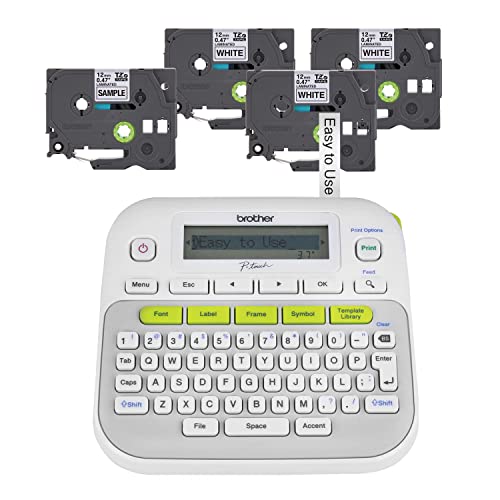
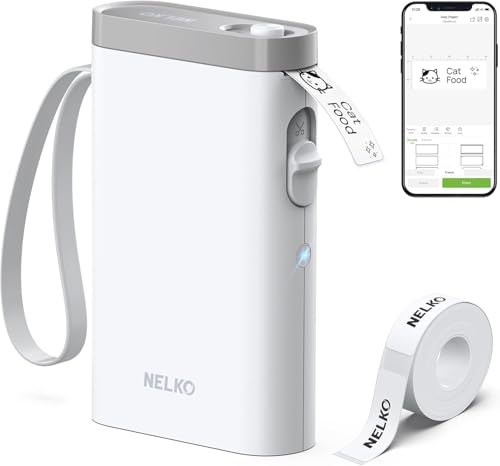

As an Amazon Associate we earn from qualifying purchases at no extra cost to you. Ratings are shown as listed on Amazon.
| Model | Input method | Maximum tape width | Power | Best fit |
|---|---|---|---|---|
| Brother P-touch PT-D210 | Built-in QWERTY keyboard and display | 12 mm | Six AAA batteries or optional AC adapter | Occasional home or office labels, with no phone required |
| Brother P-touch Cube PT-P300BT | Bluetooth; designed for a phone app | 12 mm | Six AAA batteries | Small, app-designed labels for home storage and folders |
| DYMO LetraTag 200B | Bluetooth; designed for a phone app | 12 mm | Four AA batteries | Light-duty household labeling with phone-based design |
These are not interchangeable cartridge systems: Brother and DYMO use different tape formats, and specific label materials and widths depend on the printer. None is a dedicated wide-format solution. If you want large, prominent shelf or file-box labels, check for a model that explicitly supports wider tape rather than assuming a 12 mm printer will do.
Keyboard or Bluetooth app?
Choose a built-in keyboard for simple, independent printing
A keyboard model is convenient for a short label when your phone is elsewhere, out of battery, or shared with someone who doesn’t want to install an app. The display lets you check the text before printing. The trade-off is a small keyboard and screen, which can make long names, formatting, and repeated edits slower.
Choose Bluetooth for design and repetition
An app can make it easier to set text size, add symbols, build a consistent look, and reuse saved labels. This helps when labeling a pantry set or making many folders in one session. Before buying, check that the app supports your phone and operating system, and consider whether you’re comfortable relying on a phone for setup and printing.
Bluetooth does not automatically mean lower running costs or faster output. The cartridge still determines much of the expense, and a single short label may be quicker to type on a keyboard printer.
Tape width, material, and refill cost
Pick width based on what must fit on the label. Narrow tape works for short names on small containers, drawer edges, and cables. A 12 mm strip gives more room for readable text on jars, storage bins, and file tabs. Wider labels can improve legibility at a glance, but they may require a different printer and cost more per cartridge.
Material matters as much as width. Paper labels suit dry, low-wear indoor use. For containers that get handled or wiped, look for compatible plastic or laminated tape and follow the manufacturer’s guidance on surfaces and moisture. Even durable tape can lift from dusty, textured, greasy, or curved surfaces. Clean and dry the area first, then press the label down firmly.
To compare consumables, calculate cost per printed label:
Cost per label = cartridge price ÷ estimated labels per cartridge.
For example, a cartridge costing $12 that yields about 200 short labels works out to roughly 6 cents per label. If longer pantry labels reduce the yield to 120, the same cartridge costs about 10 cents per label. These are illustrative calculations, not guaranteed yields: margins, font size, label length, and blank tape before and after each print affect how many labels you get.
To avoid surprises, price compatible replacement cartridges before purchasing the printer. Check cartridge length and whether the machine can reduce or adjust margins; generous blank ends can waste tape, especially on many short labels.
Match the printer to the job
| Your situation | A sensible choice | What to prioritize |
|---|---|---|
| Occasional labels, small budget, basic text | Entry-level keyboard model | Affordable compatible tape and simple operation |
| Pantry or craft storage, repeated designs | Bluetooth app model | 12 mm tape, saved layouts, suitable label material |
| Folders, cables, and narrow surfaces | Compact model that supports narrow tape | 6–9 mm compatibility and legible small text |
| Frequent office use across multiple people | Model with an input method your team can share easily | Readily available refills, stable power, and straightforward controls |
| Large bins or labels read from a distance | Printer that supports wider tape | Maximum tape width and large-text layout—not just Bluetooth |
Ownership details that affect satisfaction
Thermal label printers don’t use ink, but they do depend on tape cartridges and a clean print path. Tape is the recurring expense; batteries are another consideration if you print often. For a permanent desk setup, an optional AC adapter can reduce battery changes on models that support one. For portability, check whether the printer includes batteries or requires a separate purchase.
When print quality fades or labels develop gaps, check the cartridge seating and look for dust or adhesive residue near the print head. Use the cleaning method in the manual; avoid scraping the print head or applying solvents not approved by the manufacturer. Store spare cartridges sealed and away from heat, and keep the printer closed when it isn’t in use.
Common frustrations are preventable: buying a tape width the printer cannot accept, expecting a basic tape label to survive repeated washing, or printing tiny text that looks fine on screen but is hard to read on a jar. Print one sample at the intended size, check it on the actual surface, and then make the rest.
Bottom line
For flexible pantry-to-office use, start with a 12 mm model and decide whether app design or a built-in keyboard suits your routine. Choose Bluetooth if you’ll reuse layouts or print batches; choose a keyboard if you value direct, occasional printing without a phone. Before checkout, verify compatible tape widths, material options, cartridge prices, and the margin controls that determine your real cost per label.