Key takeaways
- Pro: Neutral taste makes it interchangeable with vegetable or canola oil in most recipes.
- Pro: Mid-range price for a half-gallon volume keeps per-ounce cost reasonable for daily use.
- Con: The “extra light” label confuses shoppers who assume it is a reduced-calorie product, which it is not.
Picking the right bertolli olive oil can feel like a guessing game when the label says “extra virgin” but the price differs by nearly three dollars for the same volume, or when a bottle marked “extra light” raises questions about whether it is even olive oil at all. Home cooks want a reliable fat for sautéing, roasting, finishing salads, or baking, and each of those tasks rewards a different oil. The Bertolli line spans extra virgin, cooking blends, and extra light classifications, with bottle sizes from 16.9 to 101.4 fluid ounces, so the decision is really about matching grade and format to your actual kitchen routine.
What separates a worthwhile bottle from a disappointment is straightforward: the classification tells you the processing method and therefore the flavor ceiling, the size tells you the real per-ounce value, and the taste descriptor on the label should align with how you cook. A rich extra virgin poured over a hot pan loses its character, while an extra light blend lacks the grassy depth you expect on bread. This roundup in 2026 compares published specs, listed prices, and owner feedback across all eight current Bertolli olive oil options to help you pick without overpaying.
Our top picks




As an Amazon Associate we earn from qualifying purchases at no extra cost to you.
Quick Picks
| Product | Best for | Price |
|---|---|---|
| Extra Light, 50.7 fl oz | Everyday neutral cooking | under $20 |
| Extra Virgin Rich Taste, 50.7 fl oz | General-purpose finishing and cooking | under $20 |
| Extra Virgin First Cold Pressed, 101.4 fl oz | High-volume kitchens on a value budget | under $40 |
| Cooking High Smoke Point, 50.7 fl oz | High-heat searing and frying | under $20 |
| Extra Virgin First Cold Pressed, 16.9 fl oz | Small households trying the line | under $10 |
| Cooking High Smoke Point, 101.4 fl oz | Bulk buying for frequent high-heat cooking | under $40 |
| Extra Light, 32 fl oz | Moderate use with a neutral flavor need | under $20 |
| Extra Virgin Rich First Cold Pressed, 32 fl oz | Best overall value in extra virgin | under $20 |
How We Picked
We evaluated each bottle against four criteria that matter most in this category: classification grade (extra virgin versus cooking blend versus extra light) because it dictates flavor and processing; intended-use fit (smoke point and taste profile matched to cooking method); size-to-price efficiency for households that go through oil quickly; and owner-reported experience on flavor consistency and packaging. We ranked options within each tier rather than across all eight, so the comparison reflects how shoppers actually decide—first by grade, then by size.
The 8 Best Bertolli Olive Oil in 2026
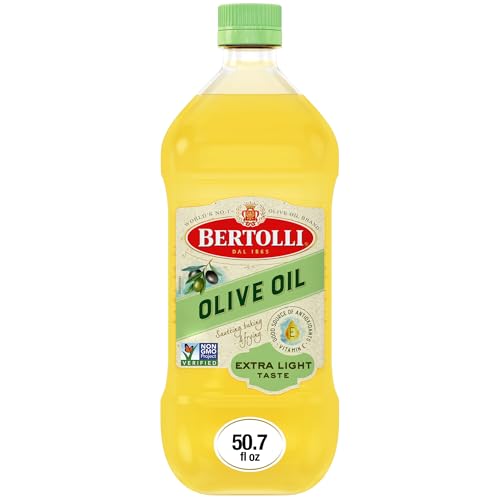
Bertolli Extra Light Olive Oil, Light Taste, 50.7 fl oz
This is the workhorse bottle for cooks who want the calories and mouthfeel of olive oil without the peppery or grassy notes. Owners consistently praise its versatility in baked goods, stir-fries, and anywhere a neutral fat is called for. The 50.7-ounce format balances cost against shelf life, since a bottle that sits too long can develop off flavors.
- Pro: Neutral taste makes it interchangeable with vegetable or canola oil in most recipes.
- Pro: Mid-range price for a half-gallon volume keeps per-ounce cost reasonable for daily use.
- Con: The “extra light” label confuses shoppers who assume it is a reduced-calorie product, which it is not.
Skip this if you are buying specifically for salad dressings or bread dipping, where the flavor complexity of a true extra virgin is the whole point.
Bertolli Extra Virgin Olive Oil, Rich Taste, 50.7 fl oz
The most recognizable Bertolli bottle in kitchens worldwide, this rich-taste extra virgin delivers the fruity, slightly peppery profile that owners expect from the classification. At 50.7 fluid ounces it suits households that cook with olive oil several times a week without committing to a full gallon.
- Pro: Bold flavor stands up well in roasts, marinades, and finishing drizzles where a mild oil would disappear.
- Pro: Widely available in grocery stores, so restocking is easy without relying on online orders.
- Con: The rich profile is a mismatch for delicate dishes or baking, where it can overpower other ingredients.
Skip this in favor of the 32-ounce version if you use olive oil infrequently, because the larger bottle risks quality decline before you finish it.
Bertolli Extra Virgin Olive Oil, First Cold Pressed, 101.4 fl oz
For families or meal-preppers who burn through a gallon every month, the First Cold Pressed variant in the largest available size offers the best per-ounce cost in the extra virgin line. The cold-pressed designation signals that the oil was extracted without heat, preserving more of the natural polyphenols and aroma compounds.
- Pro: Lowest price per ounce among all extra virgin Bertolli options, making bulk cooking economical.
- Pro: Cold-pressed extraction yields a more aromatic oil that owners note as noticeably fresher than standard extra virgin.
- Con: The 101.4-ounce bottle is unwieldy to pour and store in cabinets designed for standard half-gallon containers.
Skip this if your household consumes less than a half gallon per month, since prolonged storage in a large container accelerates oxidation.
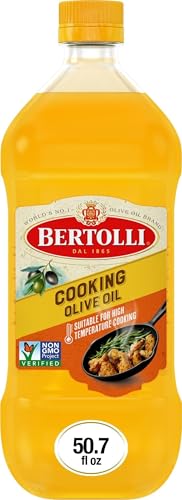
Bertolli Cooking Olive Oil, High Smoke Point, 50.7 fl oz
This blend is engineered for heat. It carries a higher smoke point than any extra virgin in the lineup, which owners confirm makes it suitable for pan-frying, wok cooking, and roasting at high oven temperatures without the bitter flavor that degraded oils produce.
- Pro: High smoke point gives confidence when searing proteins or deep-frying without worrying about the oil breaking down.
- Pro: Priced the same as the Extra Light, it offers a heat-stable option without a premium.
- Con: The blend lacks the complexity and health-compound profile of a true extra virgin, so it is not ideal for raw applications.
Skip this if your primary use is cold applications like dressings, where the milder blend taste becomes a drawback rather than a feature.
Bertolli Extra Virgin Olive Oil, Rich Taste, First Cold Pressed, 16.9 fl oz
The smallest bottle in the line serves as an entry point for anyone wanting to sample the First Cold Pressed quality before committing to a larger format. For under $10 it is the lowest sticker price overall, which appeals to single-person households or those who cook with olive oil only occasionally.
- Pro: Lowest upfront cost lets you evaluate the cold-pressed flavor without a large investment.
- Pro: Compact size means you will likely finish the bottle while the oil is still at peak freshness.
- Con: Per-ounce cost is the highest in the entire lineup, so it is poor value for regular use.
Skip this if you go through olive oil quickly; the per-ounce penalty adds up and you are better off with the 32-ounce version.
Bertolli Cooking Olive Oil, High Smoke Point, 101.4 fl oz
For home cooks who fry, sauté, and roast on a near-daily basis, the bulk High Smoke Point bottle delivers the heat tolerance of the cooking blend at a volume that reduces shopping trips. Owners who use olive oil as their primary cooking fat appreciate the economy of the gallon format.
- Pro: Best per-ounce value for high-heat cooking, beating even the Extra Light at comparable volume.
- Pro: Consistent smoke-point performance across the entire bottle, so the last drop behaves like the first.
- Con: For under $40 it is the highest sticker price in the lineup, which is a significant upfront outlay.
Skip this unless you genuinely go through a gallon of cooking oil per month; otherwise the storage challenge and oxidation risk offset the savings.
Bertolli Extra Light Olive Oil, Light Taste, 32 fl oz
The mid-size Extra Light targets households that want a neutral cooking oil but do not need a full half gallon. It fits in refrigerator doors and smaller pantry shelves, and owners note the compact format makes it easy to decant into a stovetop dispenser.
- Pro: Convenient size for apartments or kitchens with limited storage space.
- Pro: Same neutral flavor profile as the larger Extra Light, suitable for baking and light sautéing.
- Con: Per-ounce cost is notably higher than the 50.7-ounce bottle, so you pay a size premium for the smaller format.
Skip this if storage space is not a constraint; the larger Extra Light is a better economic choice for the same oil.
Bertolli Extra Virgin Olive Oil, Rich Taste, First Cold Pressed, 32 fl oz
This is the standout value in the entire Bertolli olive oil range. For under $20 for a 32-ounce cold-pressed extra virgin, it undercuts even the non-cold-pressed 50.7-ounce option on a per-ounce basis while delivering a superior extraction method. Owners who have tried both frequently express surprise at the price.
- Pro: Best price-per-ounce for a cold-pressed extra virgin, combining quality and economy.
- Pro: Rich flavor profile from cold pressing makes it excellent for both cooking and finishing without compromise.
- Con: Limited availability at this size in all retail locations, so online ordering may be necessary.
Skip this only if you require a full gallon for a commercial kitchen or high-volume meal prep; for any home use, it is hard to beat.
Buying Guide
Understanding the Classification Labels
Bertolli uses three main designations: Extra Virgin (unrefined, highest flavor and polyphenol content), Cooking (a blend of refined and virgin oils optimized for heat), and Extra Light (heavily refined, minimal flavor). Extra virgin should be your default when the oil is visible in the finished dish. The Cooking and Extra Light lines are better suited to high-heat methods where their stability matters more than taste.
Matching Size to Usage Rate
Olive oil degrades once opened, losing flavor and antioxidants over months. A 16.9-ounce bottle suits someone who uses oil twice a week; 32 to 50.7 ounces works for daily cooking in a two-to-four-person household; 101.4 ounces only makes sense if you finish a bottle within six to eight weeks. Buy the smallest size that gets you to the next shopping cycle without leaving a half-empty bottle on the counter.
Cold Pressed Versus Standard Extra Virgin
Cold pressed means the oil was extracted at temperatures low enough to preserve volatile aromatic compounds and natural antioxidants. In practice this yields a more complex, fruitier oil that owners describe as noticeably fresher. The tradeoff is a slightly lower smoke point and a higher price, though as the lineup shows, the 32-ounce First Cold Pressed can actually cost less per ounce than a larger non-cold-pressed bottle.
Our Verdict
Top pick: The Bertolli Extra Virgin Olive Oil, Rich Taste, First Cold Pressed, 32 fl oz for under $20 is the clear value leader, offering cold-pressed quality at a per-ounce cost that beats most alternatives in the lineup. Budget pick: The Extra Light, Light Taste, 50.7 fl oz for under $20 delivers a versatile neutral oil at a fair price for everyday cooking. Condition for another winner: If you cook with high heat daily and need maximum volume, the Cooking High Smoke Point in 101.4 fl oz is the smarter buy despite its higher sticker price.
FAQ
Is Bertolli Extra Light Olive Oil actually light in calories?
No. “Extra light” refers to the flavor and aroma profile after heavy refining, not to reduced fat or calories. It carries the same caloric content per tablespoon as extra virgin oil.
Can I use extra virgin olive oil for frying?
You can, though its lower smoke point means it will break down faster than the Cooking blend at high temperatures. For occasional pan-frying over medium heat it works fine, but dedicated deep-frying calls for the High Smoke Point option.
Does First Cold Pressed mean the oil is organic?
No. Cold pressing describes the extraction method and does not indicate organic certification. Bertolli’s cold-pressed line follows conventional olive processing standards.
How long does opened Bertolli olive oil last?
Most owners report maintaining good flavor for six to eight weeks after opening when stored in a cool, dark place. Beyond that, extra virgin grades lose their aromatic compounds and can turn rancid, so buy a size you will finish within that window.