Key takeaways
- Pro: Single machine eliminates coordination between generator and welder, reducing connection failures and cable clutter.
- Pro: Engine-driven durability rated for sustained high-duty-cycle welding on remote sites.
- Con: Near-$5,000 entry price is steep for anyone welding fewer than a few hours per week.
Finding the best generators for welding means solving a problem that’s deceptively hard on paper and maddening on job sites: you need a single machine that can deliver clean, consistent amperage for an arc while simultaneously powering a shop or remote site, all without a utility connection nearby. The market splits into dedicated welder-generators that combine both functions and standalone portable generators paired with separate machines. Each path carries tradeoffs in cost, portability, and power ceiling.
What separates a worthwhile pick from a money pit comes down to rated weld output, engine durability under sustained load, and whether the amperage curve holds steady at the duty cycle you actually run. Owner feedback from contractors and hobbyists reveals patterns that spec sheets miss — which units overheat after forty minutes, which adapters are non-negotiable, and which price brackets represent genuine value versus brand premium. Below we ranked eight products that collectively cover the full spectrum from $20 accessories to seven-figure professional rigs.
Our top picks
 Hobart Champion Elite 225 Engine-Driven Generator and
- Key Features
- Auxiliary Power: 10,000-Watt peak, 9,500-Watt continuous AC
- Arc Performance: Smooth and consistent for superior welding
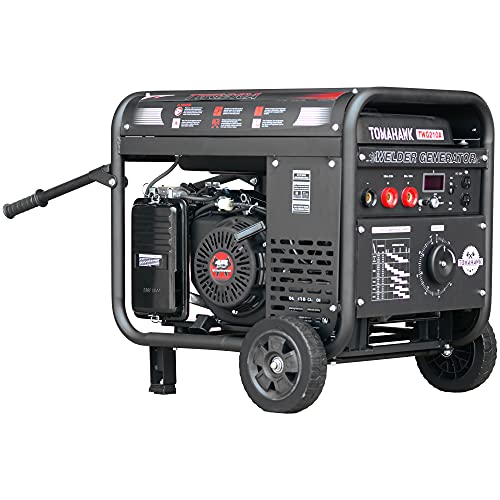 TOMAHAWK 15 HP Engine Driven Portable 2
- 210 Amps of output with a 60% duty…
- Inverter Generator with stable sine wave for the…
- Weld and Run Electric Tools all at once
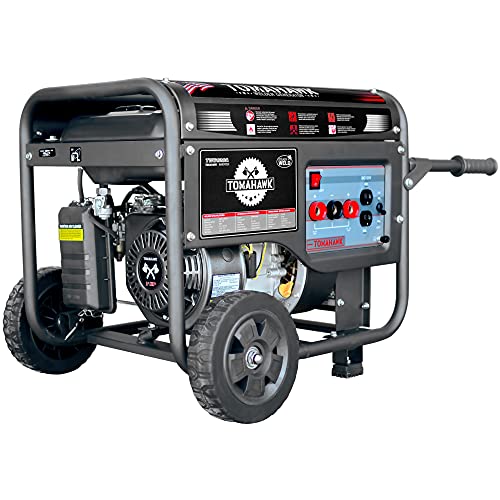 TOMAHAWK Welder Generator Stick Welder Engine Driven
- [120 AMP WELDER] Up to 120 amps of output…
- [2-YEAR WARRANTY] Backed by Tomahawk's U.S.-based support team…
- [QUIET POWER] 2200W inverter generator with stable power…
| Product | Key specs | |
|---|---|---|
| Hobart Champion Elite 225 Engine-Driven Generator and | Key Features Auxiliary Power: 10,000-Watt peak, 9,500-Watt continuous AC Arc Performance: Smooth and consistent for superior welding | Check price |
| TOMAHAWK 15 HP Engine Driven Portable 2 | 210 Amps of output with a 60% duty… Inverter Generator with stable sine wave for the… Weld and Run Electric Tools all at once | Check price |
| TOMAHAWK Welder Generator Stick Welder Engine Driven | [120 AMP WELDER] Up to 120 amps of output… [2-YEAR WARRANTY] Backed by Tomahawk's U.S.-based support team… [QUIET POWER] 2200W inverter generator with stable power… | Check price |
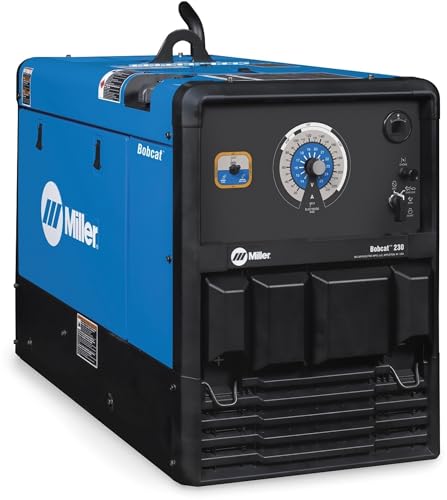 Miller Electric Miller Electric | Item Details Reliable, simple engine-driven welders great for… Designed for maintenance/repair operations, construction, farm, ranch and… Features Easy to Use - The single-knob design… | Check price |
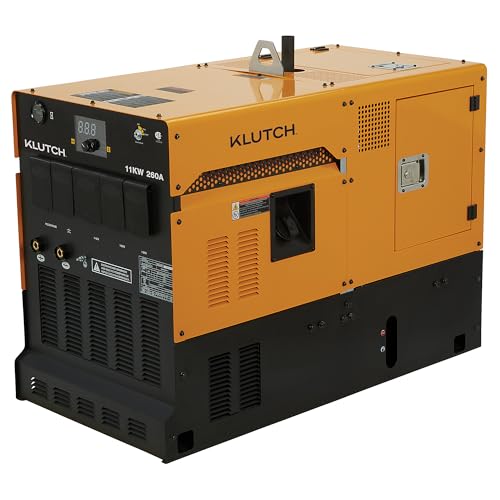 Klutch 11kW Engine-Driven Inverter Stick Welder/Generator with Klutch 11kW Engine-Driven Inverter Stick Welder/Generator with | Exceptional Stick Welding Capabilities: The perfect choice for… Handles the Heavy Metals: Get powerful performance welding… Delivers Dual-Voltage Power Right to Your Jobsite: 120V/240V… | Check price |
 Generac 12 Generac 12 | Run on gasoline, liquid propane, or natural gas… Built-in AVR continuously stabilizes output voltage, protecting connected… 12,500 STARTING WATTS FOR HIGH-SURGE LOADS: The 500cc… | Check price |
 WEN 14 WEN 14 | Switch between gasoline (14500 surge watts, 11500 running… Operates at 120V and 240V, making it perfect… The WEN Watchdog CO Shutdown Sensor helps protect… | Check price |
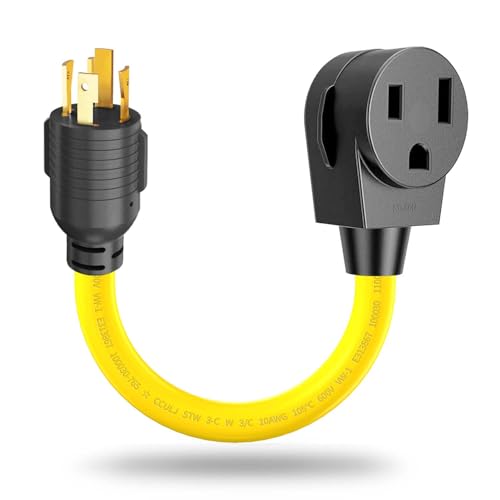 LAVANDINO 4 Prong Twist Lock to 3 LAVANDINO 4 Prong Twist Lock to 3 | 【NEMA Configuration】4 Prong locking L14-30 male plug and… 【Cord】10AWG*3C 100% copper wire inside, support max 30… 【Uses】If you want to use your welding machine… | Check price |
As an Amazon Associate we earn from qualifying purchases at no extra cost to you.
Quick Picks
| Product | Best for | Price |
|---|---|---|
| Hobart Champion Elite 225 | Professional stick welders needing one-machine simplicity | under $4,900 |
| TOMAHAWK 15 HP 210 Amp | High-amp TIG and stick work on a mid-range budget | under $2,400 |
| TOMAHAWK 120 Amp 7 HP | Hobbyists who weld occasionally and value quiet operation | under $1,400 |
| Miller Bobcat 230 | Field crews and fabrication shops with unlimited demand for uptime | $7,649 |
| Klutch 11kW Inverter | Users needing 240-volt weld output plus heavy generator power | under $3,800 |
| Generac 12,500W Tri-Fuel | Pairing with a separate welder for maximum fuel flexibility | $1,069 |
| WEN TF-1450X Tri-Fuel | High-wattage generator on a tight budget | under $1,000 |
| LAVANDINO L14-30P to 6-50R Adapter | Connecting any 30-amp generator output to a 50-amp welder inlet | under $30 |
How We Picked
We evaluated published rated weld amperage, engine horsepower and displacement, generator wattage output, fuel type options, and owner-reported long-term reliability across each unit. Price-to-performance ratio and real-world feedback about duty cycle limitations factored heavily. Products that appear in welding-forum threads with repeated failure reports or spec discrepancies were penalized regardless of brand name recognition.
The 8 Best Generators For Welding in 2026
Hobart Champion Elite 225
This is the buy-it-once answer for stick welders who work off-grid regularly and refuse to fumble with separate machines. The 225-amp output handles through 5/32-inch electrodes without laboring, and the engine-driven design means no utility dependency anywhere. Owners praise the build quality and the integrated welder-generator workflow that cuts setup time dramatically.
- Pro: Single machine eliminates coordination between generator and welder, reducing connection failures and cable clutter.
- Pro: Engine-driven durability rated for sustained high-duty-cycle welding on remote sites.
- Con: Near-$5,000 entry price is steep for anyone welding fewer than a few hours per week.
Skip this if your projects rarely exceed 6010 or 6011 stick rods, or if you already own a capable standalone generator that can be paired with a cheaper welder.
TOMAHAWK 15 HP 210 Amp
The 210-amp stick and TIG output positions this as the most capable welder-generator under $2,500, and owner feedback confirms it handles TIG work that lower-amp units simply cannot. The 2,000-watt generator section is modest but sufficient for lights and small tools alongside welding. For mid-range buyers who need real welding capability without professional pricing, this hits a sweet spot.
- Pro: 210 amps supports thicker materials and TIG processes that most competitors at this price cannot.
- Pro: Includes a welding kit that provides essential accessories out of the box.
- Con: 2,000-watt generator output limits simultaneous power tool use during welding.
Skip this if you primarily need generator wattage for running a shop and will use a separate dedicated welder — the generator section is its weakest component.
TOMAHAWK 120 Amp 7 HP Quiet Inverter
This is the entry-level machine for weekend fabricators who weld occasionally but still want engine-driven freedom from a power outlet. At 120 amps and 7 horsepower, it handles lighter stick work comfortably, and the inverter design keeps noise noticeably lower than conventional alternatives. The $1,349 price makes it accessible without sacrificing the core welder-generator concept.
- Pro: Quiet inverter engine operation makes it neighbor-friendly in residential areas.
- Pro: Lowest price among true welder-generators in this roundup.
- Con: 120-amp ceiling restricts you to smaller electrodes and lighter gauges for sustained work.
Skip this if you regularly weld material over a quarter-inch thick or need to run power tools from the generator output while welding.
Miller Bobcat 230
The Bobcat 230 remains the gold standard for field crews where downtime is measured in lost contracts, not just lost time. With a 23.5-horsepower Kohler CH730 engine and 230-amp weld output, it delivers both serious welding power and robust generator capability in a single package. Miller’s service network and parts availability make it the default choice for professionals who need uptime guaranteed.
- Pro: Industry-leading service network and parts availability reduce risk of extended downtime.
- Pro: Dual-output design handles demanding welding alongside heavy generator loads simultaneously.
- Con: $7,649 price puts it out of reach for anyone not billing hourly on commercial jobs.
Skip this if your welding is personal or small-business side work — the capability is real but the price reflects professional fleet economics.
Klutch 11kW Inverter
With a 260-amp maximum DC weld output and 11kW generator power, the Klutch 11kW bridges a gap few competitors occupy: genuine high-amp welding capability in a package that also delivers meaningful generator wattage at 120/240 volts. The LCD screen gives real-time output monitoring that owners find useful for troubleshooting load issues on site.
- Pro: 260-amp DC output exceeds most competitors in this price bracket, enabling heavy stick and high-amperage processes.
- Pro: 11kW generator output with dual voltage makes it genuinely versatile beyond welding alone.
- Con: For under $3,800 it sits uncomfortably between budget options and the Hobart, and some owners note inconsistent quality control relative to price.
Skip this if you need a proven long-term reliability record or access to a wide service network — the brand support infrastructure is thinner than established names.
Generac 12,500W Tri-Fuel
This is not a welder-generator, and that distinction matters for the buying decision. It earns its place here because pairing a capable standalone generator with a separate welder often beats a combined unit for buyers who need maximum wattage flexibility and fuel options. Running gas, propane, or natural gas at 12,500 starting watts, it provides clean power that many welders can tap directly.
- Pro: Tri-fuel capability gives you the flexibility to run on whatever fuel is cheapest or most available locally.
- Pro: Generac’s reputation for generator reliability and extensive dealer service network.
- Con: Does not include welding capability — you must budget separately for a welder and the right adapter cord.
Skip this if you want a single-machine solution or your total budget cannot stretch to cover both a welder and a quality generator.
WEN TF-1450X Tri-Fuel
For under $1,000 the WEN 14,500-watt tri-fuel is the highest raw generator wattage per dollar in this roundup. Transfer-switch ready with electric start, CO Watchdog safety, and a wheel kit included, it delivers surprising features for the price. Welders who run off a separate generator and need maximum wattage headroom will find this an easy value story.
- Pro: 14,500 starting watts for under $1,000 is exceptional raw power for the money.
- Pro: CO Watchdog and transfer-switch readiness address safety and home-backup use cases simultaneously.
- Con: Build quality and long-term durability reports from owners are mixed, as expected at this price.
Skip this if your priority is sustained heavy welding power from a generator that must run hard every day — durability is where this price point takes shortcuts.
LAVANDINO L14-30P to 6-50R Adapter
This ten-awg, one-foot adapter cord solves a single problem that catches many buyers off guard: your generator has a NEMA L14-30P twist-lock outlet, but your welder expects a 6-50R inlet. Without it, you cannot connect many generator-and-welder pairings at all. For under $30 it is the cheapest item here but potentially the one that unlocks your entire setup.
- Pro: Enables compatibility between the most common portable generator outlets and standard welder cord configurations.
- Pro: Ten-gauge wire provides adequate current handling for typical welder loads at 30 amps.
- Con: One-foot length offers no slack, so you must position the generator directly adjacent to the welder.
Skip this only if your welder already has a matching plug for your generator’s outlet — check your NEMA configurations before assuming you need it.
Buying Guide
Rated Weld Amperage vs. Engine Horsepower
Weld output is the number that determines what you can join. A 120-amp machine handles up to approximately 5/32-inch stick electrodes on lighter material; 210 to 225 amps extends that to heavier gauges and TIG capability; 260 amps pushes into sustained high-deposition work. But amperage means nothing without a motor large enough to sustain it. A 7-horsepower engine driving 120 amps is reasonable; a 15-horsepower engine driving 210 amps is where the weld quality holds steady under heat. Match the engine size to your most demanding typical job, not the occasional thick-plate project.
Welder-Generator Combo vs. Separate Machines
Combined units simplify logistics — one engine, one transport, one fuel source — but force you to accept whatever generator wattage the manufacturer paired with the weld output. If you routinely run power tools, compressors, or site lighting alongside welding, the generator section of a combo unit often falls short. A standalone 12,000-watt tri-fuel paired with a dedicated welder and an adapter like the LAVANDINO gives you more total system power, though at higher combined cost and greater logistical complexity.
Duty Cycle and Thermal Limitations
Published duty cycle ratings describe how many minutes out of ten a machine can weld at a given amperage before the thermal overload triggers. Owner reports consistently show real-world duty cycles run shorter than spec, especially in ambient temperatures above 90°F. If you need to lay beads continuously for hours, look for units with larger engines, forced-air cooling noted in design documentation, or the ability to reduce amperage to stay within thermal limits without losing arc quality on your specific electrode.
Our Verdict
The Hobart Champion Elite 225 is the top pick for anyone whose primary need is welding power in a single, durable, no-compromise package — it does one thing extremely well and removes every point of failure that multi-machine setups introduce. For budget-conscious buyers who still want a true welder-generator without professional pricing, the TOMAHAWK 120 Amp 7 HP for under $1,400 is the clear value pick. However, if your work demands maximum generator wattage alongside welding and you already own a capable standalone welder, the WEN TF-1450X for under $1,000 paired with the LAVANDINO adapter delivers more total system power than any combined unit under $2,500.
FAQ
Can I run a welder off a regular portable generator?
Yes, provided the generator’s continuous wattage output exceeds the welder’s power draw at your intended amperage and the outlet configuration matches. You will likely need an adapter cord like the LAVANDINO to bridge NEMA connector types, and you should verify your generator can handle the inrush load without voltage sag that destabilizes the arc.
What size generator do I need for stick welding?
A rough rule: multiply your target weld amperage by approximately 0.7 to estimate the continuous watts the welder draws, then add a safety margin of at least twenty percent. A 150-amp stick welder typically requires a generator rated around 12,000 to 15,000 starting watts to handle the initial strike without stalling the engine.
Are inverter generators better for welding than conventional ones?
Inverter generators produce cleaner, more stable power that can benefit TIG welding and inverter-based welders sensitive to frequency fluctuation. However, conventional engine-driven welder-generators like the Hobart or Miller Bobcat generate DC output directly from the engine, bypassing the AC-to-DC conversion entirely, which often makes the inverter advantage irrelevant in a dedicated welding context.
What fuel type is best for a welder-generator?
Gasoline remains the most common and offers the highest power density for engine weight. Diesel engines are more durable under sustained load and offer longer service intervals but cost more upfront. Tri-fuel options like the Generac and WEN give flexibility when one fuel source is unavailable, but adding that versatility to a welder-generator combo unit is rare — most dedicated welding engines are gasoline-only.