Key takeaways
- Inverter compressor improves efficiency and temperature stability
- Auto-evaporation cuts manual drain frequency in moderate humidity
- Rated coverage of 800 square feet can feel optimistic in rooms with high ceilings or direct sun exposure
Commercial cooling failures cost real money. A server room that hits eighty-five degrees during a summer afternoon can lose thousands in downtime before anyone even opens a window. Choosing the right unit means matching BTU output, airflow volume, and installation flexibility to the actual square footage and heat load of your space — not guessing or overspending on features you will never use.
The eight units in this roundup span the full practical range from a portable spot cooler under a thousand dollars to a split system that handles over a thousand square feet. The meaningful differences come down to inverter efficiency versus fixed-speed compressors, whether a unit covers its rated area at realistic ambient temperatures, and how much setup complexity you are willing to accept. After comparing published specifications, current pricing, and owner-reported experiences across these models, clear winners emerge for different facility sizes and budgets.
Our top picks




As an Amazon Associate we earn from qualifying purchases at no extra cost to you.
Quick Picks
| Product | Best for | Price |
|---|---|---|
| 16,000 BTU Inverter Portable AC | Mid-size offices and garages | under $600 |
| Commercial Cool 9,000 BTU | Small rooms on a tight budget | under $300 |
| Uninex KoolZone N407-TC | Indoor-outdoor spot cooling | under $1,200 |
| Global Industrial 16,800 BTU | Heavy-duty industrial spaces | under $4,200 |
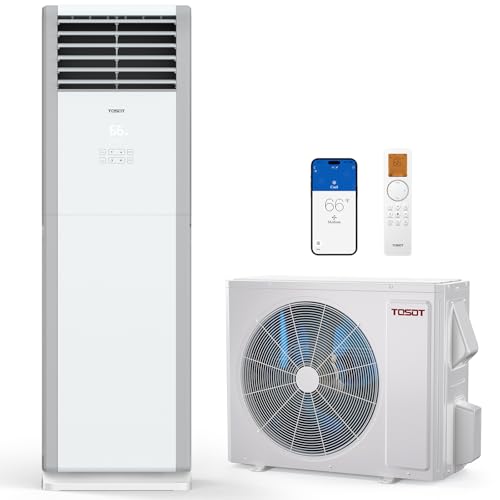
| TOSOT 34,000 BTU Split | Large light-commercial zones | $2,599 |
| ZAFRO Smart Inverter 14,000 BTU | Smart-home integrated offices | under $450 |
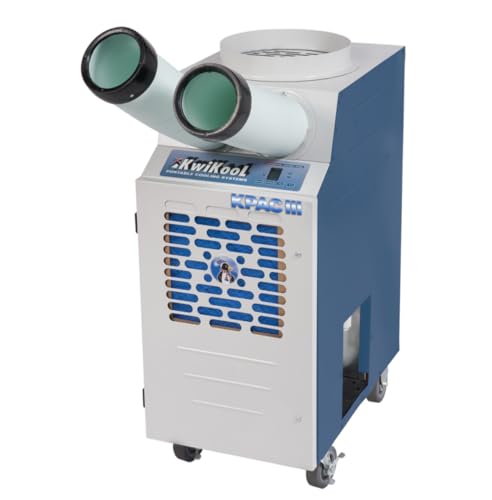
| KwiKool KPAC1411-3 | Server rooms and workshops | under $3,200 |
| BEILOCKERY 14L Spot Cooler | Mobile event and medical use | $1,069 |
How We Picked
We evaluated each unit on four criteria. Cooling capacity relative to rated coverage area matters most — a unit that promises comfort at 800 square feet must actually deliver it under real heat loads. Noise levels determine whether a machine can run in a workspace without becoming a distraction. Inverter compressors versus fixed-speed units affect long-run electricity costs and temperature consistency. Finally, installation and mobility requirements decide whether a unit fits your space or becomes a permanent fixture you cannot justify.
The 8 Best Commercial Air Conditioners in 2026
16,000 BTU Inverter Portable Air Conditioner
This unit targets facility managers who need serious cooling in spaces up to 800 square feet without installing a permanent system. The inverter compressor maintains steadier temperatures than fixed-speed models while drawing less power over long runs, which matters when an AC runs twelve hours a day during a heat wave. Auto-evaporation means the condensation system handles its own water drain under normal humidity, reducing the chore of emptying a tank. App and remote control let you adjust settings from across a large room or garage.
- Inverter compressor improves efficiency and temperature stability
- Auto-evaporation cuts manual drain frequency in moderate humidity
- Rated coverage of 800 square feet can feel optimistic in rooms with high ceilings or direct sun exposure
Skip this if your space exceeds 800 square feet or you need a single unit to cool multiple rooms through open doorways.
Commercial Cool 9,000 BTU Portable Air Conditioner
At just under $280, this is the entry point for anyone cooling a small office, server closet, or bedroom-sized space up to 400 square feet. The three-in-one design covers cooling, dehumidifying, and fan-only modes, which makes it versatile in shoulder seasons when you need airflow without full compressor engagement. Wi-Fi control adds scheduling so the unit kicks on before staff arrive. For its price, the build quality and noise profile are acceptable for rooms where occupants are not directly beside the machine.
- Lowest cost entry for commercial-grade portable cooling
- Dehumidifier mode useful in damp basements or coastal offices
- 9,000 BTU is insufficient for any room approaching 400 square feet on hot humid days
Skip this if your space is anything beyond a small private office or closet, or if multiple people work in it simultaneously during peak summer.
Uninex KoolZone N407-TC Mobile Spot Cooler
This unit earns its price by being genuinely mobile and usable outdoors, which most portable ACs in this category cannot claim. Construction sites, loading docks, and outdoor events need spot cooling that targets a specific zone rather than an entire enclosed space. The rugged build handles environments where delicate window-mounted or residential-grade units would fail quickly. It does not pretend to cool a whole room — it cools the person or workstation in front of its outlet.
- Rated for indoor and outdoor use, expanding applicable scenarios
- Spot-cooling design means less wasted energy on unoccupied space
- Higher price than most portable units and requires a dedicated power circuit
Skip this if you need to lower ambient temperature across an enclosed room rather than cooling a localized work area.
Global Industrial Commercial Portable Air Conditioner, 16,800 BTU
With nearly double the BTU rating of the top portable inverter unit, this machine is built for warehouses, factories, and large workshops where heat from equipment and poor insulation demand serious output. The 16,800 BTU rating is a published specification that positions it above anything else in the portable category here. At $4,101 it costs more than most residential split systems, but it requires no installation, no permits, and no permanent modification to the building.
- Highest BTU output in the portable category, handles genuine industrial heat loads
- No installation required, so it moves between facilities without contractor time
- Premium pricing and physical size limit placement options in tighter spaces
Skip this if your space is under 1,000 square feet or if a permanent split system is feasible, because you will overpay for the same cooling capacity.
TOSOT 34,000 BTU Floor Standing Split Air Conditioner
This unit sits at the crossover between residential comfort and light commercial duty. The 34,000 BTU rating and up to 1,150 CFM airflow make it capable of conditioning open retail floors, large offices, or multi-room areas that smaller portables cannot touch. The Cosmo Series design includes both cooling and heating modes on a single refrigerant circuit, so it replaces a separate heat source in moderate climates. Built-in Wi-Fi control integrates with smart building systems.
- 34,000 BTU output covers significantly more area than any portable unit here
- Heating mode adds year-round value in temperate commercial zones
- Requires professional installation and a 230V electrical circuit, adding hidden cost
Skip this if your lease prohibits permanent modifications, your building lacks 230V wiring, or you need cooling you can move between locations.
ZAFRO Smart Inverter Portable Air Conditioner, 14,000 BTU
The SACC rating of 10,000 BTU on this unit tells you something important: the 14,000 figure reflects a testing standard that commercial buyers have long criticized as inflated. The SACC number is the realistic one to plan around, meaning this unit handles spaces closer to 400-500 square feet rather than 700+. Smart home integration and inverter technology are genuine advantages for small offices or home workspaces where temperature consistency and scheduling matter. At $439 it competes directly with the first unit but with a lower true output.
- Smart home and scheduling features at a competitive price point
- Inverter compressor provides quieter, steadier operation than fixed-speed rivals
- 14,000 BTU marketing overshoots the practical 10,000 BTU SACC rating
Skip this if you are sizing based on the 14,000 BTU label for a room that genuinely needs that much cooling.
KwiKool KPAC1411-3 Commercial Portable Air Conditioner
KwiKool builds units specifically for commercial and industrial applications where reliability under continuous operation matters more than smart features. This model targets environments like workshops, equipment rooms, and production floors where the AC runs for entire shifts without human intervention. The construction prioritizes serviceability and durability over aesthetics. At $3,187 it sits between the budget portables and the heavy-duty Global Industrial unit, offering meaningful capacity without the extreme price of the largest options.
- Purpose-built for continuous commercial operation, not consumer-grade shortcuts
- Higher airflow and build quality than portable units in the $300-600 range
- Lacks smart controls and has a premium price relative to feature set
Skip this if your space is under 500 square feet or you need app-based scheduling and remote monitoring.
BEILOCKERY Industrial Portable Air Conditioner with Wheels
This unit fills a niche that almost nothing else in this list addresses: true mobility in environments where you need to relocate cooling hour by hour. Hospitals use spot coolers for patient rooms during HVAC maintenance; event coordinators need targeted cooling for outdoor catering zones. The 14-liter tank supports longer continuous operation between drains, and the adjustable air outlet lets you direct flow precisely where workers or patients need it. At $1,069 and 1.4 kilowatts, it runs on standard 110V power.
- Wheeled design and adjustable outlet support genuine on-the-move use
- 14-liter tank reduces drain frequency during extended operation
- Spot cooler design means it does not lower ambient temperature across a full room
Skip this if you need whole-room climate control rather than targeted relief for specific positions or zones.
Buying Guide
Matching BTU Output to Real Heat Load
Published BTU ratings almost always describe ideal conditions: a well-insulated, shaded, single-story room with standard ceiling height. A 16,000 BTU unit that handles 800 square feet in those conditions may struggle in a warehouse with twenty-foot ceilings, metal roofing, and active machinery generating supplemental heat. Use the lower number when multiple heat sources exist. Check SACC ratings when available because they apply a more realistic methodology than older EER-based standards.
Inverter Compressors Versus Fixed-Speed Units
An inverter compressor adjusts its speed to match the current cooling demand, which means steadier temperatures and lower electricity bills over a full day of operation. Fixed-speed compressors cycle on and off, creating temperature swings and consuming more power per hour of runtime. The premium for inverter models narrows quickly when an AC runs eight or more hours daily. For spaces with intermittent use, a fixed-speed unit saves on upfront cost without a meaningful energy penalty.
Installation Requirements and Mobility Tradeoffs
Split systems like the TOSOT offer superior capacity per dollar but require professional mounting, refrigerant line runs, and dedicated electrical circuits. Portable units sacrifice some efficiency for the ability to plug in and deploy within minutes. Decide upfront whether your space needs permanent cooling or flexible cooling. Facilities with changing layouts or rental leases benefit from portable investment. Buildings with fixed room assignments justify the installation cost of a split system.
Our Verdict
The top pick is the 16,000 BTU Inverter Portable Air Conditioner. It delivers the best balance of real cooling capacity, efficiency through inverter technology, and zero installation overhead for the majority of small-to-medium commercial spaces in 2026. The budget pick is the Commercial Cool 9,000 BTU for under $300, which handles its rated area adequately for single-occupant rooms and offers dehumidification that justifies its cost even in cooler months. The TOSOT 34,000 BTU split system wins outright if your space exceeds 1,000 square feet and you have access to 230V power and a licensed installer — no portable unit in this list can match its airflow or coverage per dollar.
FAQ
What size commercial AC do I need for my office?
Start with the rule of thumb of 20 BTU per square foot for average ceiling height, then increase by 10-20 percent if the space has direct sun exposure, high ceilings, or heat-generating equipment. A 200-square-foot office needs roughly 4,000 BTU minimum; a 700-square-foot workshop with machinery may need the full 16,000 BTU rating or more.
Are portable air conditioners loud enough to disrupt work?
Most portable units in this category run between 50 and 65 decibels, comparable to a normal conversation. Inverter models tend to produce lower steady-state noise than fixed-speed units because the compressor does not cycle at full blast. If staff work within five feet of the unit, choose the quietest rated model and position the exhaust hose behind an obstruction.
Do I need a window or exhaust vent for portable ACs?
Portable air conditioners require exhaust to expel the heat they pull from the air, so they always need a vent hose routed to a window, wall opening, or ceiling exhaust. Units that do not use a hose typically operate as evaporative coolers, which are fundamentally different technology and do not reduce air temperature in humid conditions.
How does inverter technology save money over time?
An inverter compressor modulates its speed to match demand rather than cycling fully on and off, which reduces energy consumption by 20-40 percent in continuous operation. The savings depend on daily runtime hours; a unit running four hours a day may not justify the inverter premium, while one running twelve hours a day recovers the extra cost within a single cooling season.