Key takeaways
- A specs-first guide to choosing a mountain bike: frame materials, suspension forks, wheel sizes, groupsets and brakes, with four Amazon US trail bikes compared.
As an Amazon Associate we earn from qualifying purchases.
Disclosure: This article contains affiliate links. If you buy through a link on this page, the site may earn a commission at no additional cost to you.
People often start shopping for a mountain bike during the late-November shopping season, but the most useful way to choose one has nothing to do with a calendar date. A mountain bike is a long-term piece of equipment. The frame size, wheel diameter, suspension design and gearing you pick will shape every ride for years, while a seasonal headline lasts only a moment. This guide therefore treats the search as a pure buying guide: it compares real mountain bikes sold on Amazon US by their frames, forks, groupsets, brakes and intended terrain, and it explains how to match those specifications to your height, your local trails and your riding style.
A good starting point is to decide what kind of riding you will actually do. A bike for smooth dirt paths, canal towpaths and light woodland trails needs far less suspension travel than a bike for rocky descents, root sections and bike-park laps. Buying more travel than you need adds weight and maintenance. Buying too little leaves you under-equipped when the trail gets rough. The four bikes below cover the most common entry points: a fat-tire bike for loose surfaces, a hardtail for general trail use, a full-suspension bike for rougher ground, and a lightweight hardtail aimed at climbing and longer rides. Each entry lists the key specifications, the strengths and trade-offs of the design, and a direct Amazon US product link so you can confirm the current specification and availability for yourself before ordering.
Quick Picks
- For sand, snow and very loose trails: Mongoose Dolomite Fat Tire Mountain Bike — wide tires, a rigid steel frame and simple gearing.
- For everyday trail riding: Schwinn High Timber Mountain Bike — a front-suspension hardtail format with multiple wheel and frame options.
- For rougher descents: Schwinn Traxion Mountain Bike — full suspension with front and rear travel for uneven ground.
- For climbing and longer cross-country rides: Royce Union RMA Mountain Bike — an aluminum hardtail format built around efficient pedaling.
Use the detailed sections below to check frame size and wheel size against your height before you settle on any one model, because the same model name often covers several sizes with different stand-over heights.
1. Mongoose Dolomite Fat Tire Mountain Bike
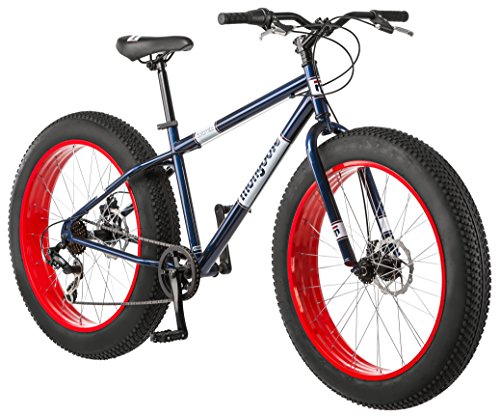
The Mongoose Dolomite is built around a simple idea: tire volume can do some of the work that suspension does on other bikes. Its oversized knobby tires are far wider than a standard trail tire, so they spread your weight over a larger contact patch. On sand, snow, mud and loose gravel that extra footprint helps the bike float and grip instead of digging in and stalling. The frame is steel, the fork is rigid rather than suspended, and the drivetrain keeps things deliberately simple, which suits riders who want a bike for beaches, winter paths, farmland tracks and relaxed off-road exploring rather than fast technical descents.
Because there is no suspension fork, there are fewer moving parts to service, and the low tire pressure you can run in the wide tires provides a degree of cushioning over small bumps. The trade-off is weight and rolling speed: a fat-tire bike is heavier to lift onto a car rack and slower on smooth pavement than a narrower-tired hardtail.
Key specifications
- Frame: alloy steel, 17-inch medium frame size on the main listing
- Wheels and tires: 26-inch wheels with 4-inch-wide knobby fat tires
- Gearing: 7 speeds with a rear derailleur and twist-style shifting on the main listing
- Brakes: front and rear disc brakes
- Suspension: rigid fork, no rear suspension
- Rider fit guidance on the listing: adult riders, with the medium frame aimed at mid-height riders
- Weight: listed at about 52 pounds, so check the current listing figure before ordering
Pros
- Very wide tires give strong grip and stability on sand, snow and loose surfaces
- Simple rigid design means fewer suspension parts to maintain
- Disc brakes work consistently in wet and muddy conditions
- Steel frame is a durable choice for heavy, low-speed trail use
Cons
- Heavy compared with an aluminum hardtail, which matters on long climbs and when lifting the bike
- A 7-speed range is limited on steep hills
- Fat tires roll more slowly on smooth roads and hard-packed paths
Check the current specification and availability here: https://www.amazon.com/dp/B00J7J40TM
2. Schwinn High Timber Mountain Bike
The Schwinn High Timber is a long-running hardtail nameplate, and its appeal is flexibility. Depending on the version on the listing, it is offered in youth and adult sizes and in different wheel diameters, which makes it one of the easier ranges for a household to size correctly. A hardtail — a frame with a suspension fork at the front and a rigid rear triangle — is the standard recommendation for a first mountain bike: it pedals efficiently, it is lighter than a comparable full-suspension bike, and the fork absorbs the worst of the impacts from roots, stones and uneven dirt.
The High Timber format suits trail centres, woodland singletrack, gravel paths and mixed commuting on rough roads. When you compare versions, look carefully at the fork travel, the number of gears and whether the brakes are disc or rim brakes, because specifications vary between sizes and production runs under the same model name. Always read the size chart on the exact listing you are ordering from, and measure your inside leg rather than relying on age ranges alone.
Key specifications
- Frame: aluminum or steel depending on version, in youth and adult sizes — confirm on the listing
- Wheels: commonly 24-inch, 26-inch, 27.5-inch or 29-inch depending on size — confirm on the listing
- Fork: front suspension fork for trail impacts
- Gearing: multi-speed drivetrain, with the exact count varying by version
- Brakes: disc or linear-pull depending on version — confirm on the listing
- Suspension: front only (hardtail)
Pros
- Wide size range makes correct fitting easier for younger and adult riders
- Hardtail layout pedals efficiently on climbs and smoother trails
- Front suspension improves comfort and front-wheel control over roots and stones
- A sensible format for learning basic trail skills
Cons
- Specifications vary a lot between versions, so you must check the exact listing carefully
- Entry-level forks offer limited adjustment compared with air-sprung forks
- A rigid rear end passes more trail vibration to the rider on rough descents
Check the current specification and availability here: https://www.amazon.com/dp/B072Q8Y4ZP
3. Schwinn Traxion Mountain Bike
The Schwinn Traxion takes the next step up in suspension: it is a full-suspension design, with travel at both ends of the bike. An aluminum frame carries a front suspension fork and a rear shock, and the larger wheel format is aimed at rolling over obstacles rather than picking a careful line around every stone. For riders whose local trails are rocky, rutted or root-covered, that extra rear-end compliance can mean better traction and less fatigue on descents, because the rear wheel follows the ground instead of bouncing off it.
Full suspension is not automatically better, though. The rear shock and linkage add weight, and an entry-level rear shock usually has fewer adjustments than the units on dedicated trail bikes. Pedaling efficiency also drops slightly, especially when you stand up on climbs, because some of your effort compresses the suspension. The Traxion format therefore makes most sense if your riding is genuinely rough, and less sense if most of your miles are on smooth paths where a hardtail would be lighter and simpler.
Key specifications
- Frame: aluminum full-suspension frame — confirm the current frame size options on the listing
- Wheels: large-diameter wheels on the main version — confirm the exact size on the listing
- Fork: front suspension fork
- Rear suspension: coil-style rear shock on the main version — confirm on the listing
- Gearing: multi-speed drivetrain with trigger or twist shifting depending on version
- Brakes: disc brakes on the main version — confirm on the listing
Pros
- Front and rear suspension improves traction and comfort on rough, uneven trails
- Large wheels roll over roots and stones more easily than smaller wheels
- Aluminum frame keeps the complete bike more manageable than a steel equivalent
- Better suited to descending than a basic hardtail
Cons
- Heavier and more complex than a hardtail, with a rear shock to maintain
- Less efficient when climbing out of the saddle
- Entry-level suspension components offer limited tuning
Check the current specification and availability here: https://www.amazon.com/dp/B078WLH7S5
4. Royce Union RMA Mountain Bike
The Royce Union RMA is an aluminum hardtail aimed at riders who spend more time climbing and covering distance than dropping into steep descents. A lighter frame material, a front suspension fork with a lockout feature on the main version, and a wide-range drivetrain are the classic ingredients of a cross-country style bike: you can lock the fork on smooth climbs and road sections so your pedaling effort goes into forward motion, then open it again when the surface roughens up.
This type of bike suits fitness riding on trails, longer weekend loops, and mixed routes that combine dirt paths with paved connectors. When comparing it with the other bikes here, pay attention to the gear range. A wide-range cassette with a low climbing gear matters far more on a long hill than a high top gear you will rarely use, and a single front chainring, where fitted, removes front-shifting complexity at the cost of some range at the very top end.
Key specifications
- Frame: aluminum hardtail frame — confirm the current size options on the listing
- Wheels: 27.5-inch on the main version — confirm on the listing
- Fork: front suspension fork, with lockout on the main version
- Gearing: multi-speed rear drivetrain — confirm the exact gear count and range on the listing
- Brakes: disc brakes on the main version — confirm on the listing
- Suspension: front only (hardtail)
Pros
- Aluminum frame is lighter to climb with and easier to carry than a steel frame
- Fork lockout, where fitted, improves efficiency on smooth sections
- Hardtail layout is simple to maintain and set up
- Well suited to longer cross-country rides and fitness training
Cons
- No rear suspension, so rough descents demand more care and lower speed
- Cross-country geometry can feel less stable on steep descents than a trail geometry
- You need to confirm the exact drivetrain specification, as versions differ
Check the current specification and availability here: https://www.amazon.com/dp/B07B3H8K9M
How to Choose a Mountain Bike
Start with frame size. A bike that is too large is hard to control and uncomfortable; a bike that is too small cramps your pedaling position. Use the manufacturer’s height chart for the exact model, check stand-over height against your inside leg, and remember that sizing differs between brands, so a medium from one maker is not identical to a medium from another.
Pick a wheel size for your terrain. Smaller wheels accelerate quickly and suit smaller riders. Larger 29-inch wheels hold speed well and roll over obstacles more easily, which helps on rough trails, but they can feel cumbersome for shorter riders. The 27.5-inch size sits between the two and is a common all-round choice.
Decide between hardtail and full suspension. Choose a hardtail for smoother trails, climbing, fitness riding and simpler maintenance. Choose full suspension if your trails are rocky or root-heavy and descending comfort and traction matter more than weight. Choose a fat-tire rigid bike only if sand, snow or very loose ground is a regular part of your riding.
Look at the fork, not just its presence. Travel, whether the fork can be locked out, and whether it uses a coil or an air spring all affect how a bike rides. For general trail use, a fork you can lock out on climbs is a practical feature. Check whether replacement parts and servicing for the fork type are realistic for you.
Check the groupset by range, not just gear count. What matters is the spread between the easiest and hardest gears. A low climbing gear you can spin on a steep hill is worth more than extra high gears. Also check the shifter type you prefer — trigger shifters are the trail standard, while twist shifters appear on simpler builds like the fat-tire bike above.
Prefer disc brakes for real trails. Disc brakes, mechanical or hydraulic, keep working in wet and muddy conditions and give more consistent control on descents than rim brakes. If you ride in the rain or on steep ground, treat disc brakes as a requirement rather than an upgrade.
Plan for the extras. Most mountain bikes arrive partly assembled, so allow time and basic tools for setup, and consider a professional safety check if you are not confident adjusting brakes and gears. Budget in your planning for a helmet, a pump matched to your valve type, a spare inner tube or tubeless sealant, and lights if any part of your route is on public roads.
FAQs
What size mountain bike do I need?
Use the size chart on the exact product listing and match it to your height and inside-leg measurement. If you fall between two sizes, the smaller size is usually easier to handle on technical trails, while the larger size can feel more stable on open ground.
Is a hardtail or a full-suspension bike better for a beginner?
A hardtail is usually the better first bike: it is lighter, simpler, and teaches good line choice because the rear wheel follows the ground you pick. Full suspension helps once your trails are genuinely rough.
Why would anyone choose a fat-tire bike?
Wide, low-pressure tires float over sand, snow and mud that would stop a standard tire. The cost is extra weight and slower rolling on firm surfaces, so it is a specialist choice rather than an all-rounder.
How many gears do I need?
Focus on range rather than the headline number. One low gear you can spin up your steepest local climb, plus a reasonable spread above it, covers most trail riding. Very simple 7-speed setups work on gentle terrain but can run out of low gears on hills.
Do these bikes arrive fully assembled?
Typically they arrive partly assembled, with the front wheel, handlebar, pedals and seat to fit and brakes and gears to check. Follow the manual for your model and have the bike checked if anything feels loose or misaligned.
Conclusion
The right mountain bike is the one whose frame size fits you, whose wheel size and suspension match your trails, and whose gearing gives you a low enough gear for your hills. For loose and winter surfaces, the Mongoose Dolomite takes a specialist fat-tire approach. For general trail riding, a hardtail such as the Schwinn High Timber or the Royce Union RMA keeps things light, efficient and simple. For rougher ground, the full-suspension Schwinn Traxion adds rear-end traction and comfort at the cost of weight. Compare the specifications on each Amazon US listing, confirm the exact size and version before ordering, and choose on fit and terrain — the factors that will still matter long after the shopping season has passed.
More from Amazon
Programs that pair well with the guide above. Offers and eligibility are set by Amazon and may change.
Send a Prime gift membership to someone who would use free shipping and Prime Video.
Gift Amazon PrimeGive audiobooks to someone who loves to listen. Plans and prices are set by Amazon.
Gift AudibleFree shipping on eligible items, Prime Video and more. Eligible new members can start with a free trial.
Start a Prime free trialAudiobooks and podcasts to listen to on the go. Eligible new members can start with a free trial.
Try Audible freeAs an Amazon Associate we earn from qualifying purchases.