Key takeaways
- Airflow (CFM): Cubic feet per minute is the single biggest predictor of drying speed. Anything under ~120 CFM struggles on a full undercoat; 170+ CFM is grooming-shop territory.
- Motor type and count: Dual-motor dryers move more air but are louder and heavier. Brush motors wear out; look for rated motor life in hours.
- Heat: High-velocity dryers rely on air speed plus mild motor warmth (usually 10–25°F above ambient), not a heating element. Avoid dryers that push genuinely hot air — double coats insulate the skin, so you can’t feel when the skin underneath is getting too warm.
- Noise: Most run 70–90 dB. If your dog is noise-sensitive, look for models with insulated housings or variable speed control so you can start low.
- Hose and nozzles: A 10-foot flexible hose is the practical minimum for a large dog. A cone nozzle concentrates air for blowing out undercoat; a flat/slot nozzle “squeegees” water off topcoat fastest.
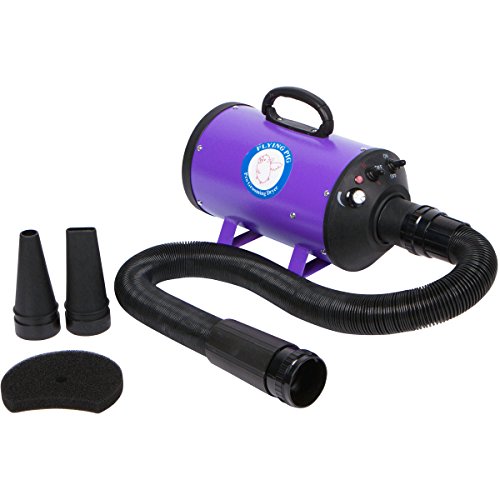
The best high-velocity pet dryers for thick coats in 2026 are the K-9 III for grooming-grade power, the Flying Pig Flying One for strong airflow at a mid-range price, and the Metrovac Air Force Commander for a compact, durable option — and for most owners of one double-coated dog, the Flying One hits the sweet spot between drying speed, noise, and cost.
Double-coated breeds like Huskies, Golden Retrievers, and Newfoundlands trap water against the skin, and towel drying alone leaves the undercoat damp for hours — a recipe for hot spots and musty smell. A high-velocity dryer blasts water out mechanically rather than relying on heat, which is exactly what dense coats need. Here’s how to choose.
Our top picks



As an Amazon Associate we earn from qualifying purchases at no extra cost to you. Ratings are shown as listed on Amazon.
What actually matters when buying
Marketing specs are noisy. These are the criteria that change real-world drying time:
- Airflow (CFM): Cubic feet per minute is the single biggest predictor of drying speed. Anything under ~120 CFM struggles on a full undercoat; 170+ CFM is grooming-shop territory.
- Motor type and count: Dual-motor dryers move more air but are louder and heavier. Brush motors wear out; look for rated motor life in hours.
- Heat: High-velocity dryers rely on air speed plus mild motor warmth (usually 10–25°F above ambient), not a heating element. Avoid dryers that push genuinely hot air — double coats insulate the skin, so you can’t feel when the skin underneath is getting too warm.
- Noise: Most run 70–90 dB. If your dog is noise-sensitive, look for models with insulated housings or variable speed control so you can start low.
- Hose and nozzles: A 10-foot flexible hose is the practical minimum for a large dog. A cone nozzle concentrates air for blowing out undercoat; a flat/slot nozzle “squeegees” water off topcoat fastest.
Top picks compared
| Dryer | Motor | Airflow (approx.) | Noise | Hose | Weight | Typical price range | Best for |
|---|---|---|---|---|---|---|---|
| K-9 III (K-9 Dryers) | Dual, ~1200 hrs rated | ~240 CFM | ~85–90 dB | 10 ft + cone & flat nozzles | ~26 lbs | $450–$650 | Multi-dog homes, pros, giant breeds |
| Flying Pig Flying One | Single, 4.0 HP | ~240 CFM peak | ~78 dB | 10 ft + 2 nozzles | ~14 lbs | $200–$300 | Most home groomers |
| Metrovac Air Force Commander | Single, 4.0 HP | ~130 CFM | ~75 dB | 6 ft + concentrator | ~12 lbs | $180–$280 | Smaller dogs, noise-sensitive pets |
| Shernbao Typhoon (SHD-2600P) | Dual, variable speed | ~220 CFM | ~80 dB | 10 ft + 3 nozzles | ~18 lbs | $150–$250 | Budget-conscious heavy shedding |
| B-Air Fido Max 1 | Single, 2 HP | ~120 CFM | ~70 dB | 8 ft + 3 nozzles | ~9 lbs | $100–$160 | Occasional baths, medium coats |
Figures are manufacturer-stated or typical measured ranges; treat CFM numbers as directional rather than lab-exact.
Decision matrix: which one fits your situation
| Your situation | Recommended pick | Why |
|---|---|---|
| One Husky/Golden, bathed monthly, under $300 | Flying Pig Flying One | Near-pro airflow, manageable noise, long hose |
| Two+ heavy shedders or weekly drying | K-9 III | Dual motor, repairable build, survives daily use |
| Apartment, noise-sensitive rescue dog | Metrovac Commander | Quietest of the group, compact storage |
| Tight budget but serious shedding season | Shernbao Typhoon | Variable speed helps anxious dogs acclimate |
| Medium coat (Border Collie, Aussie), occasional baths | B-Air Fido Max 1 | Cheapest option that still beats a human hair dryer |
Worked example: drying time and cost
On a 70-lb Golden Retriever after a full bath, towel drying removes roughly half the surface water. From there:
- Human hair dryer (high heat, low airflow): 45–60 minutes, still damp undercoat, heat-risk on skin.
- Budget HV dryer (~120 CFM): 25–35 minutes.
- Pro-grade HV dryer (220+ CFM): 12–18 minutes, undercoat visibly blown open and dry at the skin.
Cost per use: a $250 dryer used 12 times a year for 8 years runs about $2.60 per bath, versus $15–$25 for a groomer drying add-on. It pays for itself within the first year for anyone bathing monthly.
Safe handling on double coats
- Always towel-squeeze first — never dry a dripping dog; you’re fighting physics.
- Start on low speed at the rear, let the dog hear the dryer running at a distance first.
- Keep the nozzle 6+ inches from the coat and keep it moving. Aim air along the hair growth, then against it in sections to lift the undercoat.
- Never point the nozzle at ears, eyes, or genitals. Use your free hand as a shield near the head.
- If skin looks pink or the dog pulls away persistently, stop — damp and calm beats dry and traumatized. Persistent skin redness or odor is worth a vet visit, not more drying.
Ownership realities: what wears out first
- Foam intake filters clog fast with undercoat hair — clean or rinse them every 2–3 uses or airflow drops noticeably. This is the #1 cause of “my dryer got weak” complaints.
- Hoses crack at the cuffs after 2–4 years; replacements run $20–$40 and are model-specific, so check parts availability before buying an obscure brand.
- Motor brushes on brushed motors are consumables (typically $10–$20 a set) — K-9 and Metrovac sell them; some budget imports do not.
- Common mistake: running the dryer flat on a wet floor where the intake sucks up water and hair. Elevate it or hang it.
FAQ
Can I use a human hair dryer instead?
You can, but it’s slow and the heat setting is genuinely risky on insulated double coats. A high-velocity dryer dries by airflow, not temperature — faster and safer.
Is a dual-motor dryer worth it for one dog?
Usually not. The extra CFM saves maybe five minutes per bath but adds weight, noise, and cost. Dual motors earn their keep with multiple dogs or professional use.
How loud is too loud?
Above ~85 dB, most dogs need gradual acclimation. Variable-speed models let you start quieter and ramp up, which matters more than the headline number.
How often should I fully dry the undercoat?
After every bath — a damp undercoat against the skin is the main cause of post-bath skin issues. If you can’t commit to a full dry, bathe less often.