Key takeaways
- Microphone clarity: A boom mic physically closer to your mouth beats embedded mics. Look for headsets advertising multi-microphone arrays with noise-reduction algorithms.
- Background-noise reduction on transmit: This is noise suppression for your outgoing voice — what coworkers hear. ANC only helps what you hear. Both matter; don’t confuse them.
- Comfort for long calls: Clamping force under ~5 N, memory foam earpads, and weight under 250 g reduce fatigue across 6+ hour days.
- Multipoint pairing: Connecting to laptop and phone simultaneously prevents missed calls and re-pairing headaches.
- Battery life: Business headsets typically claim 20–37 hours of talk time; consumer ANC headphones claim 24–30 hours of listening. Talk time is lower because the mic is active.
- Mute controls: A physical mute button or lift-to-mute boom arm is worth more than any audio spec during a surprise question.
The best headphones for remote work in 2026 are business-grade wireless headsets like the Jabra Evolve2 series and Poly Voyager Focus 2 for call-heavy jobs, and premium consumer models like the Sony WH-1000XM5 or Bose QuietComfort Ultra Headphones if you want one device for meetings and music. The right pick depends less on sound quality and more on microphone performance, all-day comfort, and how reliably the headset stays connected during an eight-hour day of calls.
Our top picks
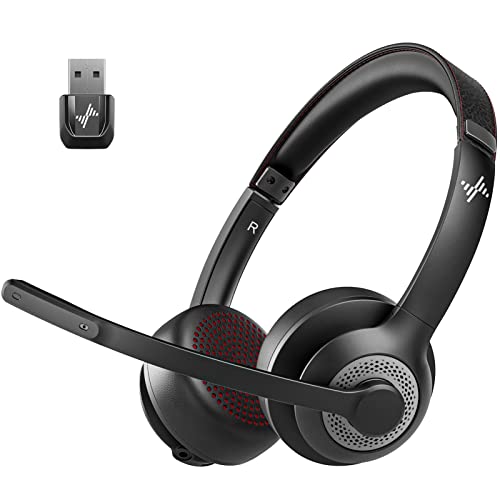

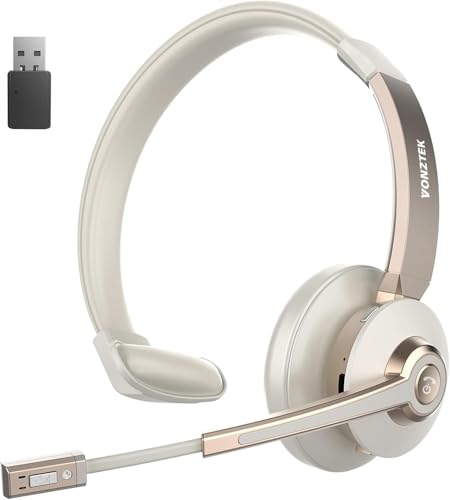
As an Amazon Associate we earn from qualifying purchases at no extra cost to you. Ratings are shown as listed on Amazon.
What Actually Matters for Remote Work
Marketing pages emphasize drivers and noise cancellation, but remote work priorities are different:
- Microphone clarity: A boom mic physically closer to your mouth beats embedded mics. Look for headsets advertising multi-microphone arrays with noise-reduction algorithms.
- Background-noise reduction on transmit: This is noise suppression for your outgoing voice — what coworkers hear. ANC only helps what you hear. Both matter; don’t confuse them.
- Comfort for long calls: Clamping force under ~5 N, memory foam earpads, and weight under 250 g reduce fatigue across 6+ hour days.
- Multipoint pairing: Connecting to laptop and phone simultaneously prevents missed calls and re-pairing headaches.
- Battery life: Business headsets typically claim 20–37 hours of talk time; consumer ANC headphones claim 24–30 hours of listening. Talk time is lower because the mic is active.
- Mute controls: A physical mute button or lift-to-mute boom arm is worth more than any audio spec during a surprise question.
Best Headphones for Remote Work: Comparison
| Model | Type | Mic Design | Battery (talk/listen) | Weight | Multipoint | Typical Price Range |
|---|---|---|---|---|---|---|
| Jabra Evolve2 65 Flex | Wireless on-ear | Boom arm, hides when folded | ~20 hrs talk | ~136 g | Yes, plus USB dongle | $250–350 |
| Poly Voyager Focus 2 | Wireless on-ear | Boom mic, flip-to-mute | ~25 hrs talk / ~40 hrs listen | ~175 g | Yes | $230–330 |
| Logitech Zone Wireless 2 | Wireless on-ear | Rotating boom mic | ~22 hrs talk | ~230 g | Yes | $250–300 |
| Sony WH-1000XM5 | Wireless over-ear ANC | Embedded beamforming mics | ~24 hrs talk / ~30 hrs listen | ~250 g | Yes | $300–400 |
| Bose QuietComfort Ultra Headphones | Wireless over-ear ANC | Embedded mics | ~24 hrs | ~253 g | Yes | $350–450 |
| Logitech Zone Vibe 100 | Wireless over-ear | Flip-down boom mic | ~18 hrs talk | ~185 g | Yes | $100–130 |
Picks by Situation
Calls all day, every day: Jabra Evolve2 65 Flex or Poly Voyager Focus 2
Purpose-built business headsets win on transmit noise reduction, certified compatibility with Teams/Zoom/Webex, dedicated USB dongles (more reliable than laptop Bluetooth), and lighter weight. The Voyager Focus 2’s flip-to-mute boom is the fastest mute you’ll find. The Evolve2 65 Flex folds flat — good if you split between home and office.
Hybrid worker who also wants great music: Sony WH-1000XM5
Class-leading ANC and audio, acceptable call quality in quiet rooms, and solid multipoint. The embedded mics struggle more in noisy environments than a boom mic — if you take calls from a kitchen with a running dishwasher, people will hear it.
Noisy household: Poly Voyager Focus 2 or Logitech Zone Wireless 2
Boom mics positioned near the mouth plus aggressive noise-reduction DSP handle barking dogs, kids, and traffic better than any embedded-mic consumer headphone.
Budget under $150: Logitech Zone Vibe 100
A flip-down boom mic and reasonable comfort at roughly a third the price of flagship business headsets. You give up ANC and some mic processing refinement.
Maximum reliability, no battery anxiety: wired USB headset
Wired headsets like the Logitech Zone Wired or Jabra Evolve2 40 eliminate charging, Bluetooth drops, and multipoint quirks entirely. Trade-off: you’re tethered to your desk. If you never pace during calls, wired is objectively the most reliable choice — and typically cheaper for equivalent mic quality.
Decision Matrix
| Your Situation | Recommended Choice | Why |
|---|---|---|
| 4+ hours of meetings daily | Business headset (Jabra/Poly) | Boom mic, certified call platforms, light weight |
| Noisy home environment | Boom-mic wireless headset | Transmit noise reduction suppresses background for callers |
| Meetings + music + commuting | Sony WH-1000XM5 or Bose QC Ultra | Best ANC and audio; adequate mics in quiet rooms |
| Budget under $150 | Logitech Zone Vibe 100 | Boom mic and multipoint at entry price |
| Never leave your desk | Wired USB headset | Zero dropouts, zero charging, cheaper |
| Frequent travel | Jabra Evolve2 65 Flex | Folds flat, dongle included |
Wired vs. Wireless Reliability
Wireless adds failure points: battery degradation (expect noticeable capacity loss after 2–3 years of daily charging), Bluetooth interference in dense apartments, and multipoint glitches when two devices fight for control. The dongle-based connection on business headsets is significantly more stable than native Bluetooth. Wired USB removes all of it and never needs charging — but a cable on your desk is a genuine annoyance if you stand or pace. A pragmatic middle ground: wireless headset, charged nightly, with the USB cable kept plugged in for emergency wired use on models that support it.
Ownership Realities
- Earpads wear first — usually 12–18 months of daily use. Replacement pads cost $15–40 and restore comfort; check availability before buying.
- Boom mic hinges and headband sliders are the most common mechanical failures; avoid models with thin plastic hinges at stress points.
- Battery tip: don’t leave wireless headsets on the charger overnight every night; topping up during lunch extends lifespan.
- Firmware matters: business headsets get mic-processing improvements via vendor apps (Jabra Direct, Poly Lens, Logi Tune). Update when you buy and quarterly after.
- Cleaning: wipe earpads weekly with a slightly damp cloth; sweat and skin oils degrade the faux-leather covering fastest.
Getting Better Call Audio Immediately
- Select the headset’s communications profile in your OS sound settings — on Windows, avoid “Hands-Free” audio issues by using the vendor dongle where provided.
- In Zoom/Teams, enable the platform’s built-in noise suppression only if your headset lacks DSP; running both can distort your voice.
- Position a boom mic one finger-width from the corner of your mouth, not directly in front of it (avoids breath pops).
- Do a test recording monthly — mic drift and driver updates can silently degrade quality.
FAQ
Do I need ANC for remote work?
Only for your own focus — ANC doesn’t improve what callers hear. Transmit noise reduction (mic-side processing) is the feature that matters for them.
Is a gaming headset a good alternative?
Some offer decent boom mics, but many emphasize bass-heavy audio and lack multipoint or business app certification. A dedicated work headset is usually better at the same price.
How long should a work headset last?
3–5 years with earpad replacement, though battery capacity on wireless models declines around year 3. Wired headsets often outlast wireless ones for this reason.