Key takeaways
- Low pile (0.375 – 0.5 inch / 10-12mm): Best for sharp contemporary patterns, easier vacuuming, better for dining areas and offices where chairs move. Feels firmer underfoot.
- Medium pile (0.5 – 0.75 inch / 13-19mm): The sweet spot for most buyers. Soft enough for living rooms and bedrooms while keeping geometric lines defined. Most premium contemporary designs sit here.
- High pile (0.75 – 1.0+ inch / 20-25mm): Plushest feel and best sound absorption, but patterns can look softer and vacuuming requires higher suction height. Better for low-traffic lounge areas.
- Density check: Look for 60+ tufts per square inch and a total rug weight of 0.6-0.9 lbs per square foot. Denser rugs shed less over time and resist matting because yarns support each other.
The best hand tufted New Zealand wool contemporary rugs reviews consistently favor medium-pile (0.5-0.75 inch) rugs with dense tufting around 60-80 tufts per square inch for the best balance of soft texture, pattern clarity, and manageable shedding.
For contemporary spaces, New Zealand wool stands out because its fibers are longer, stronger, and more resilient than many other wool types, which allows for crisp geometric patterns, subtle gradients, and low-shedding performance that holds up in living rooms and bedrooms. The trade-off is initial shedding and the need for a quality rug pad, both of which vary significantly by construction quality.
Our top picks


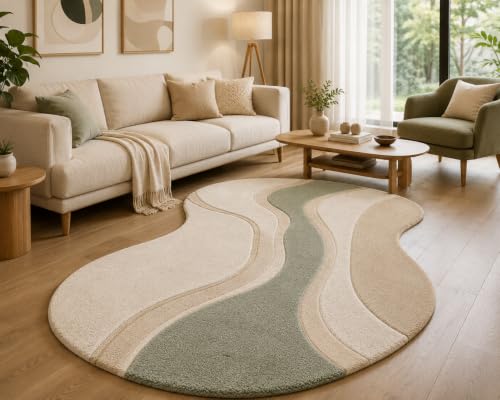

As an Amazon Associate we earn from qualifying purchases at no extra cost to you. Ratings are shown as listed on Amazon.
How to Choose a Hand-Tufted New Zealand Wool Contemporary Rug
Hand-tufted rugs are made by punching yarn through a canvas backing with a tufting gun, then applying a latex backing and often a cotton canvas cloth. Unlike hand-knotted rugs, they are faster to produce and more affordable, but pile density and finishing determine how long they look new.
1. Pile Height and Density Matter More Than Thickness Alone
- Low pile (0.375 – 0.5 inch / 10-12mm): Best for sharp contemporary patterns, easier vacuuming, better for dining areas and offices where chairs move. Feels firmer underfoot.
- Medium pile (0.5 – 0.75 inch / 13-19mm): The sweet spot for most buyers. Soft enough for living rooms and bedrooms while keeping geometric lines defined. Most premium contemporary designs sit here.
- High pile (0.75 – 1.0+ inch / 20-25mm): Plushest feel and best sound absorption, but patterns can look softer and vacuuming requires higher suction height. Better for low-traffic lounge areas.
- Density check: Look for 60+ tufts per square inch and a total rug weight of 0.6-0.9 lbs per square foot. Denser rugs shed less over time and resist matting because yarns support each other.
2. Tufting Quality and Finishing
- Backing: High-quality rugs use natural latex plus a heavy cotton backing cloth. Avoid thin synthetic latex that cracks in 3-5 years or smells strongly chemical when new.
- Carving: Many contemporary rugs use hand-carving around pattern edges to create texture. Deep carving looks dramatic but can trap dust; light contour carving is easier to maintain.
- Edge binding: Double-stitched cotton binding lasts longer than single-stitched polyester, especially on 8×10 and larger sizes that get moved during cleaning.
3. Shedding and Texture Expectations
All New Zealand wool hand-tufted rugs shed initially. Shedding is loose fibers from cutting and shearing, not the rug unraveling. Expect light fuzz for the first 8-12 weeks with weekly vacuuming. Low-shed performance comes from longer staple wool, tighter tufting, and post-production shearing to an even pile height. If a rug continues to produce handfuls of fiber after 4-6 months, it usually indicates low density or short-staple wool blends.
4. Contemporary Patterns and Color
Contemporary does not just mean gray. Current New Zealand wool collections focus on three pattern families: abstract watercolor and organic gradients, bold geometric grids and arches, and tonal minimalism with texture-on-texture. Solution-dyed wool holds color better under sunlight than yarn-dyed blends, an important factor if the rug sits near south-facing windows.
Spec Comparison: Contemporary Hand-Tufted New Zealand Wool Rugs by Type
These are representative specifications for authentic hand-tufted 100% New Zealand wool contemporary rugs from established brands such as Loloi, Jaipur Living, Safavieh, Surya, and West Elm collections. Actual models vary, but this table reflects the market in 2026.
| Type / Collection Style | Pile Height | Density (approx.) | Weight (8×10 size) | Common Sizes | Best For |
|---|---|---|---|---|---|
| Tonal Minimalist (solid with texture) | 0.50 inch / 13mm | 70-80 tufts/sq inch | 48-55 lbs | 5×7, 8×10, 9×12, 10×14 | Bedrooms, Scandinavian living rooms |
| Geometric Grid / Arch Pattern | 0.55 – 0.62 inch / 14-16mm | 65-75 tufts/sq inch | 52-60 lbs | 6×9, 8×10, 9×12 | Open-plan living, dining under table |
| Abstract Watercolor / Gradient | 0.625 – 0.75 inch / 16-19mm | 60-70 tufts/sq inch | 50-58 lbs | 5×7, 7×10, 8×10, 9×12 | Feature living room, studio apartment |
| High-Pile Carved Contemporary | 0.85 – 1.0 inch / 22-25mm | 55-65 tufts/sq inch | 58-68 lbs | 8×10, 9×12 | Lounge, low-traffic media room |
Weight is a useful proxy for quality. A true 8×10 New Zealand wool hand-tufted rug under 42 lbs is almost always low-density or blended with other fibers, and will flatten faster in traffic lanes.
Decision Matrix: Which Rug Fits Your Situation
| Your Situation | Choose This Pile / Pattern | Why |
|---|---|---|
| High-traffic living room, kids and pets | Low to medium pile (0.5 inch) geometric or tonal | Stays flat under furniture, vacuums easily, pattern hides wear |
| Bedroom or cozy reading nook | Medium to high pile (0.65-0.85 inch) abstract or carved | Maximum softness where bare feet matter, lower traffic preserves pile |
| Dining room with chairs moving daily | Low pile (0.375-0.5 inch) flat geometric | Chairs glide without catching, spills easier to blot from short pile |
| Renter or frequent mover (apartment) | 5×7 or 6×9 medium pile, cotton backing | Lighter weight to move, easier to fit in elevators and doorways |
| Allergy-sensitive household | Dense medium pile + low-VOC latex backing | Dense construction traps less dust and off-gasses less; wool naturally resists dust mites better than synthetics |
| Bright sun-facing room | Solution-dyed wool, lighter tonal palette | Fading is less visible and dye holds up better to UV |
Room-Size Suitability Guide
Scale affects how contemporary a pattern feels. A large-scale arch that looks elegant in 9×12 can overwhelm a 5×7.
- 5×7 and 6×9: Ideal for defining a seating nook, under a queen bed with 18-24 inches extending beyond the sides, or in a home office. Stick to smaller repeats or single-center motifs.
- 8×10: The most versatile for contemporary living rooms. Allows front legs of sofa and chairs on the rug with 6-10 inches of floor border showing. Keeps large geometric patterns proportional.
- 9×12 and 10×14: Best for open plans and great rooms. Required if you want an entire dining set or sectional fully on the rug. Ensure door clearance – thick rugs plus pads can block doors that swing inward.
Worked Example: Coverage and Rug Pad Calculation
For a living room that is 14 x 18 feet with a 92-inch sofa:
- An 8×10 rug (80 sq ft) leaves about 24 inches of bare floor on all sides in that room, which visually frames the seating area well.
- A 9×12 rug (108 sq ft) leaves about 18 inches of border and covers 42.8% of the floor versus 31.7% for 8×10. Choose 9×12 if you have a chaise sectional or want both coffee table and side tables fully on the rug.
- Rug pad sizing: Pad should be 1-2 inches smaller than the rug on each side to stay hidden. For an 8×10 rug, order a 7’8″ x 9’10” pad. Pad thickness of 0.25 inch (6mm) felt-rubber is ideal for wool on hardwood; 0.375 inch felt adds cushion for concrete floors but can make tufted rugs feel unstable under dining chairs.
Cleaning Needs and Rug-Pad Requirements
Cleaning: What to Do and What Damages Wool
- Vacuum weekly with suction only or with beater bar on the highest setting. Use a low-suction handheld for the first month to avoid pulling loose tufts. Vacuum in direction of pile, not against it.
- Rotate 180 degrees every 6 months to even out traffic and sunlight exposure. Wool develops traffic shading that is reversible if rotated early.
- Blot spills immediately with white cloth and cold water. Use a wool-safe detergent (pH 5.5-7) diluted, never hot water, bleach, or oxygen cleaners which strip lanolin and cause felting.
- Professional cleaning every 12-18 months for high-traffic rugs. Ask for immersion wash or low-moisture wool-certified service, not steam cleaning above 150 degrees F.
Rug Pad: Non-Negotiable for Hand-Tufted Wool
A pad extends rug life by 30-40% by absorbing foot traffic and preventing latex backing from grinding against hard floors.
- Material: Felt + natural rubber or 100% felt for radiant heat floors. Avoid pure PVC or plastic pads that off-gas and can discolor wool backing and hardwood finish.
- Grip: On hardwood or tile, rubber-backed felt prevents creep. On carpet, use felt-only pad to avoid trapping moisture.
- Thickness: 0.25 inch is standard. Thicker pads feel luxurious but make door clearance and chair stability worse for tufted construction.
Durability and Ownership Realities
New Zealand wool hand-tufted rugs typically last 7-12 years in a living room with proper care, longer in bedrooms. What wears first is predictable:
- Traffic lanes and pivot points: In front of the sofa and under desk chairs, pile compresses and lightens in color due to flattening. Dense tufting and regular rotation delay this by years.
- Backing breakdown: Latex stiffens and can crack if exposed to direct sun and heat vents, or if the rug is stored folded. Keep humidity 40-60% and store rolled, pile-in.
- Sprouting: Occasional yarn sprouts are normal. Do not pull them; clip flush with scissors. Pulling can remove an entire tuft and leave a bald spot.
- Common mistakes: Using a robot vacuum on max power daily for the first two months accelerates shedding; beating the rug aggressively; placing without a pad on polished concrete which abrades the backing; and using carpet powder deodorizers that clog wool fibers.
General market ranges in 2026 for authentic 100% New Zealand wool hand-tufted contemporary rugs are approximately $350-$700 for 5×7, $700-$1,400 for 8×10, and $1,200-$2,200 for 9×12, depending on density, carving, and brand. Blended wool or viscose-accented rugs sit lower, but shed and stain differently.
Top Picks by Situation in 2026
Best for Everyday Family Living: Dense Low-Medium Geometric
Look to Jaipur Living and Loloi contemporary geometric collections in 0.5-0.6 inch pile. These offer the sharpest lines for modern grids and arches, weigh 52+ lbs in 8×10, and use tight tufting that sheds the least after week four. They also handle vacuuming with a standard upright without fuzzing.
Best for Soft Texture and Abstract Design: Medium Plush Watercolor
Surya and Safavieh abstract collections in 0.625-0.75 inch pile provide the gradient and watercolor effects popular in 2026 contemporary interiors. The slightly higher pile adds depth to layered dyes but still allows accurate color blocks. Plan for slightly more frequent vacuuming in the first three months.
Best for Minimalist Bedrooms: Tonal Texture
West Elm and similar modern retailers offer tonal hand-tufted New Zealand wool rugs with subtle ribbed or boucle-like texture rather than bold color. At 0.5 inch pile, they give spa-like softness without competing with bedding and art, and they hide footprints better than solid cut-pile synthetics.
Best for Maximum Plushness: Carved Contemporary
Choose a high-pile carved option only if traffic is light. These rugs showcase deep carving that highlights organic curves and shadows, but the extra height means more compression in doorways and under rocking chairs. Reserve for lounge areas where you prioritize tactile comfort.
FAQ
How long does shedding last on a new hand-tufted New Zealand wool rug?
Light shedding for 8-12 weeks is normal, often filling a vacuum canister the first few times. It should taper to minimal fuzz after a month of weekly vacuuming. Persistent heavy shedding beyond 6 months usually signals low-density construction.
Do I need a special vacuum for wool rugs?
No, but adjust settings. Use the highest height for beater bars or turn off the beater and use suction only for the first month. Avoid aggressive brush rolls that can pull tufts, especially on carved areas.
Can hand-tufted wool rugs go in dining rooms?
Yes if you choose low pile (0.5 inch or less) and use a felt-rubber pad. Short pile releases crumbs more easily and chair legs do not dent it as deeply. Keep a wool-safe spot cleaner nearby and blot, never scrub.
Are New Zealand wool rugs good for pets?
Wool is naturally stain-resistant due to lanolin and bounces back from compression better than many synthetics, but pet nails can snag loops if the construction includes looped accents. Choose all cut-pile tufted styles and trim nails to reduce pulls.