Key takeaways
- Finding the right water temperature can make or break your morning brew. Pour boiling water over delicate green tea leaves and you’ll end up
What's inside
Finding the right water temperature can make or break your morning brew. Pour boiling water over delicate green tea leaves and you’ll end up with a bitter, astringent cup. Use water that’s too cool for a French press and your coffee will taste flat and under-extracted. The problem most buyers face is that a standard kettle only gives you one setting—rapid boil—which works fine for pasta or instant oatmeal but falls short for anyone serious about tea, pour-over coffee, or even baby formula.
That’s where temperature-controlled electric kettles come in. These models let you dial in precise heat settings for different beverages, hold that temperature for extended periods, and often include features like gooseneck spouts for controlled pouring, glass or stainless steel interiors to avoid plastic contact, and preset buttons that take the guesswork out of brewing. This guide covers the best electric kettles with temperature control currently available, spanning glass carafes, cool-touch designs, and pour-over specialists to help you find the right fit for your kitchen.
As an Amazon Associate we earn from qualifying purchases.




🛒 Best Price Today on Amazon
Prime members get fast, free shipping on everything above, plus member-only deals. New members get a 30-day free trial — cancel anytime.
How to Choose an Electric Kettle with Temperature Control
- Preset Range: Look for at least five temperature presets covering the spectrum from delicate white tea (around 170°F) to rolling boil (212°F). More presets aren’t always better, but having dedicated buttons for common beverages saves time and prevents guesswork.
- Interior Material: Prioritize kettles with stainless steel or borosilicate glass interiors that keep water from touching plastic. This matters for both flavor purity and long-term durability, especially if you heat water daily.
- Keep-Warm Function: A hold-temperature feature that runs for at least an hour is ideal for multi-cup sessions or slow mornings. Some models extend to four hours, which is useful but may consume more energy than necessary.
- Pour Precision: If you brew pour-over coffee, a gooseneck spout is essential for controlling flow rate. For tea and general use, a standard spout with a smooth-lifting lid is more practical and faster to fill.
- Capacity and Wattage: A 1.7-liter kettle at 1200–1500W balances speed and size for most households. Smaller 0.8-liter gooseneck models heat faster but require refilling more often if you entertain or drink multiple cups.
The Best Electric Kettles with Temperature Controls Reviewed
Chefman Electric Kettle with Temperature Control
This 1.8-liter glass kettle stands out for its included removable tea infuser, making it a solid choice for loose-leaf enthusiasts who want one device for brewing and steeping. The five preset LED indicators and 360° swivel base round out a versatile, family-friendly package.
Elite Gourmet Dual-Wall Cool-Touch Tea Kettle
The dual-wall construction keeps the exterior safe to touch even at full boil, which is a meaningful safety feature for households with children. A responsive touchscreen interface and programmed digital keep-warm function give it a premium feel at a midrange price.
Cosori Gooseneck Electric Kettle
Built for pour-over coffee drinkers, this 0.8-liter model features a precision gooseneck spout and a stainless steel interior with zero plastic contact with water. The five presets and 60-minute keep-warm cover most brewing scenarios, though the smaller capacity means more refills during back-to-back sessions.
1.7L Stainless Steel Electric Kettle (Purple)
Five preset temperatures and a dedicated 1200W boil mode handle everything from oolong to pasta water, while the 304 stainless steel interior and two-hour keep-warm round out the core functionality. The purple finish adds a splash of personality without inflating the price.
Arofeer Electric Kettle with Temperature Control
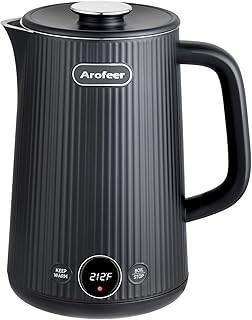
A 4-hour keep-warm setting distinguishes this 1.7-liter model, making it practical for offices or shared workspaces where people grab hot water throughout the morning. The LED display and five presets cover the essentials, and fast-boil performance lives up to its name for everyday use.
Frequently Asked Questions
What temperature should I use for green tea?
Most green teas extract best between 170°F and 180°F. Higher temperatures scorch the leaves and produce a bitter, unpleasant cup, so a kettle with a dedicated lower preset is worth having if green tea is a daily habit.
Are glass electric kettles safe?
Yes, provided they use borosilicate glass, which resists thermal shock and won’t shatter under rapid temperature changes. Look for models with stainless steel accents rather than plastic frames for better longevity and cleaner flavor.
Is a gooseneck kettle necessary?
Only for pour-over coffee. The narrow spout gives you control over flow rate and saturation, which directly affects extraction. For tea, French press, or instant drinks, a standard spout is faster and more convenient.
How does keep-warm affect energy use?
Keep-warm cycles the heating element on and off to maintain temperature, typically using far less power than a full reboil. Over four hours the draw is modest, but it’s still best to switch off the kettle when you’re finished.
Final Thoughts
For most buyers, the Chefman glass kettle offers the best all-around value thanks to its infuser, presets, and generous capacity. Pour-over specialists should lean toward the Cosori Gooseneck for its precision spout and stainless interior, while anyone prioritizing safety will appreciate the Elite Gourmet’s cool-touch dual-wall design.