Key takeaways
- Looking for budget gifts for seismologists? Compare 5 thoughtful picks, from an earthquake book to a crank radio, a rock pick and a waterproof notebook.
Seismologists spend their days listening to the ground. Some work in the field, setting out instruments on rocky slopes and logging aftershocks by hand. Others work in labs, reading wiggly lines on a screen and tracing them back to a fault that slipped hundreds of miles away. A good gift speaks to that curiosity about what happens underfoot, and it does not have to cost much to do it.
The five picks below cover the main sides of the science: the history of a great quake, a practical kit that teaches how the ground moves, a radio that keeps working when the power fails, a tool for fieldwork, and a notebook that survives rain.
As an Amazon Associate, I earn from qualifying purchases.
How to Choose
Start with how your seismologist spends their time. A field worker who hikes to remote stations needs light, tough gear that fits in a pack. A lab worker or student may get more from a book or a kit that explains the science. A preparedness-minded friend will value the radio most.
Check the limits of hobby gear before you buy it. A toy seismograph can record a footstep or a nearby tremor, but it cannot pick up a distant quake the way a professional station can. A volcano kit teaches plate tectonics and quake science, but it holds no seismograph at all. Honest gifts state what they do and what they do not do.
Comparison Table
| Gift | Best For | Key Detail |
|---|---|---|
| The Great Quake | History lovers | 1964 Alaska quake, 288 pages |
| National Geographic Ultimate Volcano Kit | Practical learners | Volcano model, 3 eruptions, rock specimens |
| Midland ER310 | Preparedness | Crank, solar, NOAA weather, flashlight |
| ESTWING Burpee Rock Pick BP500 | Fieldwork | 17-inch forged steel, pointed tip |
| Onyx and Green Storm Writer | Field notes | Waterproof stone paper, pocket size |
1. The Great Quake by Henry Fountain
This is the storytelling pick. Henry Fountain, a science journalist, tells the story of the 1964 Alaska earthquake, the largest quake ever recorded in North America, and of George Plafker, the geologist who worked out what had happened. The book follows the quake as it destroys part of Anchorage, wipes out the town of Valdez, and sends a wave across the Pacific. It also follows the science, showing how one event changed the way geologists understood plate tectonics.
It suits a seismologist who loves the history of the science as much as the science itself. The narrative is gripping without being technical, so it works for a student, a professional, or a partner who wants to understand what the job is about. The hardcover edition is a solid, giftable object that holds up on a shelf.
- Specs: Hardcover, 288 pages
- Specs: Publisher: Crown, published 2017
- Specs: Subject: 1964 Alaska earthquake and plate tectonics
- Specs: Author: Henry Fountain, science journalist
- Specs: Format: Narrative history, not a textbook
- ASIN: 1101904062
2. National Geographic Ultimate Volcano Kit
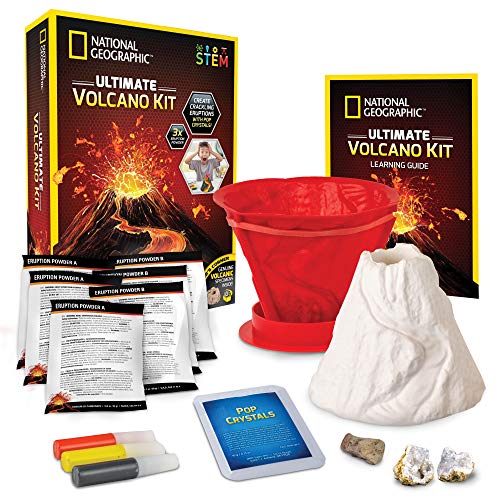
This is the practical pick. The kit lets the recipient cast a plaster volcano, paint it, and erupt it three times with the included powder, while pop crystals add a crackling sound to the eruption. Two real volcanic rock specimens, a geode and a piece of pumice, come in the box, along with a full-color learning guide that explains tectonic plates, earthquakes, volcano formation, and volcanic rocks.
It is the best choice for a younger seismologist, a student, or anyone who learns by doing. The guide connects the eruption on the table to the forces that move the ground, which is exactly the link a seismologist thinks about every day. Be honest about its limits: this kit teaches quake science, but it holds no seismograph, so it cannot record ground motion.
- Specs: Plaster volcano mold, paints, and brush included
- Specs: Eruption powder for 3 eruptions, plus pop crystals
- Specs: 2 real rock specimens: geode and pumice
- Specs: Full-color learning guide on plates, quakes, and volcanoes
- Specs: Age guidance: 8 years and up
3. Midland ER310 Emergency Crank Weather Radio

This is the practical pick. The ER310 receives AM and FM plus all seven NOAA weather channels, so it can pick up weather alerts and emergency broadcasts when the power and the cell network are down. It runs on a rechargeable 2600 mAh battery, with a hand crank, a solar panel, and AA batteries as backup. A 130-lumen flashlight, an SOS signal, and an ultrasonic dog whistle round out the kit.
For a seismologist, the point is simple: earthquakes knock out power, and the hours after a quake are when information matters most. The radio also suits anyone who lives in quake country, since the same device covers storms, floods, and fires. Know its limits before you buy. It does not decode SAME alerts, it has no shortwave band, and the solar panel is a trickle charger, not a fast one.
- Specs: AM/FM plus 7 NOAA weather channels
- Specs: Power: rechargeable battery, hand crank, solar, AA backup
- Specs: Battery: 2600 mAh, replaceable
- Specs: Flashlight: 130 lumens with SOS mode
- Specs: Extras: ultrasonic dog whistle
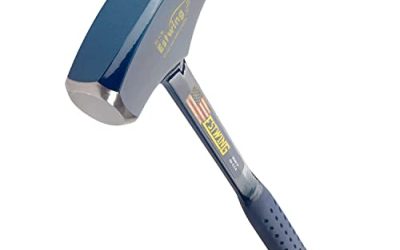
4. ESTWING Burpee Rock Pick BP500

This is the fieldwork pick. The BP500 is a 17-inch rock pick forged from a single piece of steel, with a pointed tip for splitting rock and a shock reduction grip that softens the jolt of each strike. Field seismologists and geologists use picks like this to clear loose rock around a station site, expose fresh rock faces, and collect samples that help date and understand a fault.
It is heavier than a 13-ounce pick, at about 2.3 pounds, so it suits someone who works from a vehicle or a base camp rather than someone who counts every ounce on a long hike. The pointed tip needs care: wear eye protection, keep the tip covered in transit, and never use the pick as a pry bar, since the tip can chip.
- Specs: Length: 17 inches
- Specs: Construction: one-piece forged steel
- Specs: Tip: pointed, for splitting rock
- Specs: Grip: shock reduction grip
- Specs: Weight: about 2.3 pounds
5. Onyx and Green Storm Writer Waterproof Notebook

This is the everyday field pick. The Storm Writer is a pocket notebook made with stone paper and a poly cover, so rain, mud, and sweat do not turn its pages to pulp. It measures 3 by 5 inches and holds 130 pages, which is enough for station readings, sketch maps, and quick notes taken with cold hands in bad weather.
It suits any seismologist who still writes things down in the field, which is most of them: a paper backup beats a dead phone battery at a remote station. The small size is both its strength and its limit. It slips into a jacket pocket, but it is not the book for long reports or detailed logs.
- Specs: Size: 3 x 5 inches, pocket format
- Specs: Pages: 130, stone paper
- Specs: Cover: poly, waterproof
- Specs: Use: field notes, readings, sketch maps
- Specs: Best with: pencil or ballpoint pen
Which Gift Should You Pick
For a seismologist who loves the story of the science, choose The Great Quake. It is the most personal gift on the list and the one most likely to be read cover to cover.
For a student or a younger seismologist, choose the National Geographic Ultimate Volcano Kit. It turns plate tectonics into something you can hold, and the rock specimens give it a real connection to the field.
For someone who lives in quake country or thinks about preparedness, choose the Midland ER310. It is the gift that earns its keep on the worst day, not the best one.
For a field worker, choose the ESTWING Burpee Rock Pick or the Onyx and Green Storm Writer. The pick suits heavy fieldwork from a base camp; the notebook suits anyone who takes notes outside in any weather.
FAQ
Can a hobby kit really detect earthquakes?
A toy seismograph can record nearby vibrations, such as footsteps, a slammed door, or a local tremor. It cannot detect distant quakes the way a professional station can, because real detection needs a sensitive instrument, a quiet site, and a network of stations to compare signals. Treat hobby kits as teaching tools, not as monitoring equipment.
Do seismologists actually use rock picks?
Yes, field seismologists and geologists use rock picks to clear station sites, expose fresh rock, and collect samples. The work needs eye protection, gloves, and permission to collect on the land in question. A pick is a working tool, not a souvenir, so buy it for someone who will use it in the field.
Is the Midland ER310 useful outside earthquake country?
Yes. The same radio covers NOAA weather alerts for storms, floods, hurricanes, and fires, and it works during any power outage. The crank and solar charging matter whenever the grid goes down, whatever the cause.
What should I write in a waterproof field notebook?
Station readings, times, sketch maps, instrument settings, and anything you need to read back later in the rain. Keep entries short and dated. A pencil works best on stone paper in wet conditions, since ink can smear before it dries.
Conclusion
A seismologist’s work runs from the history of great quakes to the next tremor underfoot, and the best budget gifts touch one part of that range with honesty. The Great Quake covers the history, the volcano kit covers the practical science, the Midland ER310 covers the hours after a quake, and the rock pick and waterproof notebook cover the fieldwork itself. Pick the one that matches how your seismologist spends their days.
FAQ
Can a hobby kit really detect earthquakes?
Do seismologists actually use rock picks?
Is the Midland ER310 useful outside earthquake country?
What should I write in a waterproof field notebook?
More from Amazon
Programs that pair well with the guide above. Offers and eligibility are set by Amazon and may change.
Send a Prime gift membership to someone who would use free shipping and Prime Video.
Gift Amazon PrimeGive audiobooks to someone who loves to listen. Plans and prices are set by Amazon.
Gift AudibleFree shipping on eligible items, Prime Video and more. Eligible new members can start with a free trial.
Start a Prime free trialAudiobooks and podcasts to listen to on the go. Eligible new members can start with a free trial.
Try Audible freeAs an Amazon Associate we earn from qualifying purchases.