Key takeaways
- Five budget gifts for phycologists, from a seaweed field guide and microscope to a press and waterproof notebook — practical picks for algae lovers.
Phycologists study algae, the organisms that color tide pools green and brown, build kelp forests, and feed half the ocean. It is a field that mixes muddy boots with microscope work, so a good gift can serve either half of the job. The five picks below cover both: a field guide for the shore, a microscope for the lab bench, prepared slides for learning slide technique, a press for keeping specimens, and a notebook that survives rain and spray.
As an Amazon Associate, I earn from qualifying purchases.
How to Choose
Start with where your phycologist spends their time. A shore walker needs identification help and a way to record what they find. A lab worker needs optics and slides. A student needs a starter kit that teaches technique without a steep learning curve.
Check the habitat the guide covers. Algae guides are regional: a Pacific coast guide is little help on an Atlantic shore. Match the book to the coast your recipient actually visits.
For a microscope, magnification range matters more than the highest number on the box. Algae identification usually happens between 40X and 400X; 1000X is for fine cell detail and needs oil immersion, which most beginners skip. A cordless LED light and coarse-plus-fine focus are the two features that make a student scope pleasant to use.
For a press, size is the limit. Microwave presses dry small, thin specimens fast and keep color well, but they cannot take a long kelp frond. A traditional strap press handles bigger material and takes weeks. Pick the method that fits the specimens your recipient collects.
For a notebook, look for paper that sheds water and a binding that survives a wet pack. Pencil writes best on wet-weather paper; ballpoint ink can smear when the page is soaked.
One caution before you buy collecting gear: gathering algae and seaweed needs a permit in many parks, reserves, and marine protected areas, and some species are protected. A gift that helps someone identify and record algae is always welcome; a gift that assumes they can collect anywhere is not. The FAQ below has more on this.
Comparison
| Gift | Best for | Key spec |
|---|---|---|
| Seaweeds of the Pacific Coast | Shore identification | 128 species, Alaska to Baja California |
| AmScope M150C | Lab bench microscopy | 40X-1000X, cordless LED |
| AmScope PS25 | Learning slide technique | 25 prepared slides, wooden case |
| Catcan Microwave Press | Fast specimen drying | 8 x 8 in, 4 layers |
| Rite in the Rain No. 973T | Wet-weather notes | 4.625 x 7 in, Universal pattern |
The 5 Picks
1. Seaweeds of the Pacific Coast by Jennifer Mondragon and Jeff Mondragon
A field guide is the gift a shore-going phycologist reaches for first, and this one is built for the job. It covers 128 species of marine algae commonly found along the Pacific coast from Alaska to Baja California, with the kind of plain-language keys that let a beginner separate one brown alga from another without a lab.
The book is a compact hardcover, easy to slip into a pack pocket beside a notebook. Its range is its strength and its limit: it is the right book for the Pacific coast and the wrong book for the Atlantic. If your recipient walks Gulf or Atlantic shores, look for a regional guide to that coast instead.
- Specs: Hardcover, 97 pages, covers 128 species, Alaska to Baja California, by Jennifer Mondragon and Jeff Mondragon, publisher Sea Challengers
- ASIN: 0930118294
2. AmScope M150C Student Compound Microscope

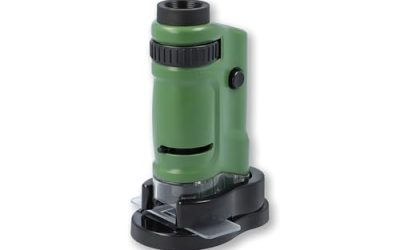
This is the microscope for a phycologist who is setting up a home bench or a student who needs their own scope. It magnifies from 40X to 1000X, with two wide-field eyepieces, three DIN achromatic objectives, and a cordless LED light that runs on batteries, so the scope works anywhere a bench is handy.
The coarse and fine focus knobs matter more than they sound: algae slides need gentle, precise focusing to bring fine filaments and cell walls into view, and a single coarse knob makes that fiddly. At 1000X the scope needs oil immersion, so most algae work will happen at 40X to 400X, where this instrument is comfortable.
- Specs: 40X-1000X magnification, WF10x and WF25x eyepieces, three DIN achromatic objectives, cordless LED illumination, coaxial coarse and fine focus, plain stage
3. AmScope PS25 Prepared Microscope Slide Set
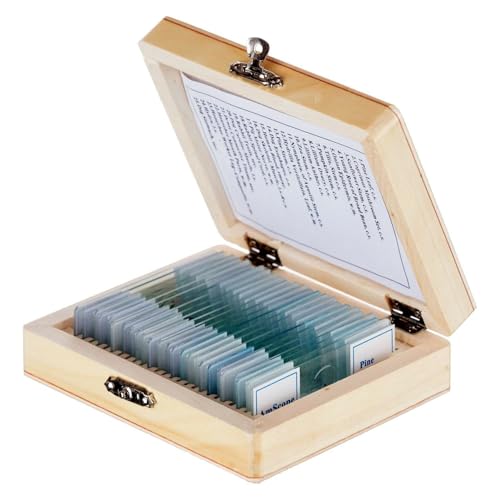
A microscope without slides is a paperweight, and this set of 25 professionally prepared slides gives a new phycologist something to look at on day one. The set covers plants, insects, and animal tissues in a fitted wooden case, and it is meant for basic biological science education.
Be honest about what this set is: it is a general biology set, not an algae-only collection. Its job in this guide is to teach slide handling, focusing, and observation before your recipient mounts their own algae samples. The wooden case keeps the glass slides safe between sessions, which matters, because a cracked slide in a drawer is a small hazard nobody needs.
- Specs: 25 prepared glass slides, plants, insects, and animal tissues, fitted wooden case, 3 x 1 in slides
4. Catcan Microwave Flower Press Kit

A seaweed press sounds like a specialist tool, and it is — but the fastest way to dry a thin alga is the same tool flower pressers use. This microwave press kit has four layers, felt pads, cotton cloths, and two plastic pressing plates in an 8 x 8 inch frame, and it dries a small specimen in minutes instead of weeks.
That speed keeps color, which is the whole point of pressing algae: a specimen that dries slowly in a strap press often fades to brown, while a quick microwave pass holds the green or red that helps identify it later. The limit is size. An 8-inch frame takes small fronds and blade pieces, not a long kelp stipe. For a phycologist who presses voucher specimens for a herbarium, this is a practical, fast tool; for someone pressing full kelp blades, a large strap press is the better gift.
- Specs: 8 x 8 in, 4 layers, 5 felt pads, 8 cotton cloths, 2 plastic pressing plates, 2 elastic bands, microwave safe
5. Rite in the Rain No. 973T Weatherproof Notebook

Field notes taken on a wet shore are useless if the paper dissolves, and this side-spiral notebook is made for exactly that problem. The tan Polydura cover resists scratches and stains, the wire-o binding holds its shape in a back pocket, and the all-weather paper sheds water so notes stay legible in rain and spray.
The notebook is 4.625 x 7 inches with 64 pages in a Universal pattern, printed in brown ink on non-glare tan paper that stays readable in bright sun. That size is a good middle ground: big enough for sketches and species lists, small enough to carry on a shore walk. One practical note: pencil writes best on this paper, and ballpoint ink can smear on a soaked page, so pair it with a pencil or an all-weather pen.
- Specs: 4.625 x 7 in, side spiral, tan Polydura cover, Universal pattern, 64 pages, 32 lb all-weather paper
Which Gift Should You Pick
For a shore walker, pick the field guide or the notebook. The guide answers “what is this alga” on the spot; the notebook records where and when it was found, which is the data that makes a sighting useful.
For a student or a home-lab beginner, pick the microscope. It is the one gift that opens the whole microscopic world of algae, and the PS25 slide set is the natural companion if you want to give two gifts.
For someone who already has a scope, pick the press or the slides. The press turns a day of collecting into a lasting voucher specimen, and the slide set teaches the handling skills that a first algae mount needs.
If you are unsure, the notebook is the safest choice. Every phycologist uses one, it fits any budget, and it never duplicates a lab instrument they may already own.
FAQ
Do phycologists need a permit to collect algae?
Often, yes. Many parks, reserves, and marine protected areas require a permit to collect any marine life, including algae, and some species are protected. Check the rules for the specific shore before collecting, and never collect in a protected area without permission. Identifying and photographing algae is welcome almost everywhere; taking specimens is not.
What magnification do you need to identify algae?
Most identification happens between 40X and 400X, which shows cell shape, filaments, and reproductive structures. The 1000X setting on a student scope is for fine cell detail and needs oil immersion, so it is used less often. A scope that reaches 400X cleanly is more useful than one that advertises a bigger number.
Can a microwave press really dry seaweed?
Yes, for small, thin specimens. A microwave press dries a small frond in minutes and holds its color better than slow air drying, which often fades algae to brown. It cannot take large kelp blades, and the specimen should be blotted dry first so the press does not steam.
What should I write in a phycology field notebook?
Record the date, location, tide, habitat, and the species or description you observed, plus a sketch of the specimen. That combination — place, time, tide, and appearance — is what turns a note into a usable record.
Conclusion
The best budget gift for a phycologist matches the half of the job they love most: the shore or the bench. A regional field guide and a waterproof notebook serve the shore walker; a microscope and a slide set serve the lab worker; a microwave press serves the collector who wants to keep what they find. Any of the five picks above is a useful, practical gift, and the notebook is the one no phycologist already has too many of.
FAQ
Do phycologists need a permit to collect algae?
What magnification do you need to identify algae?
Can a microwave press really dry seaweed?
What should I write in a phycology field notebook?
More from Amazon
Programs that pair well with the guide above. Offers and eligibility are set by Amazon and may change.
Send a Prime gift membership to someone who would use free shipping and Prime Video.
Gift Amazon PrimeGive audiobooks to someone who loves to listen. Plans and prices are set by Amazon.
Gift AudibleFree shipping on eligible items, Prime Video and more. Eligible new members can start with a free trial.
Start a Prime free trialAudiobooks and podcasts to listen to on the go. Eligible new members can start with a free trial.
Try Audible freeAs an Amazon Associate we earn from qualifying purchases.