Key takeaways
- Find budget gifts for a coleopterist with 5 beetle-lover picks, from a field guide and net to a Riker display case, loupe and resin specimens.
Beetles are the largest order of animals on Earth, with more described species than any other group. A coleopterist studies them, collects them, or simply cannot walk past a rotting log without lifting it to see what lives underneath.
As an Amazon Associate, I earn from qualifying purchases.
This guide keeps every pick affordable and practical. Each one covers a different job, from the field to the shelf, so you can match the gift to how your coleopterist actually spends their time.
How to Choose a Gift for a Coleopterist
Start with where they work. A field collector needs a net, a loupe, and a guide. A home collector needs a display case and mounting tools. A beginner needs the guide first, because identification comes before collecting.
Check permits before you celebrate a catch. Many parks, reserves, and protected areas ban collecting outright, and some beetle species are protected by law. A good gift respects that: the guide and the loupe are useful even where collecting is not allowed, and resin specimens let someone study beetles without taking anything from the wild.
Durability matters in the field. Nets get snagged on thorns, loupes get dropped on rocks, and books get rained on. Picks built from metal and glass survive longer than plastic lookalikes, and a case with a real glass top protects a collection far better than an open tray.
Comparison Table
| Gift | Best For | Key Detail |
|---|---|---|
| Beetles of Eastern North America | Identification | 1,500+ color photos, eastern North America |
| RESTCLOUD Advanced Net | Field collecting | Crushable pocket net, extends to 56 in |
| SE Glass Top Riker Display Box | Displaying a collection | 16 x 12 x 2 in, glass top, metal clips |
| Rongon 10X Pocket Loupe | Close-up identification | 28 mm optical glass lens with scale |
| Briwooody Resin Specimen Set | Study without collecting | 12 real beetles in resin, info cards included |
Products
1. Beetles of Eastern North America by Arthur V. Evans
This is the single most useful book a North American beetle lover can own. It covers the beetles of the United States and Canada east of the Mississippi River, with more than 1,500 color photographs showing live beetles in the field. The text explains families, habits, and habitats, so a reader can narrow an unknown beetle to its family before working down to species.
The guide is organized for field use. Introductory chapters explain beetle anatomy, life cycles, and collecting methods, then the species accounts walk through each family with photos of the most common and most striking members.
- Specs:
- Author: Arthur V. Evans
- Publisher: Princeton University Press
- Published: 2014
- Pages: 560
- Photos: more than 1,500 color images
- Coverage: eastern North America, east of the Mississippi River
- Format: paperback
- ASIN: 0691133042
2. RESTCLOUD Advanced Insect and Butterfly Net

A standard telescoping net is awkward to carry on a hike, which is why this crushable pocket model earns its place. The net folds down small enough to slip into a day pack, then the push-fit aluminum handle snaps together to a full 56 inches when a beetle is spotted on a flower head or a tree trunk. The muslin band around the hoop protects the netting where it meets the frame, the spot that wears out first on cheap nets.
The 56-inch reach is long enough to sweep tall grass and low branches without bending double, and the detachable handle means the net can be packed flat in luggage for a collecting trip.
- Specs:
- Brand: RESTCLOUD
- Full length: 56 in
- Handle: detachable push-fit aluminum
- Net: crushable pocket design, muslin band hoop
- Use: sweep netting in grass, shrubs, and low branches
3. SE Glass Top Riker Display Box, 16 x 12 x 2 Inches

Once beetles are pinned and dried, they need a home that keeps out dust, damp, and museum pests. This Riker mount is the classic solution: a sturdy box with a clear glass top, a polyester-filled base that pins grip, and metal clips that hold the lid shut. At 16 by 12 inches and 2 inches deep, it holds a respectable series of specimens, including larger stag beetles and longhorns that would not fit in a shallow case.
The depth is the key detail. Many display boxes are under an inch deep, which is fine for flat butterflies but too shallow for a bulky beetle pinned high on its pin. The 2-inch depth gives clearance for large bodies and for labels pinned beneath each specimen.
- Specs:
- Brand: SE
- Size: 16 x 12 x 2 in
- Top: glass
- Base: polyester filled, accepts pins
- Closure: metal clips
- Manufacturer: Sona Enterprises
- Model: JT9213
4. Rongon 10X Pocket Loupe with Scale

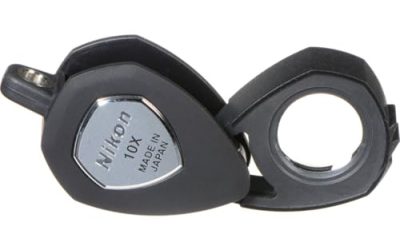
Beetle identification lives in the details: the shape of the antennae, the grooves on the wing covers, the teeth on the legs. This folding loupe magnifies 10 times through a 28 mm optical glass lens, and a printed scale in the frame lets the user measure a specimen in the field. The zinc alloy body folds shut to protect the lens in a pocket, which matters when the loupe shares space with keys and a net handle.
At 10x, it is strong enough to separate lookalike ground beetles and to read the fine sculpturing on a small rove beetle, yet the field of view is wide enough to keep the whole insect in sight. It is the tool a coleopterist reaches for dozens of times a day, and a good one lasts for years.
- Specs:
- Brand: Rongon
- Magnification: 10x
- Lens: 28 mm optical glass
- Body: zinc alloy, three-folding design
- Scale: built-in measuring scale
- Use: field identification and specimen examination
5. Briwooody 12 Pcs Insect in Resin Specimen Set (Beetle)

Not every beetle lover collects, and this set is for them. Twelve real beetles are preserved in clear resin blocks, each with an information card, and a small magnifier is included so the details can be studied up close. The blocks work as desk display pieces, teaching aids, or a way to compare species side by side without handling fragile dried specimens.
Because the insects are sealed in resin, they cannot be damaged by handling, damp, or pests, which makes the set a safe choice for a classroom, a child’s bedroom shelf, or an office desk. The beetle theme keeps the set focused: every block shows a different beetle, so the collection reads as a proper introduction to the order.
- Specs:
- Brand: Briwooody
- Contents: 12 resin specimen blocks, 1 magnifier, 12 information cards
- Theme: beetles
- Material: real insects preserved in clear resin
- Use: display, study, and teaching
Which Gift Should You Pick
Buy the book first if your coleopterist is just starting out. Identification is the foundation of the hobby, and this guide covers more species with better photos than any other single volume for eastern North America. It is also the safest gift when you are unsure about collecting rules where they live.
Choose the net for someone who spends weekends in the field. The crushable design means it actually gets carried, and a net left at home catches nothing. Pair it with the loupe for a complete field kit: the net catches the beetle, the loupe identifies it.
Pick the Riker display box for a collector whose pinned specimens are still sitting in open trays. It is the upgrade that turns a pile of specimens into a collection, and the 2-inch depth handles the large beetles that shallow cases cannot.
Give the resin specimen set when collecting is not an option, or when the recipient is a student or a teacher. It teaches beetle diversity with zero fieldwork, zero permits, and zero risk of damaging a specimen.
FAQ
Do coleopterists need a permit to collect beetles?
Often, yes. National parks, nature reserves, and many state parks prohibit collecting without a permit, and some beetle species are legally protected. Check the rules for the exact location before collecting, and remember that photographing and identifying beetles needs no permit at all.
What is the difference between a coleopterist and an entomologist?
An entomologist studies all insects. A coleopterist specializes in beetles, the order Coleoptera. The gifts overlap, but a beetle guide, a sturdy net, and a deep display case are specific to beetle work.
Why do pinned beetles need a display case with a deep base?
Beetles are pinned through the body on long pins, and large species sit high above the base. A shallow case crushes legs and antennae against the lid, while a 2-inch-deep Riker mount gives the specimen and its label room to sit safely.
Can a beginner use a 10x loupe, or is it only for experts?
A 10x loupe is the standard starting magnification. It is easy to hold steady, it shows enough detail to identify most beetles to family, and the built-in scale helps a beginner record measurements for their notes.
Conclusion
A good gift for a coleopterist matches the way they enjoy beetles. The field guide opens up identification, the net and the loupe make fieldwork productive, the Riker box protects the collection, and the resin set brings beetles to anyone who cannot collect. Pick the one that fits their habits, and you will give them something they reach for every time they go looking for beetles.
FAQ
Do coleopterists need a permit to collect beetles?
What is the difference between a coleopterist and an entomologist?
Why do pinned beetles need a display case with a deep base?
Can a beginner use a 10x loupe, or is it only for experts?
More from Amazon
Programs that pair well with the guide above. Offers and eligibility are set by Amazon and may change.
Send a Prime gift membership to someone who would use free shipping and Prime Video.
Gift Amazon PrimeGive audiobooks to someone who loves to listen. Plans and prices are set by Amazon.
Gift AudibleFree shipping on eligible items, Prime Video and more. Eligible new members can start with a free trial.
Start a Prime free trialAudiobooks and podcasts to listen to on the go. Eligible new members can start with a free trial.
Try Audible freeAs an Amazon Associate we earn from qualifying purchases.