Key takeaways
- Budget gifts for bryologists: a moss field guide, a folding hand lens, glassine specimen packets, a weatherproof notebook, and a student microscope.
Bryologists study mosses, liverworts, and hornworts, a miniature world most people walk past without noticing. A good gift for one does not need to be large or costly. It needs to fit the way they work: a hand lens in a pocket, a field guide that opens flat in damp woods, packets that keep a specimen dry and labeled, a notebook that survives rain, and a microscope for the leaf cells that settle a hard identification.
As an Amazon Associate, I earn from qualifying purchases.
How to Choose
Start with how your bryologist works. A beginner who walks trails and photographs mosses needs a field guide and a hand lens first. A collector who labels specimens needs packets and a weatherproof notebook. A bryologist who keys out difficult species at a desk needs a compound microscope, because many mosses can only be separated by their leaf cells.
Check the region the guide covers. Moss floras are regional, and a guide to the Northeast will not help someone working in the Pacific Northwest. Check the lens power: 10x is the standard field power for mosses. Check the notebook size: a pocket notebook rides along on a walk, while a larger one suits a desk.
Collecting needs a permit in many parks and reserves, and some sites ban it outright, so check the rules first and take only a small sample.
Comparison Table
| Gift | Best For | Key Detail |
|---|---|---|
| Common Mosses of the Northeast and Appalachians | Learning 200 common mosses | 391 pages, color-tabbed keys |
| Nikon 10X Triplet Loupe | Field identification | Triplet glass lens, pocket round |
| JBM Glassine Envelopes, 100-Pack | Storing labeled specimens | 4-7/8 x 3-1/4 in, translucent |
| Rite in the Rain 735-3X Notebooks, 3-Pack | Wet-weather field notes | 3 x 5 in, weatherproof paper |
| Swift SW350B Compound Microscope | Leaf-cell identification | 40X-2500X, binocular, mechanical stage |
1. Common Mosses of the Northeast and Appalachians
A field guide is the first gift for a bryologist, and this one is the friendliest entry point in print. Karl B. McKnight and co-authors cover 200 common mosses of the Northeast and the Appalachian Mountains, with a color-tabbed key system that groups similar species so a reader can narrow a moss down without a microscope. More than 600 line drawings and 400 color photographs show habitat, habit, and leaf detail side by side.
- Specs: 391 pages, paperback, Princeton Field Guides series
- Specs: 200 species with illustrated identification keys
- Specs: More than 600 line drawings and 400 color photographs
- Specs: Color-tabbed system for grouping similar species
- Specs: Covers the Northeast from Maine to Minnesota, down the Appalachians to North Carolina and Tennessee
- ASIN: 0691156964
The honest limit is geography. This guide covers the Northeast and Appalachians only, so it will not help a bryologist working in the West or the South, and it covers common species, not rare ones. Pair it with the hand lens below and your bryologist can identify many common species on the spot, with no microscope at all.
2. Nikon 10X Triplet Loupe

A hand lens is the tool a bryologist reaches for most often, and this Nikon loupe is the sharpest pocket option in the price range. The 10x triplet lens is color-corrected, so leaf edges stay crisp and true to color, with none of a single lens’s edge softening. The round case folds out to protect the glass, and the lens retracts into the body when not in use.
- Specs: 10x magnification, triplet glass lens
- Specs: Color-corrected optics, sharp true-color view
- Specs: Fold-out round case that protects the lens
- Specs: Compact pocket size, 1.65 in long retracted
- Specs: No batteries or light needed
The honest limits are the lens size and the light. The lens is only 13 mm across, so the field of view is narrow, and a bryologist must scan a shoot piece by piece. There is no built-in light, so under a dark canopy a headlamp or a phone light helps. Even so, the triplet optics give the clearest view of a moss leaf a pocket lens can offer.
3. JBM Glassine Envelopes, 100-Pack

Bryologists do not press mosses the way botanists press flowers. They fold each specimen into a small paper packet, label it with the date, place, and habitat, and file it away dry. These glassine envelopes are that packet. The translucent paper lets a collector see the moss inside without opening it, the waxed surface sheds a little damp, and the 100-pack means a season of collecting costs almost nothing per specimen.
- Specs: 100 glassine envelopes per pack
- Specs: 4-7/8 x 3-1/4 in, semi-transparent waxed paper
- Specs: Strong, tear-resistant paper for long storage
- Specs: Flat, lightweight, and easy to label with pencil
- Specs: Fits a small moss cushion or a single shoot with leaves
The honest limit is size. A number 4 envelope holds a small cushion or a single shoot, not a large mat of moss, and glassine is not waterproof, so packets need a dry bag or a sealed box on a rainy day. Labeling matters more than the envelope itself: a packet without a date and a place is a mystery, not a specimen.
4. Rite in the Rain 735-3X Notebooks, 3-Pack
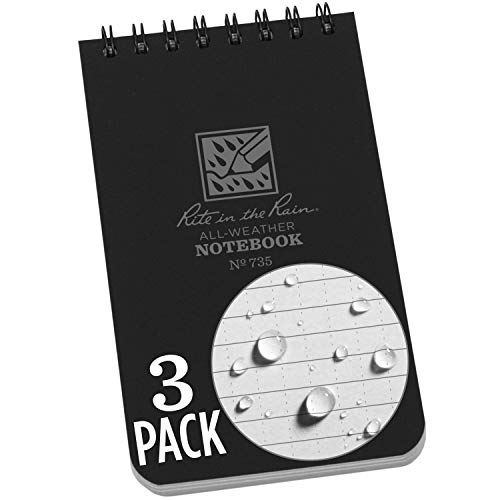
Field notes taken in the rain are worthless if the paper turns to pulp, and this three-pack of pocket notebooks solves that problem. Each 3 x 5 in book uses Rite in the Rain weatherproof paper, which sheds water and takes a pencil or an all-weather pen in any weather, and the Polydura cover defends the pages from scratches and stains. Three books in the pack means one in a pocket, one in a field bag, and one spare at home.
- Specs: 3 notebooks per pack, 3 x 5 in each
- Specs: Weatherproof paper with Universal page pattern
- Specs: Black Polydura covers, top-spiral binding
- Specs: Impact-resistant Wire-O binding that holds its shape
- Specs: Archival-grade paper that lasts in storage
The honest limit is the size. A 3 x 5 in page holds a short note, a sketch, and a few measurements, not a full species account, so a bryologist who writes long descriptions will want a larger book as well. Ballpoint ink can smear on wet weatherproof paper, so a pencil or an all-weather pen is the right writing tool.
5. Swift SW350B Compound Microscope

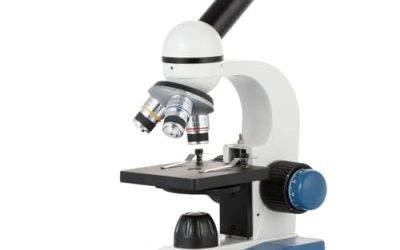
Some mosses refuse to give up their name in the field. Their leaves look alike at 10x, and only the shape of the leaf cells under a compound microscope settles it. This binocular research-grade microscope brings that power home: 40X to 2500X magnification, wide-field 10X and 25X eyepieces, an Abbe condenser, a two-layer mechanical stage, and LED illumination, under a Siedentopf head that adjusts to the user’s eyes.
- Specs: 40X-2500X magnification, binocular Siedentopf head
- Specs: Wide-field 10X and 25X eyepieces included
- Specs: Two-layer mechanical stage, precise slide movement
- Specs: Abbe condenser with LED illumination
- Specs: Research-grade compound optics, all-metal build
The honest limits are the power and the size. Magnification above about 1000X adds little for moss leaf cells, so most of the range goes unused, and the binocular head and mechanical stage make this a heavier desk instrument than a student monocular. It also ships without prepared slides or coverslips, which your bryologist will need to buy separately. For a bryologist moving past beginner tools, though, the mechanical stage and binocular viewing make long identification sessions far easier on the eyes.
Which Gift Should You Pick
For a beginner, buy the field guide and the folding loupe together. The guide teaches what to look for, and the loupe makes it visible, and the two of them together are enough to identify many common mosses without any other equipment.
For a collector, buy the glassine envelopes and the weatherproof notebooks. Specimens without packets and labels are lost work, and these two gifts keep a whole season of collecting organized and dry.
For a bryologist who already owns a guide and a lens, buy the microscope. It opens the next level: the leaf cells that separate look-alike species.
FAQ
Do bryologists need a permit to collect moss?
Often, yes. Collecting needs a permit in many parks, reserves, and protected areas, and some sites ban collecting entirely. Check the rules for the site before taking anything, take only a small sample, and leave the colony intact.
What magnification does a bryologist need in the field?
10x is the standard field power for mosses. It shows leaf shape, shoot habit, and the capsules that carry spores. A 20x lens helps with the smallest leaves, but most field identification happens at 10x, which is why the folding loupe in this guide uses that power.
How should moss specimens be stored?
Fold each specimen into a paper packet, label it with the date, place, habitat, and substrate, and store it dry. Glassine packets work well because they are translucent and tear-resistant. Keep packets in a box away from damp and insects, and never store a wet specimen in a sealed plastic bag, where it will mold.
Can a beginner identify mosses without a microscope?
Many common mosses, yes. A good field guide with illustrated keys, a 10x hand lens, and a spray bottle to wet the leaves will carry a beginner a long way. The microscope becomes necessary for difficult groups, where leaf cells are the only reliable difference between species.
Conclusion
The best budget gifts for bryologists are the tools of the work itself: a field guide that teaches, a hand lens that shows, packets that preserve, a notebook that survives the rain, and a microscope that settles the hard identifications. Each of these five picks does one job well, and together they cover a bryologist from the first walk in the woods to the last look through the eyepiece.
FAQ
Do bryologists need a permit to collect moss?
What magnification does a bryologist need in the field?
How should moss specimens be stored?
Can a beginner identify mosses without a microscope?
More from Amazon
Programs that pair well with the guide above. Offers and eligibility are set by Amazon and may change.
Send a Prime gift membership to someone who would use free shipping and Prime Video.
Gift Amazon PrimeGive audiobooks to someone who loves to listen. Plans and prices are set by Amazon.
Gift AudibleFree shipping on eligible items, Prime Video and more. Eligible new members can start with a free trial.
Start a Prime free trialAudiobooks and podcasts to listen to on the go. Eligible new members can start with a free trial.
Try Audible freeAs an Amazon Associate we earn from qualifying purchases.