Key takeaways
- Power supply: Check its make, model, age, and available PCIe connectors. A graphics card’s power recommendation is not a substitute for checking the actual PSU. Avoid improvised SATA-to-PCIe adapters for cards that require a proper GPU power lead.
- Physical clearance: Measure the available card length and expansion-slot thickness in your case. Compact prebuilt PCs may require a short, low-profile card; many gaming cards will not fit.
- Motherboard: Most cards use a PCIe x16 slot and are generally backward-compatible with older PCIe generations, though an older platform can reduce performance. Verify that the slot is present and not obstructed.
- Display outputs: Check the card’s exact HDMI and DisplayPort connectors against your monitor. Older monitors may require an adapter; make sure it supports the resolution and refresh rate you need.
- System settings: Install the appropriate graphics driver. Some Intel Arc features and performance optimizations depend on platform support such as Resizable BAR, so check compatibility if considering an Arc card for an older PC.
Best GPUs Under $100: Budget Graphics Cards
The best graphics cards GPUs for 100 dollars are usually used models such as the Radeon RX 6600 or GeForce GTX 1660 Super when you find one in working condition; for a new card, expect substantially lower gaming performance, typically from an entry-level model such as the Intel Arc A310. At this budget, check the exact card, power supply, case clearance, and return policy before buying—the model name alone doesn’t tell you whether it will fit or run reliably.
What $100 can realistically buy in 2026
Prices vary by region, condition, and local supply. The ranges below are broad shopping targets, not guaranteed current offers. A used RX 6600 near the top of the budget can be a strong 1080p choice, but it may be difficult to find under $100. Older cards are easier to find cheaply, though they often draw more power or have less VRAM. New cards in this price class are generally better suited to light games, media playback, and display output than demanding modern games.
Our top picks
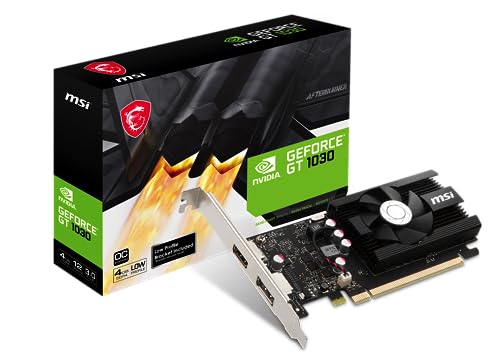
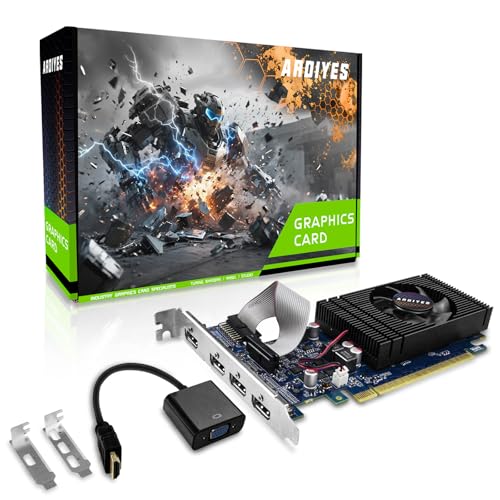

As an Amazon Associate we earn from qualifying purchases at no extra cost to you. Ratings are shown as listed on Amazon.
| Card | Typical used/new price range | VRAM | Board power | Power connector | Practical 1080p role |
|---|---|---|---|---|---|
| AMD Radeon RX 6600 | Used: about $90–$130 | 8 GB | 132 W | Usually 1 × 8-pin | Best target for modern 1080p gaming if found near budget |
| NVIDIA GeForce GTX 1660 Super | Used: about $70–$110 | 6 GB | 125 W | Usually 1 × 8-pin | Good for older games and sensible 1080p settings |
| AMD Radeon RX 580 8GB | Used: about $50–$90 | 8 GB | 185 W | Often 1 × 8-pin; some models need more | Low-cost option for older games; power and age are concerns |
| Intel Arc A310 | New: about $90–$120 | 4 GB | About 75 W | Often none; verify the specific model | Entry-level gaming, media, and display use; not a performance match for an RX 6600 |
Specifications can vary between manufacturers’ versions of the same GPU, particularly card length, thickness, cooling, connectors, and display outputs. Confirm the exact model’s specifications before purchase. Prices are approximate market ranges and can shift quickly.
Choose by your situation
| Your situation | Best direction | Why | What to check |
|---|---|---|---|
| You want the most 1080p gaming for the money | Used RX 6600, if available near $100 | Its 8 GB of VRAM and relatively modest power draw make it a more balanced modern-games option than many older cards | Working condition, 8-pin power lead, card length, and return terms |
| Your budget is firm and you mostly play older titles | Used GTX 1660 Super | Often easier to fit into a tight budget than an RX 6600, with reasonable 1080p performance in older games | Its 6 GB VRAM can limit texture settings in newer games |
| You need a new card or cannot use a PCIe power cable | Low-power new card such as a suitable Arc A310 model | New condition and low power needs can be more valuable than raw frame rates for a basic or older PC | Exact model, case height, outputs, motherboard support, and whether your CPU platform supports Resizable BAR |
| You have a weak or older power supply | Prioritize a low-power card over an RX 580 | An older high-draw GPU can turn a cheap purchase into a power-supply upgrade | Power-supply model and available connectors—not just its advertised wattage |
Used versus new: where the trade-off sits
Under $100, a used card usually delivers more gaming performance per dollar. The downside is uncertainty: fans, thermal paste, and accumulated dust age, and the seller may offer little protection if the card fails. Ask for the exact model and clear photos, confirm that the display outputs work, and use a payment method and seller with meaningful buyer protection. If possible, test a used card under load and watch for artifacts, crashes, unusual fan noise, or overheating.
A new card is less likely to have a worn cooling system and may come with a manufacturer warranty, but entry-level models can be much slower than used midrange cards. Read the warranty terms and confirm who handles claims. A low advertised price is not a bargain if the card lacks the performance, ports, or physical fit you need.
VRAM and 1080p expectations
VRAM stores textures and other graphics data. For older games and lighter competitive titles, 4 GB can be workable; newer games may require reduced texture quality or other compromises. Six gigabytes is a reasonable floor for many budget builds, while 8 GB offers more breathing room at 1080p. More VRAM does not automatically make a card faster: the GPU’s processing power matters too.
With an RX 6600, many games are suitable for 1080p at medium-to-high settings, though demanding new releases may need lower settings or upscaling. A GTX 1660 Super is better approached as a medium-settings card for modern games and a comfortable option for older ones. An RX 580 can still serve a low-cost build, but expect compromises in newer titles. The A310 is for lighter gaming; don’t buy it expecting RX 6600-class results.
Frame rates also depend on the CPU, memory, and game. A very old processor can hold back a newer GPU, especially in competitive games. Check the minimum requirements for the specific games you play, and look for benchmarks using a similar processor rather than treating any single frame-rate figure as universal.
Check power, fit, and ports before you pay
- Power supply: Check its make, model, age, and available PCIe connectors. A graphics card’s power recommendation is not a substitute for checking the actual PSU. Avoid improvised SATA-to-PCIe adapters for cards that require a proper GPU power lead.
- Physical clearance: Measure the available card length and expansion-slot thickness in your case. Compact prebuilt PCs may require a short, low-profile card; many gaming cards will not fit.
- Motherboard: Most cards use a PCIe x16 slot and are generally backward-compatible with older PCIe generations, though an older platform can reduce performance. Verify that the slot is present and not obstructed.
- Display outputs: Check the card’s exact HDMI and DisplayPort connectors against your monitor. Older monitors may require an adapter; make sure it supports the resolution and refresh rate you need.
- System settings: Install the appropriate graphics driver. Some Intel Arc features and performance optimizations depend on platform support such as Resizable BAR, so check compatibility if considering an Arc card for an older PC.
When an under-$100 GPU is the wrong upgrade
If your current PC has no compatible expansion slot, a severely underpowered or unreliable PSU, or a processor that already struggles in your games, buying a graphics card may not solve the problem. Compare the total cost of a card plus any necessary power-supply or case changes with saving for a better-matched upgrade. For office use, video playback, or games that already run well on integrated graphics, keeping the money may be the better choice.
Bottom line: For gaming, look first for a verified used RX 6600 close to $100, then consider a GTX 1660 Super if the price is lower and its 6 GB VRAM suits your games. Choose a new low-power entry-level card when warranty, lower power demand, or a simple upgrade matters more than modern-game performance.