Key takeaways
- Distance: A ball cannot correct poor contact, but a low-compression two-piece model can make reasonable contact easier to launch. Do not choose a ball solely because its packaging promises maximum distance.
- Greenside feel: Ionomer balls may release more after landing than urethane balls. For a beginner, learning landing position and green-reading usually matters more than buying maximum spin.
- Price: A cheaper durable ball often produces a lower real cost than an expensive ball that is quickly lost or cut by a wedge.
- Visibility: Yellow, orange, or matte finishes can make the ball easier to find. A ball recovered from rough is more useful than a theoretically better ball that disappears.
The best golf balls for beginners are affordable two-piece balls with low-to-mid compression, ionomer covers, and a distance-focused design—especially for golfers with slower or inconsistent swing speeds.
Our top picks


As an Amazon Associate we earn from qualifying purchases at no extra cost to you. Ratings are shown as listed on Amazon.
Best golf balls for beginners by playing situation
| Golfer or priority | Best fit | Typical compression | Construction and cover | Typical price per dozen |
|---|---|---|---|---|
| Lowest-cost practice and casual play | Wilson Duo Soft | Low, approximately 40 | Two-piece; ionomer cover | $15–$25 |
| Soft feel with useful all-around distance | Callaway Supersoft | Low, approximately 38 | Two-piece; ionomer cover | $22–$32 |
| Balanced distance and durability | Srixon Soft Feel | Low-to-mid, approximately 60 | Two-piece; ionomer cover | $22–$30 |
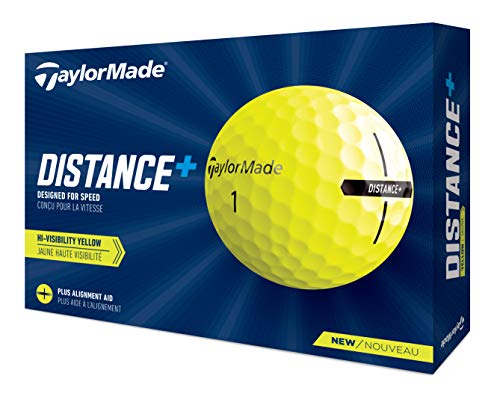
| Firmest distance-focused option | TaylorMade Distance+ | Mid, approximately 77 | Two-piece; ionomer cover | $18–$28 |
| Straighter flight and everyday durability | Bridgestone e6 | Low-to-mid, approximately 50 | Two-piece; ionomer cover | $22–$32 |
| Titleist branding without a premium tour-ball price | Titleist TruFeel | Low, approximately 40 | Two-piece; ionomer cover | $22–$30 |
Compression figures are approximate rather than perfectly standardized across manufacturers, so use them to understand relative firmness, not as laboratory-equivalent measurements. Market prices also vary by package size, color, and seasonal promotions.
What beginners should look for
Low compression helps slower swings
Compression describes how much the ball deforms when struck. A low-compression ball generally feels softer and can be easier to compress with a slower swing. That does not automatically make every shot longer, but it can help a beginner launch the ball comfortably without needing tour-level speed.
For many new golfers, a ball in the approximate 35–65 compression range is a sensible starting point. If you have a relatively fast swing or strongly dislike a soft sensation at impact, a firmer ball around 70–80 may suit you better. Swing speed matters more than age or handicap: a beginner who swings hard does not necessarily need the softest ball.
Two-piece construction is usually the right first choice
A two-piece ball has a large solid core and an outer cover. This design prioritizes distance, durability, and predictable performance. It is also less expensive than a multi-layer ball, which makes it less painful when a beginner loses one in rough or water.
Three-piece and four-piece balls can provide more spin separation and greenside control, but those benefits are most useful when a golfer consistently controls contact and wants to shape or stop shots. For a new golfer, paying for those layers can add cost without producing a noticeable advantage.
Ionomer covers survive learning better than urethane
Most beginner-friendly distance balls use an ionomer or Surlyn-style cover. It is more resistant to scuffs from cart paths, trees, wedges, and occasional thin strikes than a soft urethane cover. The trade-off is less delicate greenside spin and a firmer, less responsive feel on short shots.
Urethane balls can offer better wedge and chip control, but they are usually more expensive and easier to mark. Unless greenside performance is already a major part of your game, ionomer is the practical ownership choice.
Head-to-head: which beginner ball is the best fit?
Callaway Supersoft vs. Srixon Soft Feel
Callaway Supersoft is the softer-feeling choice, with a very low-compression design aimed at easy launch and comfortable impact. It is a good match for a slower swing, a golfer who dislikes a clicky sound, or someone who wants a familiar all-around ball at a moderate price.
Srixon Soft Feel is a slightly firmer alternative. Its added firmness can give better feedback on full shots while still remaining easier to compress than many distance balls. Choose it if Supersoft feels too mushy or if you want a little more balance between driver distance and approach-shot feedback.
Wilson Duo Soft vs. Titleist TruFeel
Wilson Duo Soft is particularly attractive for budget-conscious golfers and practice-heavy players. Its low compression and two-piece construction make it inexpensive to replace, while the ionomer cover handles ordinary beginner damage well.
Titleist TruFeel is also soft and low compression, but it appeals to golfers who prefer Titleist’s familiar alignment markings and appearance. It is not a tour-style Pro V1 substitute; it is a lower-cost distance ball intended for a different purpose.
TaylorMade Distance+ vs. Bridgestone e6
TaylorMade Distance+ is the firmer, more distance-oriented option in this comparison. It can suit a beginner with a faster swing who wants a crisp impact and low spin on long shots. It may feel less comfortable than a low-compression ball for someone with a gentle swing.
Bridgestone e6 is a useful middle ground. It is designed around easy distance and a straighter, forgiving flight, with a feel that is neither extremely soft nor especially firm. It is a strong choice when the main problem is losing shots sideways rather than carrying the ball a few extra yards.
Distance, feel, and price: what matters most?
- Distance: A ball cannot correct poor contact, but a low-compression two-piece model can make reasonable contact easier to launch. Do not choose a ball solely because its packaging promises maximum distance.
- Greenside feel: Ionomer balls may release more after landing than urethane balls. For a beginner, learning landing position and green-reading usually matters more than buying maximum spin.
- Price: A cheaper durable ball often produces a lower real cost than an expensive ball that is quickly lost or cut by a wedge.
- Visibility: Yellow, orange, or matte finishes can make the ball easier to find. A ball recovered from rough is more useful than a theoretically better ball that disappears.
A simple value calculation
Suppose a golfer loses three balls during each of 12 rounds. A $25 dozen costs about $2.08 per ball, so the season’s replacement cost is approximately 36 × $2.08, or $74.88. A $45 dozen costs $3.75 per ball, making the same loss rate $135.
The premium ball would need to deliver a meaningful scoring or enjoyment benefit to justify the extra $60. For a new golfer still learning contact and course management, buying two affordable dozens and keeping a few spare balls in the bag is often better value than buying one premium dozen.
Durability and maintenance realities
Inspect the ball before important shots. A shallow paint mark is mostly cosmetic, but a deep cut, cracked cover, or visible deformation can change flight. Replace damaged balls rather than trying to save them for a full-swing shot.
- Wash mud with lukewarm water and a towel; avoid harsh solvents that can affect the cover.
- Do not leave balls in a hot car for long periods, particularly in extreme summer temperatures.
- Use older scuffed balls for practice, short-game drills, or water-hazard holes.
- Keep one consistent model in play while learning; changing between very soft and very firm balls makes feedback less consistent.
- Mark your balls with an identification line so you do not accidentally play another golfer’s ball.
How to choose your first dozen
Start with a low-compression two-piece ionomer ball in the $20–$30-per-dozen range. Choose Callaway Supersoft, Wilson Duo Soft, or Titleist TruFeel if softness is your priority; choose Srixon Soft Feel or Bridgestone e6 for a more balanced feel; and choose TaylorMade Distance+ if you swing faster and prefer a firmer response.
Play at least several rounds with one model, then compare ordinary outcomes: how easy it is to find, whether it launches comfortably, how badly it scuffs, and whether chips stop close enough for your current skill level. The best golf balls for beginners are not necessarily the most expensive or softest—they are the ones that match your swing, survive your misses, and let you play without worrying about replacement cost.