Key takeaways
- Highest contrast markings in the group for low-light work
- Dual-sided printing with auto lock reduces reading errors
- 18-foot reach falls short for larger framing or layout tasks
Learning how to read a tape measure markings trips up more DIYers and new tradespeople than almost anyone admits out loud. The blade is covered in tick marks, numbers, and colored segments, and without a clear framework you end up guessing whether a line means a sixteenth, an eighth, or just a decorative filler. The real problem is not that the tape is wrong—it is that manufacturers print markings at wildly different densities, contrast levels, and blade lengths, so a tape that is perfectly readable for one person becomes useless in the hands of another.
What separates a genuinely helpful tape from a frustrating one comes down to three things: how boldly the fraction lines are printed, whether the tape shows the same scale on both sides, and whether the blade stiffness lets you hold it vertical with one hand while your eyes stay on the mark. The eight tapes below span heavy-duty construction blades to soft sewing measures, each solving a different slice of the markings puzzle. Prices are current at publication, and owner feedback from retail listings shaped every call here.
Our top picks



As an Amazon Associate we earn from qualifying purchases at no extra cost to you.
Quick Picks
| Product | Best For | Price |
|---|---|---|
| Perfect Measuring Tape BrightLine 18ft | Low-light clarity and high-contrast markings | under $20 |
| FastCap ProCarpenter Reverse 16ft | One-handed marking accuracy | under $10 |
| CRAFTSMAN 25-Ft with Fraction Marking | Balanced general-purpose readability | under $20 |
| DEWALT Atomic Compact 30ft | Long reach in a pocketable shell | under $20 |
| Magnetic 25ft 1/8 Fraction Tape | Absolute lowest price for fraction learning | under $10 |
| GDMINLO Soft Tape Black Retractable | Body and fabric measurements | $3.99 |
| GDMINLO Soft Tape White Double Scale | Craft and tailor work with dual units | $3.69 |
| WORKPRO 25FT Pink Easy Read | Color-coded workspace identification | under $20 |
How We Picked
We filtered this category on four criteria: marking legibility under real lighting conditions, blade length matched to the typical use case rather than an arbitrary maximum, dual-sided or reverse printing that eliminates mental gymnastics when reading backwards, and price-to-accuracy ratio for someone who is still building confidence with fraction notation. Owner reviews that specifically mention “I can finally read the numbers” or “confused me until I understood the red marks” carried extra weight because they describe the learning curve rather than just build quality.
The 8 Best How To Read A Tape Measure Markings in 2026
Perfect Measuring Tape BrightLine 18ft
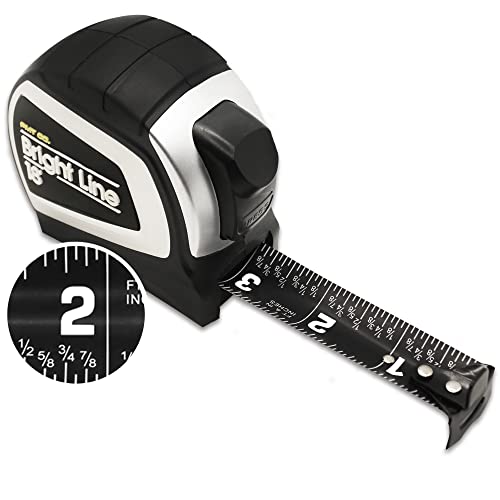
This tape exists because someone got tired of squinting at a faded blade in a dim garage. The dark mode background with bright ink creates the highest contrast we found anywhere in this list, which makes the fraction lines pop even when the light is poor. The dual-sided auto lock means the same scale reads correctly whether you pull from the front or the back. Owners consistently praise how quickly they stopped guessing between eighth and sixteenth marks. The 18-foot blade is a deliberate trade-off—shorter than most competitors—but the readability gain is substantial for anyone whose job is precision rather than long runs.
- Highest contrast markings in the group for low-light work
- Dual-sided printing with auto lock reduces reading errors
- 18-foot reach falls short for larger framing or layout tasks
Skip this if you regularly measure runs beyond 18 feet; you will tire of resetting the case constantly.
FastCap ProCarpenter Reverse 16ft
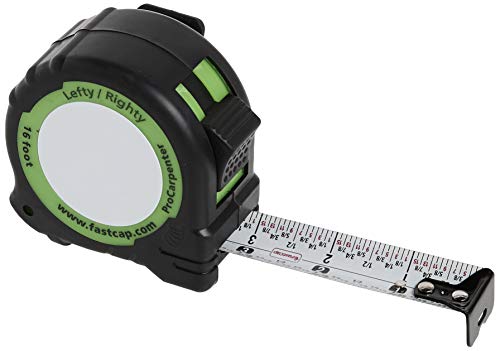
Reverse-printed tapes solve a specific confusion point in learning how to read a tape measure markings: when you hook the end over an edge and pull, the numbers on a normal blade read upside down relative to your hand position. The ProCarpenter flips the print so it reads right-side up in that exact scenario. At 16 feet the blade is short, but it is stiff enough for one-handed marking on a single sheet of plywood without sag. The under-$10 price makes this the easiest way to try reverse printing before committing to a longer model.
- Reverse scale reads correctly during hook-edge measurements
- Stiff 16-foot blade supports one-handed marking on panels
- Shorter reach limits use to smaller projects and cabinetry
Skip this if you need to measure across a room or mark long runs; the 16-foot blade forces frequent re-hooking.
CRAFTSMAN 25-Ft with Fraction Marking
A solid middle-ground option for someone who wants standard 25-foot reach without paying premium prices. The fraction markings are clear and evenly spaced, with the common one-inch, three-inch, and sixteen-inch red indices that carpenters rely on for stud layout. Manual locking keeps the mechanism simple and repairable. Owner feedback highlights that the black-on-white print is easy to photograph for project documentation, a small but real advantage when you need to reference measurements later. It will not wow you, but it removes confusion without drama.
- Standard 25-foot reach covers most residential projects
- Clear red indices at 16-inch and 19.2-inch for stud spacing
- Manual lock is less convenient than automatic or one-hand lock
Skip this if you work in dim environments often; the standard contrast is adequate but not exceptional.
DEWALT Atomic Compact 30ft
The Atomic earns its place by packing a 30-foot blade into a case barely larger than a deck of cards, which means you can actually carry it while learning to read markings on the fly rather than leaving the tool in a bag. The blade is thin but rigid enough for two-person layout work, and the fraction lines are printed with bold black ink on yellow background—the most familiar color scheme for anyone coming from construction training materials. Auto lock holds the blade without a separate thumb button. For under $20 it ties the BrightLine for the highest price in this group, but you are buying reach plus portability.
- 30-foot blade in an ultra-compact case for on-the-go reading
- Familiar yellow-and-black print reduces the learning curve for trainees
- Thin blade flexes more than wider rivals at full extension
Skip this if you mark single-handed on rough surfaces; the narrow blade can twist under pressure.
Magnetic 25ft 1/8 Fraction Tape
For under $10 this is the cheapest way to get a full 25-foot tape with clearly marked 1/8-inch fractions, making it a practical first purchase for someone who is still memorizing how to read a tape measure markings and does not want to invest much while learning. The magnetic end helps with solo measurements on metal studs or conduit. The 1/8-inch fraction step is coarse enough to read without a magnifying glass but fine enough for most carpentry. Build quality is entry-level, and the case feels lighter than competitors at double the price, but the core function—showing you where the marks fall—works well.
- Lowest price for a 25-foot blade with fraction markings
- Magnetic hook speeds up solo work on metal framing
- Case and lock feel budget-grade compared to premium models
Skip this if durability matters for daily jobsite use; owners report blade wear faster than on higher-priced tapes.
GDMINLO Soft Tape Black Retractable
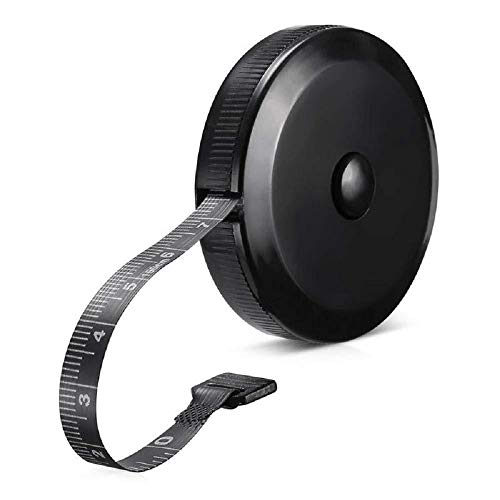
Soft tapes introduce a completely different markings challenge because the blade is flexible and numbers can appear on either face. This black retractable model uses white ink that stands out well, and the double scale means you get inches on one side and another unit on the reverse without flipping. Body measurements, knitting gauge checks, and fabric cuts all work here, but it cannot replace a rigid blade for construction tasks. At $3.99 it is nearly disposable pricing, which is appropriate given the limited lifespan of a flexible vinyl tape under heavy use.
- Double scale eliminates unit conversion during sewing or body work
- White-on-black print is high contrast even for soft tapes
- Not suitable for any rigid-surface measurement or marking
Skip this if you need to mark cut lines on lumber; the soft blade cannot hold a straight reference edge.
GDMINLO Soft Tape White Double Scale 60-inch
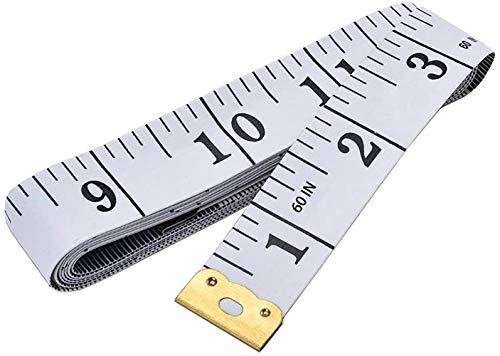
The white variant of the same GDMINLO line swaps to centimeters on the reverse side, targeting tailors and medical body-measurement users who think in metric. Sixty inches is the full extension, so this is strictly a body or craft tool. The markings are smaller than on a carpenter’s tape because the blade is narrower, which means it serves people who already know how to read a tape measure markings in inches and need to cross-reference to centimeters. It is not a beginner teaching tool; it is a convenience upgrade for someone already comfortable with both systems.
- Centimeter reverse scale bridges metric-imperial without a separate ruler
- Compact 60-inch length stores easily in a sewing kit or pocket
- Smaller markings demand good vision or magnification for quick reads
Skip this if your eyes struggle with fine print; the 60-inch format compresses all markings into a narrow band.
WORKPRO 25FT Pink Easy Read
Pink casing is not just aesthetic here; on a shared jobsite or in a classroom, color-coding means your tape does not walk away and you always have a readable blade. The 1/8-inch fraction markings are printed large with high contrast, and owners report that students and first-time DIYers pick up the scale faster on this model than on standard yellow tapes simply because they look at it more. The 25-foot length handles typical residential work. For under $20 it sits between budget and premium, offering the same fraction readability as more expensive options.
- Bold easy-read fractions accelerate the learning process for new users
- Pink case makes the tool identifiable in shared or classroom settings
- Premium pricing is not justified by any mechanical advantage over cheaper rivals
Skip this if you already have a high-contrast yellow tape and do not need color identification; the BrightLine or Magnetic model offer similar readability at lower cost.
Buying Guide
Fraction Density and Print Contrast
The single biggest factor in learning how to read a tape measure markings is whether you can physically distinguish between an eighth-inch line and a sixteenth-inch line at arm’s length. Look for tapes that use at least two line weights—one for whole inches and a heavier stroke for half-inches—so your brain can segment the scale visually. High contrast (dark ink on light background or vice versa) matters more than blade length for beginners because you will spend more time staring at the first three feet of the tape than extending it.
Blade Length vs. Stiffness Trade-Off
A longer blade means more measurements without resetting, but long thin blades flex, which makes the markings appear to shift and confuses a new reader. For learning purposes, a 16 to 25-foot blade that is wide enough to stand rigid for at least eight feet is more useful than a 30-foot blade that sags at 20. The DEWALT Atomic gets away with its length through material science; cheaper long blades will not.
Dual-Sided and Reverse Printing
When you hook the tape end over a corner and pull toward you, a standard single-sided tape shows the numbers inverted relative to your reading position. Reverse or dual-sided printing eliminates that extra mental step. This is one of the most underrated features for anyone still building fluency with markings, and at the price difference between the FastCap and the CRAFTSMAN, trying reverse printing costs less than a lunch.
Our Verdict
The top pick is the Perfect Measuring Tape BrightLine 18ft. Its dark mode contrast makes it the fastest way to build reading confidence, and the dual-sided auto lock removes the orientation confusion that trips up beginners. For a budget pick, the Magnetic 25ft 1/8 Fraction Tape for under $10 delivers a full-length blade with legible markings for the price of a coffee. However, if your primary task is hook-edge marking on cabinetry or trim, the FastCap ProCarpenter Reverse for under $10 wins outright because its reverse scale eliminates the number-flipping step that every other tape here leaves to you.
FAQ
What do the red marks on a tape measure mean?
Red numbers typically indicate every 16 inches and every 19.2 inches, which are standard stud and truss spacing intervals in residential framing. These landmarks let you measure stud centers without counting small tick marks each time, so learning to recognize them early saves significant layout time on walls.
Why does my tape measure show different numbers on each side?
Some blades print the full inch scale on one face and a secondary scale—often centimeters or a mirrored inch read—on the reverse. Dual-sided inch prints, like the BrightLine, repeat the same inch markings on both faces so you never have to mentally reverse the number sequence. If the two sides differ, you are looking at a unit-conversion tape designed for international users.
How do I read fractions on a tape measure quickly?
Start by identifying the longest line, which marks a full inch, then the second-longest for half-inches, then quarter, eighth, and sixteenth in descending stroke length. Most beginners learn to count eighths by sight within a week of daily use because the eighth lines are the most common cut fraction. Focus on distinguishing eighths from sixteenths first; the smaller marks only matter for precision joinery.
Is a soft tape or a rigid blade better for learning markings?
A rigid blade is always better for learning because it holds steady, the markings stay fixed relative to your line of sight, and you can hook the end on a board edge to practice without someone holding the other side. Soft tapes are for body and fabric work where a rigid blade cannot conform to curves, so keep them in a separate use category entirely.