Key takeaways
- 40-strain blend covers the widest microbial diversity here
- 240 capsules deliver exceptional price-per-day value
- CFU count this high may cause initial digestive adjustment for sensitive users
Digestive discomfort, post-antibiotic recovery, and the vague desire to “support gut health” push thousands of shoppers toward probiotic capsules each year. The problem is that the category rewards marketing over substance: CFU counts are printed in billion-sized fonts, strain lists run to absurd lengths, and the actual difference between a $7 tablet and a $31 capsule can be hard to parse from the label alone. An educated buyer needs to weigh viable CFU at time of manufacture against strain relevance, dosage convenience, and price-per-day rather than being dazzled by the largest number on the bottle.
What separates a worthwhile probiotic capsule from a mediocre one in 2026 comes down to a few concrete factors: whether the manufacturer commits to potency through the end of shelf life or only at production, whether the strain profile targets the symptoms you actually experience, and whether the serving size and capsule count make daily use realistic without a second refill order. This roundup compares published specs, listed prices, and aggregate owner feedback to help you narrow the field without wasting money on a bottle you will not finish.
Our top picks



As an Amazon Associate we earn from qualifying purchases at no extra cost to you.
Quick Picks
| Product | Best for | Price |
|---|---|---|
| NatureBell Probiotics 200 Billion CFU | Maximum strain diversity | under $30 |
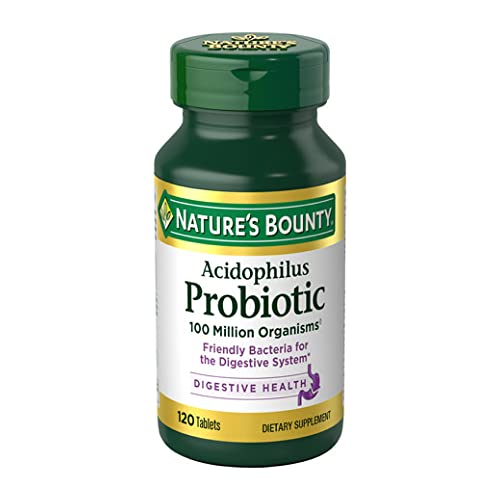
| Nature’s Bounty Acidophilus Tablets | First-time users on a budget | under $10 |
| Physician’s CHOICE Probiotics 60 Billion CFU | Bloating, gas, and irregularity | under $30 |
| Culturelle Pro Strength | Trusted single-strain reliability | under $40 |
| NOW Probiotic-10 25 Billion | Vegans and multi-strain balance | under $30 |
| Nature’s Bounty Acidophilus Daily | Straightforward daily maintenance | under $20 |
| Nature’s Bounty Ultra Strength 10 | Moderate CFU with strain variety | under $30 |
| Amazon Basics Probiotic 5 Billion CFU | Lowest cost per capsule | under $10 |
How We Picked
We evaluated each product on four criteria drawn from what matters most in this category: CFU potency with manufacturer commitment to shelf-life viability, strain count and relevance to common complaints like bloating or irregularity, serving convenience (capsules per day versus single-serve bottles), and price per day of use. A product that wins on one axis but fails badly on another did not make the cut for a “best for” designation, because the best probiotic capsule is the one you will actually take consistently.
The 8 Best Probiotic Capsules in 2026
NatureBell Probiotics 200 Billion CFU
This is the most aggressive label on the list: 200 billion CFU per serving across 40 strains in a 240-capsule bottle. Owners seeking broad microbial coverage gravitate toward it, and the capsule count translates to roughly four months of daily use at a single serving. The price of under $30 works out to an extremely competitive daily cost.
- 40-strain blend covers the widest microbial diversity here
- 240 capsules deliver exceptional price-per-day value
- CFU count this high may cause initial digestive adjustment for sensitive users
Skip it if you want a gentle introduction to probiotics or prefer a recognizable name brand with published clinical references.
Nature’s Bounty Acidophilus Tablets
For under $10, this is the cheapest entry point in the roundup and the only tablet format among the eight products. Nature’s Bounty carries mainstream recognition, and acidophilus remains the most studied single strain for basic digestive support. Owners who want to try probiotics without committing to a specialty purchase frequently start here.
- Lowest price makes experimentation risk-free
- Trusted heritage brand with wide retail availability
- Tablet format may dissolve slower than capsules and lacks stated CFU count
Skip it if you need multi-strain coverage or prefer the faster disintegration of a veggie capsule.
Physician’s CHOICE Probiotics 60 Billion CFU
This 30-capsule bottle pairs 10 strains with organic prebiotics and explicitly targets occasional constipation, diarrhea, gas, and bloating in both men and women. The 60 billion CFU is substantial without reaching the numbers that can trigger uncomfortable adjustment periods. Owners with IBS-like symptoms frequently cite it in reviews.
- Prebiotics included in the same capsule for synbiotic convenience
- Strain selection targets gas and bloating specifically
- Only 30 capsules per bottle means a one-month supply at most
Skip it if you want a multi-month supply or prefer a higher strain count for general diversity.
Culturelle Pro Strength
Culturelle built its reputation on a single well-researched strain, LGG, and this Pro Strength version delivers 12 billion CFU across 60 capsules. Owners who value clinical backing over label theatrics tend to stick with Culturelle for years. The under-$40 price is the highest here, but the brand’s published research on its flagship strain is hard to ignore.
- Backed by decades of published studies on LGG specifically
- Simple dosing with minimal strain-confusion for skeptical buyers
- Highest price on the list and lower CFU than several competitors
Skip it if you prefer multi-strain formulas or need to keep monthly supplement costs low.
NOW Probiotic-10 25 Billion
NOW’s 100-veggie-capsule bottle provides 25 billion CFU across 10 strains and a two-month-plus supply at one capsule daily. The vegan capsule and NOW’s broad catalog presence make it a reliable middle-ground pick. Owners frequently mention its balanced profile for everyday digestive maintenance without adjustment discomfort.
- 100 capsules offer long supply at a moderate price
- Veggie capsule format suits vegan and vegetarian buyers
- 25 billion CFU is solid but not standout compared to higher-potency options
Skip it if you have specific symptom targeting like severe bloating that benefits from prebiotic inclusion.
Nature’s Bounty Acidophilus Daily Probiotic
This capsule format from Nature’s Bounty sits between their tablet product and the Ultra Strength line, aimed squarely at buyers who want a no-frills daily supplement. For under $20 it costs roughly double the tablet version but delivers the convenience of a capsule with the same acidophilus focus. Owners transitioning from the tablets appreciate the easier swallow.
- Affordable step up in format from the tablet version
- Single-strain focus keeps the formula simple and predictable
- Lacks multi-strain diversity and stated CFU potency compared to others
Skip it if you already know you need multiple strains or higher CFU counts.
Nature’s Bounty Ultra Strength Probiotic 10
The “10” in the name signals 10 strains, and this 70-capsule bottle positions itself as Nature’s Bounty’s more serious offering. For under $30 it is the priciest Nature’s Bounty product here, bridging the gap between single-strain simplicity and the broad-spectrum approach of higher-strain-count competitors.
- 10 strains provide multi-microbial coverage in a trusted brand framework
- 70 capsules cover a reasonable daily cycle
- Price is close to Culturelle but without comparable published clinical backing
Skip it if the per-capsule cost outweighs your confidence in the strain selection versus NOW or Physician’s CHOICE.
Amazon Basics Probiotic 5 Billion CFU
Amazon’s house-brand probiotic offers 8 strains plus a 60 mg prebiotic blend in 60 vegetarian capsules marketed as a two-month supply. For under $10 it delivers the lowest per-capsule cost among capsule-format products. The prebiotic inclusion mirrors Physician’s CHOICE’s synbiotic logic at a fraction of the price.
- Prebiotic blend supports bacterial colonization in the same dose
- Two-month supply for under $9 is hard to beat on value
- 5 billion CFU is the lowest potency listed here
Skip it if you have stubborn digestive issues that demand higher CFU counts or you simply do not trust house-brand formulations.
Buying Guide
CFU Potency and Shelf-Life Commitment
A label claiming 200 billion CFU means little if the manufacturer guarantees that number only at time of production rather than at the end of shelf life. Look for wording like “through expiration” or “at time of consumption.” Products that omit this detail carry a higher risk of degraded potency by the time you finish the bottle, especially those sold at room temperature.
Strain Relevance Versus Strain Count
Forty strains sound impressive, but if none of them are the specific species associated with your symptoms, diversity is just noise. LGG and acidophilus have the most published research for general digestive comfort. Targeted blends listing lactobacillus and bifidobacterium sub-strains linked to bloating or irregularity often outperform shotgun approaches at a lower CFU count.
Price Per Day and Supply Duration
Divide the bottle price by the number of days the supply lasts at recommended dosing. NatureBell for under $30 for 240 capsules and Amazon Basics for under $10 for 60 capsules both land under fifteen cents per day. Physician’s CHOICE for under $30 for a 30-day supply is nearly four times that daily cost. A probiotic you stop taking because the next bottle feels expensive is not a probiotic that works.
Our Verdict
Top pick: NOW Probiotic-10 25 Billion wins as the best overall balance of potency, strain diversity, capsule supply, vegan format, and reasonable price. It avoids the adjustment risk of ultra-high CFU while delivering more than enough diversity for general digestive support.
Budget pick: Amazon Basics Probiotic 5 Billion CFU earns the value designation on the strength of its prebiotic blend, two-month supply, and sub-nine-dollar price point.
Condition where another product wins: If your primary complaint is gas and bloating rather than general maintenance, Physician’s CHOICE Probiotics with its targeted 10-strain plus prebiotic formula is the better choice despite the shorter supply cycle.
FAQ
Do probiotic capsules need refrigeration?
Not necessarily. Many modern strains are freeze-dried or encapsulated in delayed-release capsules designed for shelf stability. Check the label for storage instructions; products marketed with high CFU counts at expiration are often formulated to survive room temperature. Physician’s CHOICE and NOW are examples of shelf-stable options in this roundup.
How long before I notice results?
Owner feedback across these products typically suggests two to four weeks of consistent daily use before meaningful changes in regularity or bloating. Some people notice differences within a few days, especially when addressing post-antibiotic imbalance, but treating the first week as a trial rather than a verdict tends to set realistic expectations.
Are higher CFU counts always better?
No. A 200 billion CFU dose does not produce proportionally better outcomes than 25 billion for a person with mild occasional discomfort. Excessively high counts can trigger gas and temporary bloating during adjustment, which may discourage continued use. Match potency to symptom severity rather than defaulting to the largest number.
Can I take probiotics with prebiotics in the same capsule?
Yes, and several products in this roundup do exactly that. Physician’s CHOICE includes organic prebiotics, and Amazon Basics adds a 60 mg prebiotic blend. Taking both together in one dose ensures the prebiotic fiber reaches the colon alongside the live bacteria, which supports colonization more efficiently than staggered dosing.