Key takeaways
- A KitchenAid stand mixer is one of those rare kitchen tools that can outlast the kitchen itself, but the sticker price stops a lot of home bakers
What's inside
- Watch: How to Find the Best Deals on KitchenAid Stand Mixers — Video Review
- Understand the Model Tiers First
- Know the Best Times to Buy
- Spot a Real Discount vs. a Fake One
- Consider Color and Bundle Value
- Refurbished and Open-Box Options
- Tips
- Frequently Asked Questions
- Conclusion
- Related Articles
- Related Guides
A KitchenAid stand mixer is one of those rare kitchen tools that can outlast the kitchen itself, but the sticker price stops a lot of home bakers before they ever get to the checkout. A brand-new Artisan tilt-head routinely lists between $380 and $450 at full retail, which is a real hurdle when you only planned to bake the occasional batch of cookies. The good news for 2026 is that these mixers go on sale more often than most people realize, and knowing when and where to look can shave $100 or more off the price.
- Watch: How to Find the Best Deals on KitchenAid Stand Mixers — Video Review
- Understand the Model Tiers First
- Know the Best Times to Buy
- Spot a Real Discount vs. a Fake One
- Consider Color and Bundle Value
- Refurbished and Open-Box Options
- Tips
- Frequently Asked Questions
- Conclusion
- Related Articles
- Related Guides
This guide walks through how KitchenAid pricing actually works, which models tend to discount the hardest, and the timing tricks that separate a genuine deal from a fake “was/now” markdown. Whether you are eyeing the compact Classic Series or a heavy-duty bowl-lift, the same rules apply.
As an Amazon Associate we earn from qualifying purchases.





⚡ Save on Your Next PC — Amazon Prime
Prime members get fast free shipping on the systems above, plus early access to Prime Day & Black Friday PC deals. New members get a 30-day free trial.
Watch: How to Find the Best Deals on KitchenAid Stand Mixers — Video Review
Understand the Model Tiers First
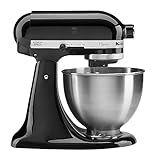
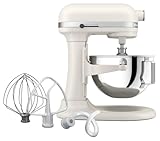
KitchenAid sells three broad tiers, and the discount patterns differ for each. The Classic Series 4.5 Quart Tilt-Head (K45SS), sold in colors like White and Onyx Black, is the entry point and the easiest to find under $250. The Artisan 5-Qt Tilt-Head (KSM150PS), offered in shades such as Almond Cream, Milkshake, and Pistachio, is the mid-tier and the one most retailers put on doorbuster sales. The bowl-lift machines, including the 5.5-Qt KSM55 and the 7 Quart KSM70SKXX, are the pro-grade tier and discount less frequently but more dramatically when they do.
Know the Best Times to Buy
Timing is the single biggest lever on price. The deepest KitchenAid discounts cluster around a handful of predictable windows, and buying outside those windows almost always means paying more than you need to.
- Black Friday and Cyber Monday: Historically the lowest prices of the year, with Artisan models occasionally dipping under $280.
- Amazon Prime Day (July and the October event): Color-specific flash deals, often on less popular shades like Pistachio or Milkshake.
- Mother’s Day and the winter holidays: Retailers position mixers as gifts and bundle in extra attachments.
- Post-holiday clearance in January: Discontinued colors get liquidated to make room for new-season hues.
Spot a Real Discount vs. a Fake One
Not every crossed-out price is a bargain. Use a price-history tracker to see whether the “sale” number is actually the lowest it has been in the last 90 days. A KSM150PS that “drops” to $349 is barely a deal if it sat at $329 for months. Look for the current price to beat the recent average by at least 15 to 20 percent before you call it a win.
Consider Color and Bundle Value
Popular neutrals such as White and Onyx Black hold their price because demand stays high. Seasonal or limited colors like Almond Cream and Pistachio are where you find the steepest markdowns, since retailers want to clear them. If a bundle throws in a pouring shield, extra bowl, or flex-edge beater, calculate the value of those accessories separately, roughly $40 to $70, before deciding whether the bundle beats a bare-mixer sale.
Refurbished and Open-Box Options
KitchenAid-certified refurbished units carry the same one-year warranty as new and typically cost 20 to 30 percent less. For a machine built around an all-metal gearbox, a factory refurb is a low-risk way into a higher tier, for example landing a 7 Quart KSM70SKXX for close to Artisan money.
Tips
- Set a price-drop alert on two or three target colors rather than watching a single model.
- Stack a store coupon or cashback portal on top of a sale price when the retailer allows it.
- Buy the mixer you will actually grow into; a 5-quart bowl handles most home recipes without straining.
- Check the attachment ecosystem, all tilt-head and bowl-lift models share the same power hub, so accessories carry over.
Frequently Asked Questions
Is the Classic Series worth it over the Artisan?
Yes, if you bake in modest batches. The K45SS Classic has a 4.5-quart bowl and a slightly lower-wattage motor, but for cookies, single loaves, and frostings it performs almost identically to the Artisan while costing $100 or more less.
Do bowl-lift mixers really need to cost more?
They use a sturdier frame and a screw-lift mechanism designed for dense doughs like bagel and pizza. If you rarely make stiff bread doughs, the extra spend on a KSM55 or KSM70 is optional rather than necessary.
How much should I expect to save on a good deal?
A strong sale takes 15 to 25 percent off. On an Artisan that means roughly $70 to $110, and on a bowl-lift model it can exceed $150 during peak events.
Are the discontinued colors lower quality?
No. The motor, gearbox, and bowl are identical across colors. A “retired” shade like Milkshake simply means KitchenAid rotated its palette, and those units are often the best-value buys of the year.
Conclusion
Finding a great deal on a KitchenAid stand mixer in 2026 comes down to patience and pattern recognition: pick your tier, target a less-popular color, wait for one of the known sale windows, and verify the discount against real price history. Do that, and a machine engineered to last decades can land in your kitchen for hundreds less than the number on the shelf tag.