Key takeaways
- The best indoor hydroponic gardens in 2026 are the AeroGarden Harvest Elite for most beginners, the Click & Grow Smart Garden 9 for the quietest low-maintenance setup, and the Gardyn Home 4 for households that want the highest growing capacity.…
The best indoor hydroponic gardens in 2026 are the AeroGarden Harvest Elite for most beginners, the Click & Grow Smart Garden 9 for the quietest low-maintenance setup, and the Gardyn Home 4 for households that want the highest growing capacity. The right choice depends less on headline plant count than on light clearance, reservoir size, refill frequency, pump noise, app features, and the long-term cost of pods and parts.
Our top picks


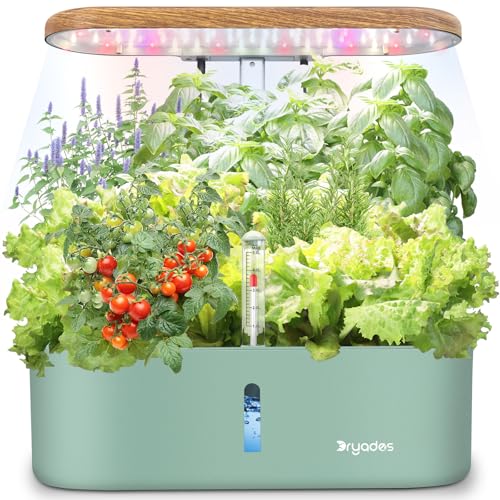
As an Amazon Associate we earn from qualifying purchases at no extra cost to you. Ratings are shown as listed on Amazon.
Best indoor hydroponic gardens at a glance
| System | Plant capacity | Light height | Water capacity | Pump noise | Best for |
|---|---|---|---|---|---|
| AeroGarden Harvest Elite | 6 pods | Up to about 12 in. | About 2.6 L | Low, but audible during circulation | First-time growers and small kitchens |
| AeroGarden Bounty Basic or Elite | 9 pods | Up to about 24 in. | About 4.1 L | Low to moderate | More herbs and taller plants |
| Click & Grow Smart Garden 3 | 3 pods | About 11.5 in. of growing clearance | About 1.2 L | No conventional pump | Quiet offices and very small spaces |
| Click & Grow Smart Garden 9 | 9 pods | About 19.7 in. of growing clearance | About 4 L | No conventional pump | Quiet, low-effort growing |
| Gardyn Home 4.0 | Up to 30 plants with plant sites | Vertical tower format | Large reservoir; refill interval varies by growth and climate | Low, with periodic water circulation | Maximum harvest from floor space |
Capacities and refill intervals vary with temperature, plant size, humidity, and how many plants are actively growing. Treat the figures above as buying benchmarks rather than guarantees.
Head-to-head: which garden fits your growing situation?
Best for most beginners: AeroGarden Harvest Elite
The six-pod Harvest Elite is a practical middle ground. Its compact footprint fits on a counter, the adjustable LED hood handles common herbs, and the circulation pump helps deliver water and nutrients without requiring soil. The display provides reminders for water and plant food, while selected AeroGarden models connect to an app for schedules and alerts.
The limitation is light height. Approximately 12 inches is enough for basil, parsley, dill, chives, and leafy greens, but vigorous basil or mature mint can reach the hood quickly. Plan to prune frequently or choose shorter varieties. The roughly 2.6-liter reservoir often means checking water about once or twice a week once plants become established.
Typical system pricing is roughly $80–$150, with seed-pod kits commonly costing about $15–$30 depending on the variety and quantity. It is the easiest recommendation when you want a conventional pump, simple controls, and a modest upfront cost.
Best for a larger herb harvest: AeroGarden Bounty
The Bounty range is the stronger choice if you regularly cook with fresh herbs. Nine planting sites provide more room than the Harvest, and the approximately 24-inch adjustable light gives tall basil, parsley, and leafy greens substantially more headroom. Its approximately 4.1-liter reservoir also reduces refill frequency compared with smaller countertop units.
Expect more pruning and more frequent nutrient checks because nine plants can consume water quickly. The wider footprint also matters: measure the counter and leave clearance above the raised light. Bounty models generally cost about $150–$250, while replacement pod kits and compatible grow sponges add recurring expense.
Quietest simple option: Click & Grow Smart Garden 3
Click & Grow uses passive capillary watering rather than a conventional recirculating pump. That makes the Smart Garden 3 especially appealing for a bedroom, study, or open-plan living area where periodic pump noise would be distracting. It has three plant sites, automatic LED lighting, and a small reservoir that keeps the unit compact.
The trade-off is capacity. Three pods are enough for a personal supply of basil, thyme, or salad greens, but not a broad herb collection. The system usually needs more frequent topping up than a larger reservoir, particularly in dry rooms. Because the light clearance is only around 11.5 inches, choose compact crops and prune early.
The Smart Garden 3 commonly falls in the $60–$100 range. Click & Grow plant capsules are convenient but can cost more per plant than buying loose seed and reusable growing media. This is the better pick when quiet operation and simplicity outweigh maximum value.
Best quiet larger countertop garden: Click & Grow Smart Garden 9
The Smart Garden 9 keeps the passive-watering approach but expands capacity to nine pods. It is a useful compromise for people who want several herbs without a pump sound. The larger reservoir, approximately 4 liters, usually means fewer top-ups than the Smart Garden 3, although nine mature plants can still empty it quickly.
Its approximately 19.7 inches of growing clearance suits many herbs and greens, but very tall plants still require pruning. App controls are limited compared with connected hydroponic systems: the main automation is the light schedule, not remote pump management or detailed crop monitoring. Budget about $150–$250 for the unit and account for capsule costs over time.
Best for maximum capacity: Gardyn Home 4.0
The Gardyn Home 4.0 uses a vertical tower and camera-connected growing system rather than a small countertop reservoir. Its plant-site capacity can reach approximately 30 plants, making it the strongest option for a household that wants a substantial supply of greens and herbs while preserving floor space.
The app is a central part of the ownership experience, offering plant guidance, monitoring features, and reminders. That is useful if you travel or want more automation, but it also creates more dependence on software and a stable Wi-Fi connection than a timer-based countertop garden.
A tower system costs considerably more—often roughly $700–$1,000 before optional service plans and replacement plants. It also has more components to maintain: pumps, tubing, lighting, cameras, reservoir fittings, and many plant sites. Choose it for capacity and automation, not for the lowest cost per herb.
Decision matrix
| Your priority | Best match | Why | What to accept |
|---|---|---|---|
| Under about $100 | Click & Grow Smart Garden 3 | Small initial footprint and simple operation | Only three plants and higher capsule cost per plant |
| New to hydroponics | AeroGarden Harvest Elite | Water and nutrient reminders plus a familiar pump system | Limited light height for tall herbs |
| Frequent cooking with herbs | AeroGarden Bounty | Nine pods, larger tank, and taller light | More pruning, cleaning, and counter space |
| Noise-sensitive room | Click & Grow Smart Garden 3 or 9 | No conventional water pump | Less active control over nutrient circulation |
| Travel or irregular schedule | Gardyn Home 4.0 | Larger system, app support, and monitoring features | High purchase price and more replacement parts |
| Very limited floor space | Countertop six- or nine-pod model | Uses vertical light clearance rather than floor area | Measure overhead clearance before buying |
Ownership costs: the pod price is only part of the calculation
A countertop system may look inexpensive until consumables are included. For example, suppose a six-pod refill pack costs $24 and produces six usable plants. That is $4 per planted site before nutrients, electricity, and replacements. If two plants fail and only four reach harvest, the effective pod cost becomes $6 per successful plant. Reusable baskets and bulk seed can lower this cost, but they require more cleaning and careful germination.
Replacement LED panels, pumps, power adapters, grow baskets, sponges, and reservoir lids can cost from roughly $10 to $60 depending on the component and model. Check replacement availability before buying, particularly for older systems. A proprietary capsule ecosystem is convenient, but it can make long-term ownership more expensive than a system that accepts standard seeds and media.
Setup and maintenance that prevent common failures
- Start with fewer plants than the maximum. Crowding increases humidity, blocks light, and makes pruning difficult. For a nine-site unit, beginning with six herbs can produce a more manageable canopy.
- Keep the light close to the leaves. Raise it only as plants grow. A light that stays too high produces thin, leaning stems; one that stays too low can scorch tender leaves.
- Check water before the reminder appears. Small tanks can fall quickly once roots and leaves mature. Never let a pump run dry.
- Prune above a leaf pair. Regular harvesting encourages branching in basil and many similar herbs. Remove dead leaves before they enter the reservoir.
- Clean between crops. Empty the tank, wash removable parts, and remove slimy root debris. Mineral buildup around the pump and water-level sensor can cause inaccurate readings.
- Keep compatible plants together. Basil and parsley can share a system, while aggressive mint is best isolated because it can dominate the available space.
Final recommendation
Choose the AeroGarden Harvest Elite if you want the best balance of price, capacity, reminders, and beginner-friendly controls. Select the AeroGarden Bounty for a larger herb harvest and more light height. Pick the Click & Grow Smart Garden 3 or 9 when pump noise and simplicity matter most. If you want a serious indoor growing installation and accept higher purchase and replacement costs, the Gardyn Home 4.0 provides the greatest capacity per floor footprint.