Key takeaways
- Best for general home repair: A Gearwrench 1/4-inch and 3/8-inch drive set with 90-tooth or 120XP ratchets and both metric and SAE sockets.
- Best for automotive DIY: A Gearwrench 120XP set with 1/4-, 3/8-, and 1/2-inch drives, deep and shallow sockets, extensions, and universal joints.
- Best for professional versatility: A large Gearwrench master set, typically offering roughly 200 to 250 pieces and a wider range of drive sizes, accessories, and socket lengths.
- Best for tight spaces: A compact 1/4-inch or 3/8-inch 120XP ratchet set. The 3-degree swing is more useful around brackets and engine accessories than a bulky high-count kit.
- Best budget approach: Buy a smaller metric 3/8-inch set first, then add a 1/4-inch or 1/2-inch set only when your work requires it.
The best Gearwrench ratchet sets for most buyers are a 1/4-inch-and-3/8-inch metric/SAE set for home repairs, a three-drive 120XP set for mixed vehicle work, and a larger professional set only when you regularly need 1/2-inch sockets and broad coverage.
Our top picks

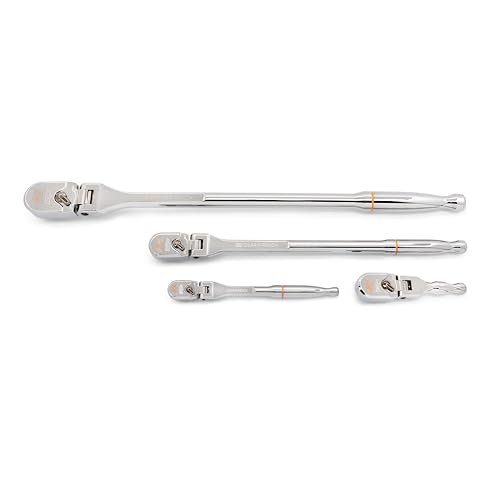

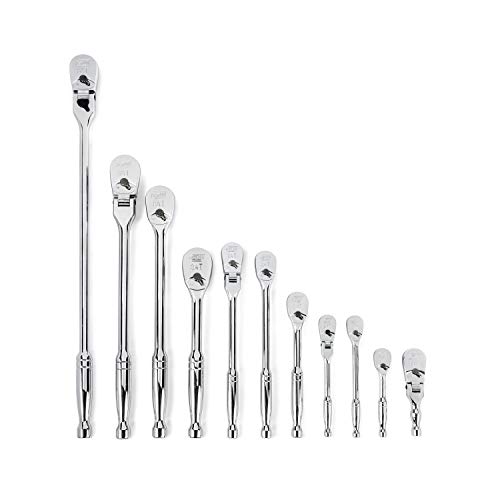
As an Amazon Associate we earn from qualifying purchases at no extra cost to you. Ratings are shown as listed on Amazon.
Quick picks by toolbox
- Best for general home repair: A Gearwrench 1/4-inch and 3/8-inch drive set with 90-tooth or 120XP ratchets and both metric and SAE sockets.
- Best for automotive DIY: A Gearwrench 120XP set with 1/4-, 3/8-, and 1/2-inch drives, deep and shallow sockets, extensions, and universal joints.
- Best for professional versatility: A large Gearwrench master set, typically offering roughly 200 to 250 pieces and a wider range of drive sizes, accessories, and socket lengths.
- Best for tight spaces: A compact 1/4-inch or 3/8-inch 120XP ratchet set. The 3-degree swing is more useful around brackets and engine accessories than a bulky high-count kit.
- Best budget approach: Buy a smaller metric 3/8-inch set first, then add a 1/4-inch or 1/2-inch set only when your work requires it.
Gearwrench ratchet sets compared
| Set type | Typical contents | Ratchet mechanism | Useful range | Typical market range |
|---|---|---|---|---|
| Compact 1/4-inch set | 35–50 pieces; 4–14 mm and small SAE sizes | 90-tooth or 120XP, depending on series | Interior trim, electronics brackets, small hardware | $45–$90 |
| Mixed 1/4- and 3/8-inch set | 55–85 pieces; shallow sockets, extensions, adapters | 90-tooth or 120XP; 3° swing on 120XP | Home maintenance and most light automotive repairs | $90–$180 |
| Three-drive automotive set | 120–180 pieces; 1/4, 3/8, and 1/2 inch drives | Usually 120XP on the higher-spec versions | Suspension, brakes, engine work, and larger fasteners | $180–$350 |
| Large master set | 200–250 pieces; deep and shallow metric/SAE sockets | Multiple 120XP ratchets and accessories | Frequent vehicle, equipment, and workshop repairs | $300–$550 |
Prices vary with promotions, drive-size combinations, and whether the set includes combination wrenches or impact-rated accessories. Treat those ranges as normal market positioning rather than fixed prices.
Which drive size should you buy?
1/4-inch drive
A 1/4-inch ratchet is the best choice for small fasteners, confined spaces, and jobs where excessive torque could damage a bolt or surrounding part. Typical sockets run from about 4 mm to 14 mm, although individual sets differ. It is light and easy to control, but it is not the right tool for seized suspension bolts or large mounting hardware.
3/8-inch drive
For one versatile ratchet, choose 3/8-inch drive. It covers much of the 8–19 mm range used in vehicles and household equipment while remaining compact enough for engine bays. A long-handled 3/8-inch ratchet can handle moderate torque, but it should not be treated as a substitute for a 1/2-inch drive when a fastener is heavily rusted or specified for high torque.
1/2-inch drive
The 1/2-inch drive is for high-torque work: wheel fasteners, suspension components, large brackets, and machinery. It usually starts around 13 mm or 1/2 inch and extends into the mid-30 mm range in larger kits. These sockets and ratchets are heavier, so buying a 1/2-inch set adds little value if your work rarely exceeds ordinary maintenance.
90-tooth versus 120XP ratchets
Tooth count affects how far the handle must move before the mechanism engages. A 90-tooth ratchet has a theoretical 4-degree swing, while a 120-position ratchet has a 3-degree swing. That one-degree difference sounds small, but it matters when only a few millimeters of handle movement are available.
Gearwrench’s 120XP design is the stronger choice for cramped automotive work because its fine engagement and slim head reduce repositioning. A 90-tooth model may still be the better value when the set is substantially cheaper and your work is mostly open-access fasteners. Neither tooth count makes a ratchet an impact tool: use an impact-rated socket and an appropriate power tool when specified, not a hand ratchet as a breaker bar.
Socket coverage: avoid paying for duplicate gaps
The most useful set is not necessarily the one with the highest piece count. Count the actual socket sizes and check whether the kit includes both shallow and deep versions. A set advertised with 150 pieces may include many accessories, bits, and duplicate sizes rather than complete coverage.
- Home toolbox: Prioritize metric sockets from 6 mm through 19 mm, plus common SAE sizes from 1/4 inch through 3/4 inch if you maintain older equipment.
- Modern vehicle work: Metric coverage matters most. Look for 8–19 mm shallow sockets and deep sockets at least through 19 mm.
- Older American vehicles or machinery: A metric-and-SAE kit prevents interruptions caused by a single non-matching fastener.
- Professional repair: Check for 21, 22, 24, and 27 mm sockets and larger SAE sizes; these are more likely to justify a three-drive or master set.
A practical coverage calculation helps: if a 3/8-inch set contains 12 metric shallow sizes, 12 metric deep sizes, and 12 SAE shallow sizes, that is 36 sockets before counting ratchets and accessories. Compare that usable coverage—not just the headline piece count—against your work.
Case storage, finish, and ownership details
Gearwrench cases vary from compact molded trays to larger hinged cases with labeled recesses. A compact case saves shelf space but can become crowded when extensions and adapters are added. A large case is easier to inventory, though it may be inconvenient to carry and can consume an entire toolbox drawer.
Chrome-plated hand sockets are intended for ratchets and ordinary hand tools. The polished finish resists corrosion and wipes clean, but it can become slippery when covered in oil. Do not use chrome hand sockets with an impact wrench; choose impact sockets designed for that use.
The parts that usually show wear first are the ratchet pawl and selector, the square-drive detent ball, and the case hinges or latches. Dirt and hardened grease can make a fine-tooth ratchet feel rough long before the sockets are worn out. After dirty work, wipe the ratchet, brush debris from the head, and apply only a small amount of suitable light lubricant. Heavy grease can collect grit inside the mechanism.
Decision matrix: match the set to your situation
| Your situation | Recommended choice | Why | What to skip |
|---|---|---|---|
| Occasional household repairs, limited budget | 1/4- and 3/8-inch mixed set | Covers furniture, appliances, bicycles, and light vehicle work | Large 1/2-inch master kit |
| Beginner maintaining one modern car | Metric 3/8-inch set with deep sockets | Simple, compact, and aligned with common vehicle sizes | SAE-heavy set unless your vehicle requires it |
| Frequent DIY brake and suspension work | Three-drive 120XP automotive set | Adds 1/2-inch torque capacity and useful deep sockets | Small 1/4-inch-only kits |
| Professional or high-frequency repairs | Large master set plus separate impact sockets | Broad coverage reduces tool runs and downtime | Relying on one mixed hand-tool set for impact work |
| Very limited storage | Compact 3/8-inch set, then targeted additions | One drawer can handle most routine jobs | Oversized cases with rarely used duplicates |
How to choose between two similar Gearwrench sets
- List the fasteners you actually use. Note metric or SAE, shallow or deep, and the largest size you regularly encounter.
- Compare usable sockets. Subtract duplicate bits and accessories from the advertised piece count.
- Check the ratchet angle. Choose 120XP when access is tight; choose a 90-tooth option when price and general use matter more.
- Inspect the case layout. Make sure the lid closes with extensions installed and that socket markings are readable.
- Separate hand and impact duties. Budget for impact sockets if you use an impact wrench or electric impact driver.
Final verdict
For most people, the best Gearwrench ratchet sets are not the biggest ones. A mixed 1/4-inch and 3/8-inch set provides the strongest balance of coverage, portability, and price for home use. Choose a 120XP three-drive set when automotive work is frequent or includes large fasteners. A master set makes sense for a professional toolbox only when its extra sizes, deep sockets, and accessories will save repeated trips to buy individual tools.