Key takeaways
- A garden hose looks like the simplest purchase in the yard, yet it is one of the items people replace most often.
A garden hose looks like the simplest purchase in the yard, yet it is one of the items people replace most often. Kinks, cracked couplings, a hose that fights you around every corner, and a spray that dribbles at the far end are the usual reasons. The core decision is between two families. Expandable hoses shrink when the water is off, weigh little, and store in a small bucket. Non-expanding hoses, whether rubber, vinyl, or hybrid, keep a fixed diameter, deliver steadier flow, and tend to be easier to drag around trees and beds. Length and inner diameter then decide whether the water you want actually reaches the roses or the vegetable rows.
This guide is for homeowners and gardeners shopping in 2026 who want a dependable hose for watering, washing the car, and general yard cleanup. The picks span 50-foot and 100-foot lengths, 5/8-inch and 3/4-inch diameters, expandable and non-expandable styles, and options with a spray nozzle included. Everything below comes from the listing titles, so confirm length, connector material, and nozzle details on the listing, and match the hose to the spigot and the longest reach you need before ordering.
Quick Picks
Our top picks



As an Amazon Associate we earn from qualifying purchases at no extra cost to you.
| Product | Best for | Key spec from the title |
|---|---|---|
| Flexi Hose Expandable Garden Hose | Light handling and compact storage | 50FT, 8 function nozzle, no-kink |
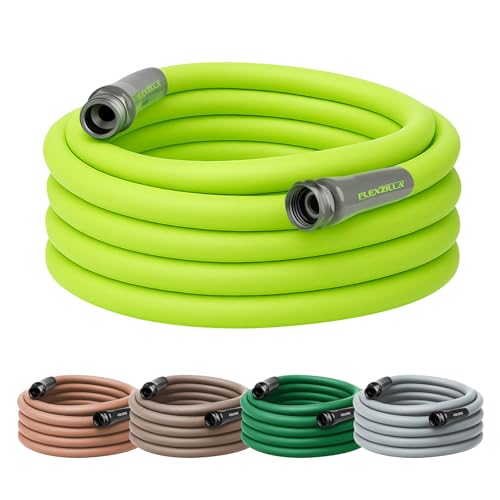
| Flexzilla Garden Hose 5/8 in. | All-weather daily watering | 5/8 in. x 50 ft or 100 ft, leak-free connections |
| Pocket Hose Ballistic | Expandable hose with a reinforced sleeve | 50 FT, anti-burst sleeve, swiveling connector |
| CXEZSIK Garden Hose | Non-expanding, easy to carry | 50FT, metal connector, no-knot |
| Giraffe Tools Garden Hose | Long reach with a hybrid build | 5/8″, 100ft, swivel handle |
| 100ft 3/4-Inch Non-Expandable Hose | High flow over long distances | 3/4″, 100ft, 8 function spray nozzle |
How to Choose
Length and diameter
Measure from the spigot to the farthest spot you need to water, then add ten feet for turns and slack. Fifty feet suits a small yard or a front bed, while 75 to 100 feet covers a back lot or a long driveway. Inner diameter shapes flow. A 5/8-inch hose is the common household size and balances weight and output, while 3/4-inch moves more water for sprinklers and big watering jobs but is heavier to drag and coil. Very long hoses lose pressure at the end, so do not buy 100 feet when 50 will do. Water pressure at the spigot also matters, since a long, narrow hose on a weak supply delivers a weak spray.
Expandable versus non-expandable construction
Expandable hoses have an inner tube inside a fabric sleeve and grow when pressurized. They are light and easy to store, and they resist kinks. The trade-off is that they can wear faster if dragged over rough concrete, and the fabric can snag on thorns. Non-expanding hoses, including rubber and hybrid builds, hold their shape, stand up to abrasion better, and handle regular use with less fuss, but they weigh more. Pick expandable for convenience and small yards, and a fixed-diameter hose for a heavy-use garden.
Fittings, swivels, and leaks
Connectors are where hoses usually fail. Brass and other metal couplings tend to last longer than plastic ones, and a swiveling end makes it easier to thread onto a spigot without twisting the hose. Look for titles that name the connector material, and check the listing for the thread type, since standard garden-hose threads are what most spigots use. A rubber washer inside the female fitting is cheap to replace and often solves a drip, so keep a few on hand. Do not overtighten with tools, since that can crack a plastic collar, and replace any washer that looks flattened or brittle before blaming the hose.
Nozzles, drinking water, and winter care
An included multi-pattern nozzle saves a purchase, but spray quality varies, so treat it as a bonus. A hose is not automatically safe for drinking, and a title that does not say so should not be used that way; look for that labeling on the listing if it matters to you. In freezing weather, drain the hose, disconnect it from the spigot, and store it out of direct sun to extend its life. Budget hoses commonly cut corners on fittings and wall thickness, so read the title for connector and burst-resistance details.
The 6 Best Options
Flexi Hose Expandable Garden Hose, 50FT
A lightweight expandable hose that comes with an 8 function nozzle, in black-and-green and black-and-blue listings, plus a Flexi Hose PLUS variant. It suits owners of small yards, patios, and balconies who want a hose that is easy to carry and put away.
- The listing describes a lightweight hose that expands for easy watering and offers no-kink flexibility.
- The included 8 function nozzle means no extra purchase to start watering.
- Trade-off: expandable fabric builds can wear faster if dragged across rough surfaces, so careful handling matters.
Skip it if you plan to run the hose across gravel or concrete every day, or if you want a fixed-diameter hose that handles heavy use year after year. Gardeners who water for long stretches with a sprinkler may prefer a steadier, non-expanding build.
Flexzilla Garden Hose 5/8 in.
A 5/8-inch all-weather hose, listed in 50-foot and 100-foot lengths, described as lightweight, durable, and flexible with leak-free connections. It fits gardeners who want a non-expanding hose for regular watering and who care about connection quality.
- Two length choices let you match the hose to a small yard or a long property.
- The all-weather description and leak-free connections address the two common complaints about hoses.
- Trade-off: the titles do not mention a nozzle, so budget for a separate one, ideally with a shutoff so the hose is not left under pressure.
Skip it if you want a hose with a spray nozzle included in the box, or if a compact storage size matters more than a fixed diameter and durability. A balcony gardener with a tiny storage corner may find a fixed hose awkward to coil.
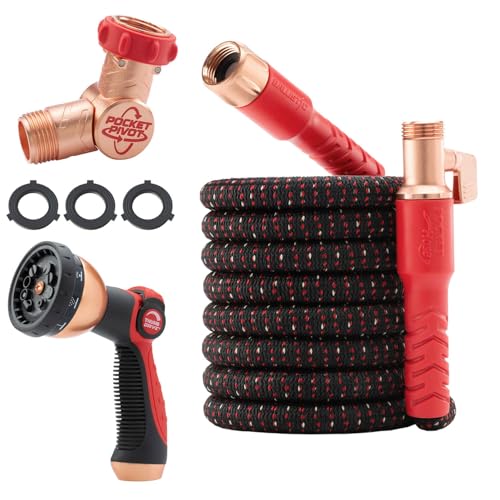
Pocket Hose Ballistic 50 FT Expandable Garden Hose
A 50-foot expandable hose marketed as no-kink, with an anti-burst sleeve reinforced with ballistic fiber and a 360-degree swiveling connector. It suits buyers who like the convenience of an expandable hose but want a stronger-looking build.
- An anti-burst sleeve is named in the title, which addresses a common worry with expandable designs.
- A swiveling connector helps reduce twisting when attaching to a spigot.
- Trade-off: it is still an expandable hose, so abrasion from rough ground can wear the sleeve over time.
Skip it if you want a steady, fixed-diameter flow for sprinklers, or if you plan to leave the hose under pressure for long stretches, since expandable models are best drained and stored between uses. Follow the manufacturer instructions for water pressure and storage.
CXEZSIK Garden Hose 50FT
A 50-foot lightweight non-expanding hose with a metal connector, described as leak-proof and no-knot, easy to store and carry. It suits gardeners who want a simple non-expandable option without the stretch-and-shrink behavior of expandable models.
- The metal connector is named in the title, which points to more durable fittings than plastic.
- No-knot and no-tangle language targets one of the most common hose frustrations, the coil that fights back when it is unrolled across a lawn.
- Trade-off: the brand is less familiar, so check the listing for warranty details and fitting specs.
Skip it if you want a 100-foot reach or a named, established hose line, or if you want a spray nozzle bundled with the hose. Confirm the thread size and fitting type on the listing so the hose matches your spigot and any attachments.
Giraffe Tools Garden Hose 5/8 in., 100ft
A heavy-duty 100-foot hybrid hose with a swivel handle and male-to-female fittings, described as flexible and lightweight and burst-resistant. It suits owners of large yards who need extra length without moving to an expandable build.
- The 100 ft length reaches distant beds and corners from a single spigot.
- The hybrid build and swivel handle are named in the title to ease handling, and the burst-resistant wording speaks to durability under pressure.
- Trade-off: a 100-foot hose is bulky to coil, so storage space and a hose reel matter.
Skip it if your yard is small. Extra length means extra weight and a longer run for water, so a 50-foot option is more practical and easier to store. A hose reel or hanger is close to essential at this length, so factor that into the total cost.
100ft 3/4-Inch Non-Expandable Garden Hose with 8 Function Spray Nozzle
A 100-foot, 3/4-inch hose described as non-expandable, burst-resistant, kink-free, lightweight, durable, and flexible, with an 8 function spray nozzle included. It suits buyers with big properties who want more water volume and the nozzle in the same box.
- The 3/4-inch diameter can carry more water than the common 5/8-inch size.
- The nozzle is included, so the hose is ready to use right away for watering beds, rinsing a patio, or washing a car.
- Trade-off: a wide, long hose is heavy to drag and coil, and it uses more water when filled.
Skip it if you want a light, easy-to-handle hose for a small yard, or a model with a named brand and detailed fitting specs in the title. The listing leaves out the connector material, so check it before assuming metal fittings, and confirm the thread type fits your spigot.
Which One Fits Your Situation
A small yard or townhouse patio
The Flexi Hose 50FT is a natural fit. It is light, comes with a nozzle, and is easy to put away between uses.
A large lot with beds far from the spigot
The Giraffe Tools 100ft or the 100ft 3/4-inch hose cover the distance, with the Giraffe model offering a hybrid build and the other adding extra diameter and a nozzle.
Daily watering and long-term durability
The Flexzilla 5/8 in. line is the choice for buyers who want a non-expanding hose with leak-free connections, in either length.
Storage-limited households
Pocket Hose Ballistic offers an expandable form with a reinforced sleeve, while the CXEZSIK 50FT suits those who prefer a simple fixed-size hose that is still easy to carry.
Common Mistakes
- Buying 100 feet for a yard that needs 50, then fighting the extra weight and pressure drop.
- Leaving an expandable hose pressurized in direct sun, which can stress the fabric and fittings.
- Over-tightening plastic couplings with pliers, cracking the collar.
- Assuming any hose is safe for drinking when the listing makes no such statement.
- Skipping winter care by leaving the hose full of water and attached to the spigot in freezing weather.
Related guides
- How To Stack Amazon Coupons With Subscribe And Save
- How To Use Amazon Price History To Spot Real Deals
- Amazon Renewed Vs Amazon Warehouse Deals
Frequently Asked Questions
Is a 5/8-inch or 3/4-inch hose better?
Five-eighths is the standard for most homes and is easier to handle. A 3/4-inch hose moves more water over long runs, which helps with sprinklers, but it is heavier and bulkier.
Do expandable hoses last as long as rubber or hybrid hoses?
Often not, especially with heavy use or rough ground. They shine for light duty and storage, while fixed-diameter hoses usually handle repeated dragging and weather better.
How long should a hose be?
Measure the distance from the spigot to the farthest spot, then add about ten feet. A shorter hose delivers more pressure and is easier to handle, so avoid buying extra length you will not use.
How can a leak at the spigot be stopped?
Check the rubber washer inside the female coupling and replace it if it is cracked or flat. Hand-tighten the connection, and confirm that the threads on the hose and spigot match.
FAQ
Is a 5/8-inch or 3/4-inch hose better?
Do expandable hoses last as long as rubber or hybrid hoses?
How long should a hose be?
How can a leak at the spigot be stopped?
More from Amazon
Programs that pair well with the guide above. Offers and eligibility are set by Amazon and may change.
Free shipping on eligible items, Prime Video and more. Eligible new members can start with a free trial.
Start a Prime free trialAudiobooks and podcasts to listen to on the go. Eligible new members can start with a free trial.
Try Audible freeAd-free music streaming. Eligible new subscribers can start with a free trial.
Try Music Unlimited freeA free business account with business pricing and bulk-buying tools for work, shop or home office.
Create a business accountAs an Amazon Associate we earn from qualifying purchases.