Key takeaways
- Speed Queen’s own feature list and Consumer Reports both show “Moisture sensor: No”
- Rear knob controls with no time-remaining display
- End-of-cycle signal, extended tumble, drum light and up-front lint filter
- Reversible door and multiple vent options
Finding a clothes dryer that operates without a moisture sensor has become one of the more specific shopping challenges in the 2026 appliance market. Buyers who want predictable, manual-cycle control—perhaps because they’ve had sensors misread delicate fabrics, or because they simply prefer the reliability of a timer—often discover that most mid-range and budget options now advertise sensor technology as a default selling point. The real difficulty is sorting machines that genuinely run on timed cycles from those that merely offer a sensor as one feature among many.
This roundup compares seven dryers listed under relevant search terms, ranging from full-size front-load electric and gas models to compact portable units. Only a handful actually omit sensor-based drying; the rest include it as a feature. Below, each product is examined on its published specifications and aggregate owner feedback, with clear notes on which models deliver the sensor-free operation some buyers are specifically seeking.
Our top picks

![KoolMore 27" Front Load X-Large 8 Cu. Ft. Dryer, Large Capacity Home Unit with Wrinkle Release Steam Function and Smart Sensor Dry Technology, Stainless-Steel Drum [White] [240V] (FLD-8CWH)](https://m.media-amazon.com/images/I/419U1mSpawL._SL500_.jpg)

As an Amazon Associate we earn from qualifying purchases at no extra cost to you.
Updated October 2026 — Shopping for the best dryers without autosensors 2026 has to offer? Yes, they still exist, but only a few. The Speed Queen DC5003WE is the best full-size dryer with no moisture sensor (7.0 cu. ft., timed and preset cycles, 5-year warranty). The GE GTD33EASKWW is the value pick: 7.2 cu. ft., timed dry from 10 to 80 minutes and an Auto Dry that reads air temperature, not moisture. For small spaces, the Panda PAN725SF is a timer-only 1.5 cu. ft. portable dryer that runs on a standard 120V outlet.
Before you buy any dryer from this list, check the spec sheet for “Moisture sensor: No” or “Sensor Dry: No”. Many listings that look basic, including some full-size models from big brands, now advertise sensor or smart drying.
Quick Picks
| Product | Best for | Price |
|---|---|---|
| Kenmore 7.0 Electric Dryer | Full-size capacity; advertises Smart Sensor Drying | Varies |
| Kenmore 7.0 Gas Dryer | Gas hookup homes; advertises Smart Sensor Drying | Varies |
| Samsung 7.2 Sensor Dry | Buyers who reconsidered and want a sensor option | Varies |
| Samsung Washer/Dryer Bundle | Full laundry setup with sensor overdry prevention | Varies |
| Dessiz 1.6 Portable | Small-space drying with hygrometer feedback | Varies |
| KoolMore 8 Cu. Ft. | High-capacity families wanting steam and sensors | Varies |
| Portable 1.6 Smart Dryer | Compact portable; check the listing for sensor details | Varies |
Best Non-Sensor Dryers at a Glance
| Model | Type | Capacity | Power | How it decides when to stop | Moisture sensor | Price tier |
|---|---|---|---|---|---|---|
| Speed Queen DC5003WE | Full-size electric | 7.0 cu. ft. | 240V, 30A | Timer and 4 preset cycles | No | Premium |
| GE GTD33EASKWW | Full-size electric | 7.2 cu. ft. | 240V | Timed dry 10-80 min; Auto Dry by air temperature | No | Mid-range |
| Panda PAN725SF | Portable, vented | 1.5 cu. ft. | 120V, 850W | Timer only (up to 200 min) | No | Budget |
| ROVSUN 1.5 Cu. Ft. Classic Knob | Portable, vented | 1.5 cu. ft. | 110V, 850W | Timer knob (Hot 120-200 min) | No | Budget |
| Magic Chef MCSDRY15W | Compact, wall-mountable | 1.5 cu. ft. | 110V | Four timer settings | None listed | Budget |
| BLACK+DECKER BCED26 | Portable, vented | 2.65 cu. ft. | 120V, 1,400W | Timer, with Sensor Dry switch | Yes, can be turned off | Budget |
Summary: if you have a 240V hookup and want the simplest controls, buy the Speed Queen DC5003WE; if price matters, the GE GTD33EASKWW does the same job with thermostat-based Auto Dry; if you rent or have no dryer hookup, the Panda PAN725SF is the cleanest timer-only option.
How We Compared
Three criteria drove this comparison: whether the product genuinely operates without a moisture sensor, its drum capacity and cycle flexibility for real laundry loads, and value at the listed price. A fourth consideration is installation fit—gas versus electric hookup, front versus top load, and whether a unit belongs in a closet or on a countertop. Products that fail one of these criteria are still included because they appear in the same search results, but they are flagged accordingly.
Dryers From Related Search Results, Reviewed
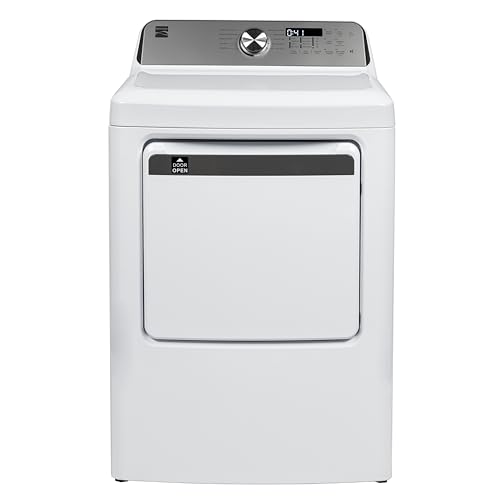
Kenmore 7.0 cu. ft. Front Load Electric Dryer
This is a 7.0 cubic foot front-load electric dryer for households that want large capacity. Kenmore and major retailers list it with Smart Sensor Drying, plus Wrinkle Guard and a Sanitize cycle, so it is a sensor model, not a sensor-free one. Owners appreciate the generous drum for bedding and the front-loading configuration that matches stacked laundry rooms, and the white finish fits neutral utility spaces. The primary con in this context is the sensor itself. Skip this model if you want pure timer control; the Speed Queen DC5003WE and GE GTD33EASKWW below are better fits.
Kenmore 7.0 cu. ft. Front Load Gas Dryer
The gas counterpart to the electric model above, this 7.0 cubic foot front-load dryer serves homes with an existing gas hookup. Kenmore and major retailers list it with Smart Sensor Drying as well, so it is also a sensor model. Pros include the same large drum capacity and gas heating. Skip this if your home lacks a gas line, or if you want a dryer without automatic dryness detection.
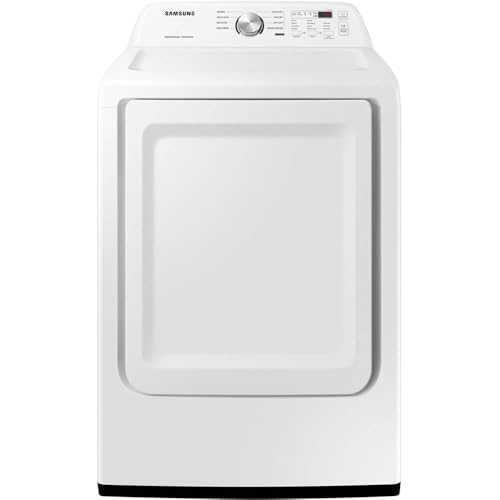
Samsung 7.2 cu. ft. Top Load Electric Dryer with Sensor Dry
Despite appearing in “dryers without sensors” search results, this Samsung model explicitly includes Sensor Dry technology, making it a mismatch for buyers specifically seeking sensor-free operation. That said, it is a large-capacity top-load electric dryer with a 7.2 cubic foot drum. Pros include the sensor itself preventing overdrying when you do want it, and the top-load convenience for shorter users. The con is obvious in context: it defeats the purpose of this search. Skip it if your entire reason for searching is avoiding sensors—otherwise it is a solid value machine.
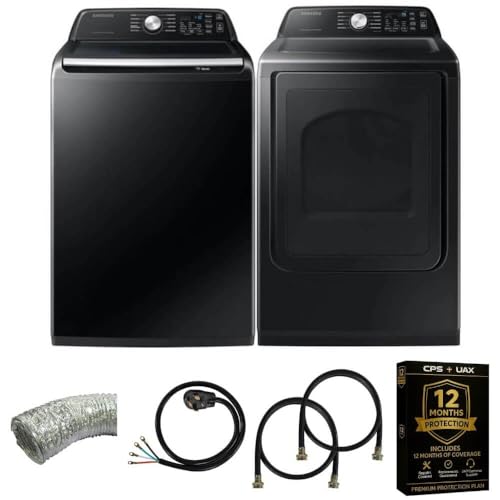
Samsung Smart 4.7 Washer and 7.4 Dryer Bundle
This bundle pairs a 4.7 cubic foot top-load washer with a 7.4 cubic foot electric dryer and includes power cords, hoses, and a vent duct. The dryer’s sensor stops overdrying, and the washer advertises low-vibration quiet operation with a WaterJet cycle. It is not a sensor-free option. Pros: the all-in-one kit simplifies installation and includes a one-year CPS protection plan. Skip this if you already own a functioning washer or if sensor-free drying is your strict requirement.
Dessiz 1.6 Cu. Ft. Portable Clothes Dryer
This compact portable dryer holds 1.6 cubic feet, uses 970 watts, features a stainless steel drum, and includes an exhaust hose. A digital control panel incorporates a hygrometer sensor. Owners in apartments, dorms, and RVs find it functional for small loads up to roughly 11 pounds. The con: the hygrometer sensor means it is not truly sensor-free, and the small capacity limits it to a few garments per cycle. Skip it if you need full-load capacity or are adamant about no sensor involvement.
KoolMore 27″ Front Load X-Large 8 Cu. Ft. Dryer
With an 8 cubic foot stainless-steel drum, this 240V front-load dryer targets large families needing maximum capacity. It includes wrinkle-release steam and Smart Sensor Dry Technology—meaning it is not a sensor-free unit. Owners praise the drum size for comforters and the steam function. Pros: best-in-class capacity among this list and useful steam features. Skip it if you need sensor-free operation or a tighter budget.
Portable 1.6 cu. Ft. Compact Smart Dryer, 1200W
It is the closest budget competitor to the Dessiz in form factor and represents a plausible sensor-free pick for small-space dwellers. Pros: lower wattage draws slightly less power than full-size machines,. The con: published specifications are sparse, making it harder to confirm the absence of a sensor. Skip it if you require full-size capacity or cannot tolerate limited product information.
Best Dryer Electric Without Sensor: 6 Verified Picks
Each model below was checked against the maker’s spec sheet or manual and at least one independent spec listing for the presence of a moisture sensor. Full-size picks come first, then compact and portable units.
Speed Queen DC5003WE — Best Full-Size Dryer With No Moisture Sensor

Spec line: 7.0 cu. ft. · 240V, 30A, 5,350W heat · 4 preset cycles, 4 temperatures · galvanized drum · 220 CFM fan · 5-year parts and labor
- Speed Queen’s own feature list and Consumer Reports both show “Moisture sensor: No”
- Rear knob controls with no time-remaining display
- End-of-cycle signal, extended tumble, drum light and up-front lint filter
- Reversible door and multiple vent options
This is the clearest answer for anyone who wants a dryer that stops when the timer says so. The galvanized drum and heavy fan are built for long service life, and the 5-year warranty is far longer than most dryers in any price tier.
Pros: verified no moisture sensor; long parts-and-labor warranty; simple, repairable controls.
Cons: premium price; not Energy Star rated; galvanized rather than stainless drum.
Skip it if… you only need a dryer for a few years or have a tight budget; the GE GTD33EASKWW costs far less.
GE GTD33EASKWW — Best Value Full-Size Electric Dryer Without a Sensor
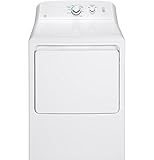
Spec line: 7.2 cu. ft. · 240V electric · aluminized alloy drum · Timed Dry 10-80 min · Auto Dry by air temperature · up to 120 ft. venting
- Retail spec sheets list “Sensor Dry: No”; Consumer Reports lists no moisture sensor
- Electromechanical rotary controls with 3 dry cycles and 3 heat settings
- Four-way exhaust, reversible door, removable up-front lint filter
GE’s Auto Dry uses a thermostat that reads exhaust air temperature, so there are no moisture bars in the drum to misread jeans or towels. If you prefer pure timed drying, the 10-80 minute timer bypasses Auto Dry completely.
Pros: mainstream price; large drum; long venting run for awkward laundry rooms.
Cons: cycles run longer than average; no steam or sanitize options.
Skip it if… you want no automatic cycle of any kind; the Speed Queen DC5003WE is more basic.
Panda PAN725SF — Best Portable Dryer Without a Sensor

Spec line: 1.5 cu. ft. · 120V, 850W · stainless drum · timer only (Cool 0-20, Warm 20-120, Hot 120-200, Air Dry 0-80 min) · max 140°F · 37.5 lb
- One drying cycle with timer zones; no moisture or humidity sensor
- Auto shut-off at the end of the timer
- Panda’s guide: about 30 minutes for 1 lb, about 200 minutes for 5.5 lb
Pros: genuinely timer-only; plugs into a normal outlet; small enough for a closet or RV.
Cons: long drying times for full loads; needs a vent hose or a window path for moist air.
Skip it if… you need to dry towels and bedding for a family.
ROVSUN 1.5 Cu. Ft. Portable Dryer (Classic Knob) — Best Budget Timer Dryer

Spec line: 1.5 cu. ft. · 110V, 850W · stainless drum · knob timer (Hot 120-200, Cool 0-20, Air Dry 0-80 min) · Low/High heat · up to 140°F
- Stops automatically if the door opens mid-cycle
- Mounting kit for countertop, floor or wall
- Recommended load about 5.5 lb of clothes
Pros: lowest price among sensor-free tumble dryers here; simple knob control; one-year warranty.
Cons: model numbers vary between listings; limited capacity.
Skip it if… you want a long-established appliance brand; the Panda PAN725SF has a longer track record.
Magic Chef MCSDRY15W — Best Wall-Mounted Compact Dryer

Spec line: 1.5 cu. ft. · 110V · stainless tub · four timer settings · two heat levels plus Air Dry · anti-wrinkle tumble · 23.8 x 19.5 x 16.1 in · 1-year warranty
- Maker and retailer listings mention no sensor dry function
- Includes a wall-mount kit and exhaust connector
Pros: wall mounting saves floor space; known appliance brand; anti-wrinkle option.
Cons: about 5.5 lb capacity; the larger Magic Chef 2.6 cu. ft. model does have a sensor, so do not confuse the two.
Skip it if… you need more than a few garments per load.
BLACK+DECKER BCED26 — Best Compact Dryer With a Sensor You Can Switch Off
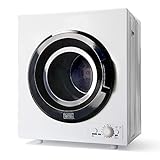
Spec line: 2.65 cu. ft. · 8.8 lb load · 120V, 1,400W · stainless drum · timer 30-200 min · Sensor Dry on/off · Air Dry, Cool, ECO, Warm, Hot
- With Sensor Dry off, the manual says the dryer runs strictly on the timer
- Manual notes the sensor can cut heat too early, which is the classic reason people want timed drying
- 4-inch vent hose and exhaust connector included
Pros: larger load than 1.5 cu. ft. portables; you choose sensor or timer per load.
Cons: not sensor-free; heavier at about 48 lb.
Skip it if… you want no sensor hardware at all.
Also Consider: BLACK+DECKER BCED15

Spec line: 1.5 cu. ft. · 120V, 850W · programs: High Temperature, Sensor Dry, Air Dry, Anti-Wrinkle · timer 20-200 min. Sensor Dry is one program you can skip, so you can run it on time alone. Trade-off: electronic panel and a smaller drum than the BCED26.
Buying Guide
Confirming Sensor-Free Operation
The single most important step is reading the full feature list for any mention of “sensor,” “moisture detection,” “auto-dry,” or “smart dry.” Products that omit all such language are more likely to rely on timed cycles alone. If a listing is ambiguous, contact the seller directly before purchasing. A “smart” label alone does not guarantee a sensor, but it warrants scrutiny.
Capacity and Load Matching
Full-size dryers start at roughly 7 cubic feet and handle bedding, towels, and family loads in one cycle. Portable units at 1.6 cubic feet accommodate perhaps 10-12 pounds of everyday clothing per run. Mismatched capacity means running twice as many cycles, negating any perceived savings from the smaller unit’s lower price.
Controls: Rotary Knobs vs. Electronic Panels
The control panel is the fastest clue. Electromechanical rotary timers, like those on the GE GTD33EASKWW, Speed Queen DC5003WE, Panda PAN725SF and ROVSUN Classic Knob, are where sensor-free dryers live. Touch panels with a time-remaining display almost always pair with a moisture sensor, because the display needs the sensor to estimate when the load will finish.
- Knob with minutes printed around it: timer-based; check for an “Auto Dry” zone, which is usually thermostat-controlled.
- Knob plus a “Sensor Dry” switch: sensor-optional, as on the BLACK+DECKER BCED26.
- LED touch panel with countdown: expect a moisture sensor; confirm that a Timed Dry cycle is included.
Mechanical controls also tend to be cheaper to repair. A replacement timer for a basic GE or Whirlpool-built dryer is a common, low-cost part, while electronic control boards cost several times more and are model-specific. If long-term repairability is part of why you want a dryer without a sensor, favor knobs.
Gas, Electric, and Portable Power
Gas dryers heat faster and cost less per cycle to operate but require a gas line and typically carry a higher purchase price. 240V electric models deliver the strongest heat for full-size drums. Portable 120V units plug into standard outlets, making them viable for renters and RV owners who cannot install dedicated circuits.
Best Non-Sensor Dryers by Budget and Space
Budget: portable timer dryers
Panda PAN725SF: 1.5 cu. ft. · 850W · timer only. ROVSUN 1.5 Classic Knob: 1.5 cu. ft. · 850W · knob timer. BLACK+DECKER BCED26: 2.65 cu. ft. · 1,400W · sensor can be switched off. Magic Chef MCSDRY15W: 1.5 cu. ft. · wall-mountable · four timer settings.
- Expect 5-9 lb loads and 1-3 hour cycles on 120V power.
- Mechanical timer knobs are the norm; true sensor-free models are easiest to find here.
- You still need to vent moist air outside or through a window kit.
Mid-range: full-size electric
GE GTD33EASKWW: 7.2 cu. ft. · thermostat Auto Dry · Timed Dry 10-80 min.
- Full-size drums dry a family load in one cycle.
- Look for “Auto Dry” (thermostat) rather than “Sensor Dry” (moisture bars).
- Requires a 240V, 30A dryer outlet for full-size electric models.
Premium: built to last
Speed Queen DC5003WE: 7.0 cu. ft. · no moisture sensor · 5-year warranty.
- Commercial-style parts and the longest warranty in the category.
- Simple knobs and no display, by design.
- Limited retail distribution, so check stock before planning an install date.
Auto Dry vs. Sensor Dry vs. Timed Dry
| Method | How it works | Typical spec-sheet wording | Good for |
|---|---|---|---|
| Timed Dry | Runs for the minutes you set, regardless of dryness | “Timed Dry”, “Timer” | Heavy mixed loads, buyers who want full control |
| Thermostat Auto Dry | Timer only advances while the heater is cycled off, so wetter loads run longer | “Auto Dry”, “Automatic Dryness Control” | Hands-off drying without moisture bars |
| Moisture Sensor Dry | Metal bars in the drum read moisture from clothes touching them | “Sensor Dry”, “Moisture Sensing”, “Smart Dry” | Energy saving on uniform loads |
A dryer without a moisture sensor can still have an automatic cycle. If what bothers you is cycles that end with damp jeans, a thermostat Auto Dry model such as the GE GTD33EASKWW avoids the sensor bars that cause that problem.
Mistakes to Avoid When Buying a Dryer Without a Sensor
- Trusting the product title. Listings with plain names often advertise “Smart Sensor Drying” deeper in the bullets. Read the full feature list or the maker’s spec sheet.
- Confusing similar models. Panda’s 1.5 cu. ft. PAN725SF is timer-only, but the larger Panda PAN60SF has Sensor Dry. Magic Chef’s 1.5 cu. ft. model has no sensor listed; the 2.6 cu. ft. model does.
- Ignoring wiring. Full-size electric dryers need a 240V, 30A circuit. Portables run on 120V but take 2-3 times longer per load.
- Overdrying on timed cycles. Start at 40-50 minutes for a normal full-size load and add 10 minutes if needed rather than setting the maximum.
How We Verified “No Sensor”
This update is research-based; we did not run these dryers ourselves. For every new pick we checked three things: the maker’s spec sheet or manual, an independent spec database (Consumer Reports’ feature list or a major appliance retailer’s spec table), and owner discussions about how the cycle actually ends. A model only counts as sensor-free when the documentation says “Moisture sensor: No” or “Sensor Dry: No”, or when the manual describes a timer-only control. Models with a sensor that can be switched off are labeled separately. Where sources disagreed, such as an old retailer page calling the Speed Queen DC5003WE a moisture-sensor dryer, we went with the maker’s current feature list.
How to Get Good Results From a Timed Dryer
Start with these times
- Full-size, normal mixed load: 40-50 minutes on medium heat, then check.
- Towels and jeans: 55-70 minutes on high.
- Synthetics and delicates: 20-30 minutes on low.
- Portable 1.5 cu. ft. units: Panda lists about 60 minutes for 2-3 lb and up to 200 minutes for 5.5 lb on high.
Spin harder before you dry
Every extra minute of washer spin removes water that a timed dryer would otherwise have to boil off. Use the highest spin your fabrics allow; for portable dryers, a separate spin dryer or a high-spin washer cycle can cut drying time sharply.
Keep the vent short and clean
Long or crushed ducts slow every dryer, but they hurt timed dryers most because nothing shortens the cycle to compensate. Clean the lint filter every load and the duct at least once a year. The GE GTD33EASKWW is rated for runs up to 120 ft., but shorter is always faster.
Do not overload
Fill full-size drums about two-thirds and portable drums about half. Packed loads leave damp centers no matter how long the timer runs.
Which Dryer Without a Sensor Should You Buy?
- Homeowner with a 240V hookup who wants it to last: Speed Queen DC5003WE.
- Full-size on a budget: GE GTD33EASKWW.
- Renter, RV or dorm with a normal outlet: Panda PAN725SF or ROVSUN 1.5 Cu. Ft. Classic Knob.
- Short on floor space: Magic Chef MCSDRY15W on the wall.
- Want bigger portable loads and the choice of sensor or timer: BLACK+DECKER BCED26.
Our Verdict
The top pick for true sensor-free operation is the Speed Queen DC5003WE, the value pick is the GE GTD33EASKWW, and the budget pick is the Panda PAN725SF. The Kenmore, Samsung and KoolMore models above advertise sensor drying, so skip them if you want a timer-only dryer.
FAQ
Why would someone specifically want a dryer without a sensor?
Sensor dryers can misread heavy items like jeans or layered fabrics, ending cycles too early and leaving loads damp. Buyers who prefer manual control set a timer, confirm dryness visually, and avoid the risk of a sensor terminating the cycle inconsistently.
Are portable dryers without sensors reliable for everyday use?
For small households or supplementary drying, portable units handle 10-12 pound loads adequately on timed cycles. They require more frequent runs for families, but the simplicity of no-sensor operation means fewer electronic components that can fail over time.
Does a higher price guarantee no sensor in a dryer?
No. Several premium models in this roundup include sensors as a standard feature. Price correlates more with drum size, build quality, and added functions like steam—sensor presence or absence is independent of cost tier.
Can I disable a sensor on a dryer that has one?
Some models offer a manual or timed cycle setting that bypasses sensor logic. Others do not provide this option, making sensor-equipped dryers permanently reliant on the sensor during most programs. Check the control panel settings before assuming a bypass is available.
Are there any dryers without auto sensing dry?
Yes, but they are now a small group. The Speed Queen DC5003WE has no moisture sensor, and the GE GTD33EASKWW uses a temperature-based Auto Dry instead of moisture bars. Most small portable dryers, such as the Panda PAN725SF and ROVSUN 1.5 cu. ft. knob model, run on a timer only.
What are the best non-sensor dryers for a full-size laundry room?
The Speed Queen DC5003WE and GE GTD33EASKWW are the two full-size picks. The Speed Queen costs more but has a 5-year warranty and no automatic moisture cycle at all. The GE is the budget choice, with 7.2 cu. ft. of capacity and a 10-80 minute timer.
Is Auto Dry the same as Sensor Dry?
No. Auto Dry on basic dryers uses a thermostat that reads air temperature, while Sensor Dry uses metal bars that touch the clothes to read moisture. Thermostat Auto Dry is less likely to stop early because a dry outer layer touched the bars while the inside of a heavy item is still damp.
Do portable dryers have moisture sensors?
Some do and some do not. Timer-knob models like the Panda PAN725SF and ROVSUN Classic Knob have no sensor. The BLACK+DECKER BCED26 and BCED37 have a Sensor Dry switch you can turn off, and the Panda PAN60SF includes Sensor Dry.
Can you use a sensor dryer on time only?
Yes, almost every sensor dryer has a Timed Dry cycle that ignores the sensor. If you mainly want control, a sensor dryer used on Timed Dry works. If the sensor hardware itself worries you as a future repair, buy a model that does not have it.
Are dryers without sensors less energy efficient?
Usually yes, if you set the timer longer than the load needs. Consumer Reports notes that its top-rated dryers generally have moisture sensors, mainly because they stop heating once clothes are dry. With a timed dryer, you get the same efficiency only by setting realistic times and checking the load rather than running the maximum.
Why do sensor dryers sometimes leave clothes damp?
Because the sensor bars only read the clothes that touch them. Dry outer layers, small loads or a heavy item with damp seams can make the dryer think the load is done. The BLACK+DECKER BCED26 manual even warns that its sensor may switch off heat too early, which is why it includes a timer-only mode.
Will a dryer without a sensor shrink my clothes?
Not by itself; high heat and overdrying cause most shrinkage. Use low heat for cotton knits and synthetics, start with a shorter time, and add 10 minutes if needed. A timer you set sensibly is no harder on fabric than a sensor cycle.