Key takeaways
- Compare five budget drones with 4K cameras, GPS return and sub-249g designs, plus flight times, transmission ranges and beginner features explained.
- Top Pick: DJI Mini 4K
- Runner-up: Potensic ATOM Fly More Combo
- Also consider: Holy Stone HS360S
A first drone no longer has to mean a toy that drifts into the nearest tree. The budget end of the market now includes foldable camera drones with GPS positioning, automatic return home, stabilized 4K video, and flight times that used to belong to far more expensive models. Most picks here also stay under 249 grams, the weight class the listings describe as not requiring FAA registration for recreational flying in the United States, though you should always check the current rules where you live.
This comparison covers five widely sold budget drones, from a palm-sized self-flying camera to a three-battery combo built for long sessions. Rather than ranking by headline specs, it looks at what differs in practice: camera stabilization, flight time per battery and per kit, video feed range, and beginner aids.
As an Amazon Associate, we earn from qualifying purchases.
Quick answer
For most beginners, a sub-249g GPS drone with return home and a stabilized camera is the sensible budget target. The DJI Mini 4K and the Potensic ATOM lead this group on camera stabilization, the Holy Stone HS360S and Ruko F11MINI compete on kit value with extra batteries, and the DJI Neo is the pick if you want a tiny self-flying camera instead of a traditional controller setup.
1. DJI Mini 4K
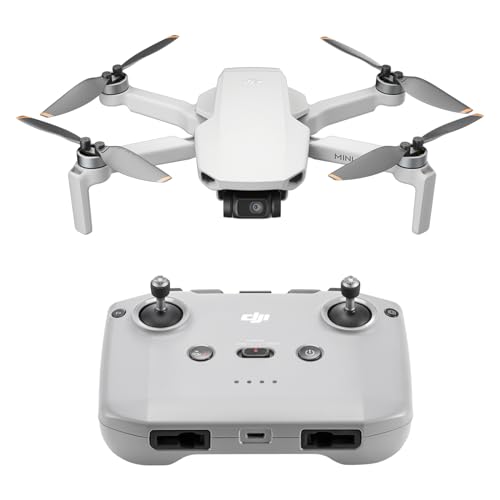
The Mini 4K is the benchmark budget camera drone. It weighs under 249 grams and pairs a 4K UHD camera and 12 MP stills with a 3-axis mechanical gimbal, the strongest stabilization setup in this price class. DJI rates it for up to 31 minutes of flight per battery and up to 10 kilometers of HD video transmission, with Level 5 wind resistance listed.
Beginner support is thorough: one-tap takeoff and landing, GPS return to home, stable hovering, and QuickShots modes such as Helix, Dronie, Rocket, Circle, and Boomerang that fly pre-programmed camera moves. The base kit includes one battery, the RC-N1C controller, spare propellers, and cables; multi-battery sets are sold separately. A microSD card is not the focus of the listing, so confirm storage details on the listing before ordering. If camera quality per dollar is the priority, this is the one to beat.
Specs
- Weight: under 249 g
- Camera: 4K UHD video, 12 MP stills, 3-axis gimbal stabilization
- Flight time: up to 31 minutes per battery, per the listing
- Transmission range: up to 10 km HD video
- Wind resistance: Level 5, per the listing
- Features: GPS return to home, one-tap takeoff and landing, QuickShots
- In the box: drone, 1 battery, RC-N1C remote controller, spare propellers, cables, gimbal protector
2. Potensic ATOM Fly More Combo

The Potensic ATOM is the closest alternative to the DJI formula, with a 3-axis gimbal, 4K video at up to 30 frames per second, and a Sony CMOS sensor. It also stays under 249 grams. Where it stands out is the Fly More Combo packaging: three intelligent batteries for up to 96 minutes of total flight time, a parallel charging hub, a portable handbag, spare propellers, and a 64GB microSD card are listed in the box.
Transmission is rated up to 6 kilometers, and the feature set includes visual tracking, QuickShots, and the brand’s Surgefly takeoff system. For buyers comparing total kit value rather than the drone alone, three batteries and a charging hub in the box change the math, because extra batteries are usually the first add-on purchase with any drone. Confirm the exact combo contents on the listing, since Potensic sells the ATOM in more than one configuration.
Specs
- Weight: under 249 g (about 249 g listed for the combo)
- Camera: 4K video up to 30 fps, Sony CMOS sensor, 3-axis gimbal
- Flight time: up to 96 minutes total with the 3 included batteries, per the listing
- Transmission range: up to 6 km
- Features: visual tracking, QuickShots, GPS auto return
- In the box (Fly More Combo): drone, remote control, 3 batteries, parallel charging hub, handbag, spare propellers, 64GB microSD card
3. Holy Stone HS360S
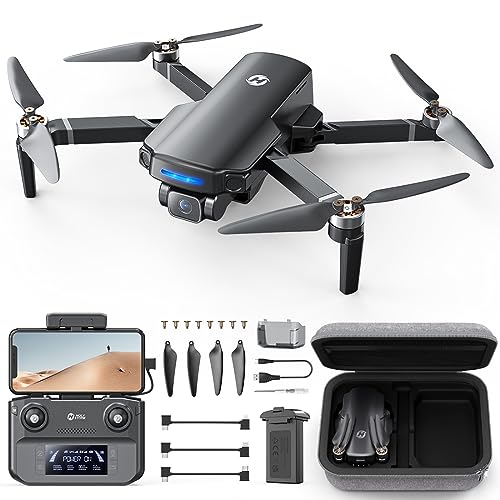
The HS360S is Holy Stone’s budget GPS option, a foldable 249 gram drone with a 4K UHD camera built around a GalaxyCore sensor. The camera tilts up to 90 degrees by remote or app, and the listing describes 4K photos and video; still resolution is listed at 8 MP, lower than the DJI and Potensic picks, so stills-focused buyers should weigh that difference.
Control range is listed at up to 10,000 feet, with about 20 minutes of flight from the modular battery. GPS features include Follow Me, smart return home, Tap Fly, and point of interest modes, plus a beginner mode and optical flow positioning for steadier hovering. It uses electronic stabilization rather than a mechanical gimbal, the main trade-off against the top two picks.
Specs
- Weight: 249 g, foldable design
- Camera: 4K UHD, 8 MP stills per the listing, 90-degree adjustable angle
- Flight time: about 20 minutes per modular battery, per the listing
- Control range: up to 10,000 feet
- Features: GPS Follow Me, smart return home, Tap Fly, beginner mode, brushless motors
- Stabilization: electronic; confirm details on the listing
- In the box: drone, battery, transmitter, charging cable, connection cables, spare propeller, screwdriver
4. DJI Neo Three-Battery Combo

The Neo takes a different approach: it is a 135 gram self-flying camera that launches from your palm and follows you without a traditional controller. It records 4K video and 12 MP stills with electronic stabilization and full propeller guards, which suit close-range filming of walks, rides, and everyday moments. Subject tracking and QuickShots are built in, and control is handled through the app, voice, or an optional controller.
This three-battery combo includes three flight batteries, a two-way charging hub, propeller guards, and spare propellers, but no remote controller, so check the listing carefully if you want stick control. Flight time per battery is shorter than the larger drones here, at up to 18 minutes per DJI’s published figures, which is why the multi-battery kit matters. Choose the Neo for an always-with-you follow camera, and a GPS drone above for range and manual flying.
Specs
- Weight: 135 g
- Camera: 4K video, 12 MP stills, electronic stabilization, built-in propeller guards
- Flight time: up to 18 minutes per battery, per brand figures; confirm on the listing
- Features: palm takeoff and landing, subject tracking, QuickShots, app control
- Controller: not included in this combo; confirm on the listing
- In the box: drone, 3 batteries, two-way charging hub, propeller guards, spare propellers, USB-C cable
5. Ruko F11MINI

The F11MINI is the value-kit pick from Ruko: a foldable 245 gram GPS drone with a brushless motor, a carrying case, and multiple batteries in the box. Ruko lists 4K photo resolution with 12 MP stills and 2.7K video, so video resolution sits a step below the true-4K picks, and buyers who prioritize footage should factor that in.
GPS features include auto return, Follow Me, waypoint flight, and point of interest. Total flight time depends on the kit: two-battery versions are listed at up to 60 minutes combined, while the three-battery version runs longer, so confirm which kit the listing describes before comparing it with the other picks. The bundle includes a remote controller, spare propellers, a camera protector, and charging cables. For beginners who want GPS assistance, a case, and spare batteries without buying accessories separately, it is a practical starting point.
Specs
- Weight: 245 g, foldable design
- Camera: 4K photos, 12 MP stills, 2.7K video per the listing details
- Flight time: up to 60 minutes total with 2 batteries; varies by kit, confirm on the listing
- Transmission: 5GHz FPV; range varies by version, confirm on the listing
- Features: GPS auto return, Follow Me, waypoint flight, brushless motor
- In the box: drone, remote controller, batteries (count varies by kit), carrying case, spare propellers, camera protector, cables
How to choose
Start with weight and rules. Drones under 249 grams are listed by their makers as not requiring FAA registration for recreational use in the United States, but regulations differ by country and change, so verify the current rules for where you will fly. Next, look at stabilization: a 3-axis gimbal gives the smoothest video, electronic stabilization is a step down, and fixed cameras show the most shake.
Then count real flight time. A single battery typically delivers somewhere between about 18 and 31 minutes in this class, and wind and temperature reduce that in practice, so kits with two or three batteries and a charging hub are worth more than a slightly better camera if you plan longer sessions. Finally, check what is actually in the box. A controller, a case, spare propellers, and a memory card may or may not be included, and those extras are part of the real price of getting started.
Who should skip
Skip the budget class entirely if you need obstacle avoidance sensors, professional color profiles, or reliable performance in strong wind; those features live in higher price tiers. Skip the Neo if you want long-range manual flying, and skip the lighter-stabilized picks like the HS360S and F11MINI if smooth 4K video is your main goal, since their stabilization and video specs are a step behind the gimbal models. And if you plan to fly commercially, registration and certification requirements are different, so research those rules before buying anything.
FAQ
Do budget drones under 249 grams need FAA registration?
The listings for the sub-249g picks here state that FAA registration and Remote ID are not required for recreational use in the United States. Rules depend on how and where you fly and can change, so check the current requirements with the aviation authority in your country before your first flight.
How long can a budget drone actually stay in the air?
Per battery, the picks here range from about 18 minutes for the DJI Neo to about 31 minutes for the DJI Mini 4K, based on listing and brand figures. Real flights are usually shorter in wind or cold. Multi-battery kits extend a session by swapping batteries, not by flying longer in one go.
Is a 3-axis gimbal worth paying for in a budget drone?
If video is your main reason for buying, generally yes. A mechanical 3-axis gimbal, like those on the DJI Mini 4K and Potensic ATOM, compensates for movement on all axes and produces visibly smoother footage than electronic stabilization alone. If you mostly want to learn to fly, electronic stabilization is acceptable.
What else should I budget for besides the drone?
A microSD card if one is not included, spare propellers, and possibly extra batteries or a charging hub. Also check whether the kit includes a controller and a case. Comparing the full kit contents, rather than the drone price alone, gives a fairer picture of value.
Final verdict
The DJI Mini 4K is the safest all-round budget buy, with the strongest camera package and the longest single-battery flight time here. The Potensic ATOM Fly More Combo is the better value if you want three batteries and a charging hub included from day one. The Holy Stone HS360S and Ruko F11MINI trade some camera performance for lower-cost GPS flying with useful kit bundles, and the DJI Neo is in a class of its own as a palm-sized follow camera. Match the pick to how you will actually fly, and confirm the kit contents on the listing before ordering.
More from Amazon
Programs that pair well with the guide above. Offers and eligibility are set by Amazon and may change.
Free shipping on eligible items, Prime Video and more. Eligible new members can start with a free trial.
Start a Prime free trialAudiobooks and podcasts to listen to on the go. Eligible new members can start with a free trial.
Try Audible freeAd-free music streaming. Eligible new subscribers can start with a free trial.
Try Music Unlimited freeA free business account with business pricing and bulk-buying tools for work, shop or home office.
Create a business accountAs an Amazon Associate we earn from qualifying purchases.