Our Short List of 3

- Best for: Partners who want a direct, replayable strategy duel with several ways to win.
- Publisher: Asmodee, designed by Antoine Bauza and Bruno Cathala
- Players: 2 only
- Playtime: 30 minutes
- Ages: 10 and up

- Best for: Couples who enjoy a calm, tactile puzzle with gentle pressure instead of attacks.
- Publisher: Lookout Games, designed by Uwe Rosenberg
- Players: 2 only
- Playtime: 30 minutes
- Ages: 8 and up
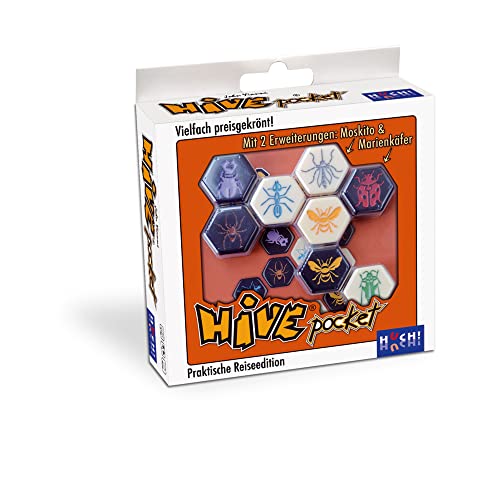
- Best for: Travelling pairs and small tables that cannot fit a full board.
- Publisher: Smart Zone Games
- Players: 2 only
- 26 tiles, including Ladybug and Mosquito expansion pieces
- No board required; the tiles form the playing surface
All 5 Picks at a Glance
| Product | Specs | Action |
|---|---|---|
| Asmodee 7 Wonders Duel Board Game |
| Check price on Amazon |
| Lookout Games Patchwork Board Game (Revised Edition) |
| Check price on Amazon |
| Smart Zone Games Hive Pocket |
| Check price on Amazon |
 Space Cowboys Splendor Duel Board Game |
| Check price on Amazon |
 Scorpion Masqué Sky Team |
| Check price on Amazon |
Key takeaways
- Five budget board games built for two players only, from civilization duels and quilt puzzles to a cooperative cockpit landing, with listing specs.
Most board games quietly assume a crowd, so couples and pairs often end up scaling down rules meant for four. A game designed for exactly two plays differently: every move lands directly on one opponent, turns come back fast, and nothing waits on a third person showing up. The five boxed games below were built for a pair from the first rule, and each one stays in the small-box, low-cost corner of the hobby.
This guide is for partners who play after dinner, roommates with one shared shelf, and gift buyers shopping for a duo. Every pick comes from its Amazon listing, with player counts, ages and play times taken from the product titles and specification tables rather than from reviews or outside rankings.
Quick Picks
As an Amazon Associate we earn from qualifying purchases
| Product | Best for | Key spec from title |
|---|---|---|
| Asmodee 7 Wonders Duel | Couples who want a real strategy contest | 2 players, 30 minute playtime, ages 10+ |
| Lookout Games Patchwork (Revised Edition) | Pairs who prefer a calm spatial puzzle | 2 players, 30 minute playtime, ages 8+ |
| Smart Zone Games Hive Pocket | Travel and small tables | 26 tiles with Ladybug and Mosquito expansions |
| Space Cowboys Splendor Duel | Engine builders who like collecting sets | 2 players, 30 minute playtime, ages 10+ |
| Scorpion Masqué Sky Team | Partners who would rather cooperate | 2 players, 20 minutes playing time, ages 14+ |
How to Choose
Check That Two Is the Design, Not a Variant
Plenty of group games print a two-player variant on the box, and most of those variants feel patched together, with dummy hands or removed cards doing the work of missing people. A dedicated duel game instead builds its tension around a single opponent: shared displays, direct blocking and scoring that reacts to one rival. When a listing states two players as the only count rather than a range, the balance has usually been tuned for pairs from the start, which is exactly the case with all five games in this guide.
Match the Style of Competition to the Pair
Two-player games split into camps that suit very different evenings. Direct contests such as 7 Wonders Duel reward watching an opponent and cutting off their plans. Abstract games like Hive Pocket and Patchwork remove luck almost entirely, so the better plan wins and rematches settle arguments. Splendor Duel sits between the two, with an engine that grows quietly before it spikes. Sky Team removes opposition altogether and makes the pair a crew. Decide first whether the pair enjoys beating each other, out-thinking each other, or solving something together, then shop inside that camp.
Weigh Play Time Against Depth Honestly
A thirty minute listing time only helps if the pair actually finishes games. Duel titles with several victory paths, such as 7 Wonders Duel and Splendor Duel, pack real decisions into half an hour, but the first learning game runs longer. Hive Pocket and Sky Team finish closer to twenty minutes and teach in far fewer rules. Patchwork looks gentle, yet its button economy punishes sloppy planning. Buyers who play on weeknights should favour the shorter, lighter boxes; buyers who want a standing weekly rivalry can carry the heavier thirty minute games without trouble.
Look at Components, Table Space and Storage
Small boxes earn their shelf space twice over in a two-player collection. Hive Pocket needs no board at all, because its chunky tiles become the playing surface, and the whole game travels in a drawstring bag. Patchwork asks for room for two personal quilt boards plus a ring of tiles. 7 Wonders Duel spreads cards across the table in layered rows. Sky Team hides dice behind screens on a shared cockpit board. Check the box dimensions and component lists on each listing against the table and storage the pair really has.
The 5 Best Options
Asmodee 7 Wonders Duel Board Game
- Best for: Partners who want a direct, replayable strategy duel with several ways to win.
- Publisher: Asmodee, designed by Antoine Bauza and Bruno Cathala
- Players: 2 only
- Playtime: 30 minutes
- Ages: 10 and up
Partners who want a direct, replayable strategy duel with several ways to win.
There is no way to add a third player, so it stays in the cupboard on group nights.
Two rival civilizations grow side by side over three ages, drafting cards from a shared display where every card taken is one the opponent cannot have. Victory can arrive suddenly through military pressure or a set of science symbols, or settle on points at the end, so both players stay alert from the first draft to the last. It suits pairs who want the weight of a civilization game inside half an hour, with enough interaction that no one can simply build in a corner and ignore the other side of the table.
Lookout Games Patchwork Board Game (Revised Edition)
- Best for: Couples who enjoy a calm, tactile puzzle with gentle pressure instead of attacks.
- Publisher: Lookout Games, designed by Uwe Rosenberg
- Players: 2 only
- Playtime: 30 minutes
- Ages: 8 and up
Couples who enjoy a calm, tactile puzzle with gentle pressure instead of attacks.
The theme hides a strict efficiency puzzle, so it can frustrate players expecting a relaxed craft activity.
Patchwork turns quilting into a quiet contest of space and timing. Each player fills a personal nine by nine quilt board with fabric tiles bought from a shared ring, paying in buttons and time. Moving further along the time track earns more buttons but hands the opponent extra turns, so a greedy purchase can cost the game. It fits pairs who like puzzles more than confrontation: nobody attacks a quilt, yet every tile left unplaced counts against its owner when the boards are scored at the end.
Smart Zone Games Hive Pocket
- Best for: Travelling pairs and small tables that cannot fit a full board.
- Publisher: Smart Zone Games
- Players: 2 only
- 26 tiles, including Ladybug and Mosquito expansion pieces
- No board required; the tiles form the playing surface
Travelling pairs and small tables that cannot fit a full board.
The smaller Pocket tiles are easier to knock out of place than the full-size set, so a steady surface helps.
Hive does away with the board entirely. Twenty-six chunky hexagonal tiles, each printed with an insect that moves in its own way, are placed and slid around one growing hive, and the first player to surround the opposing queen bee wins. The Pocket edition shrinks the tiles for travel, packs them in a drawstring bag, and includes the Ladybug and Mosquito expansion pieces in the box. It suits pairs who play in cafes, on trains or across a kitchen counter, and who like chess-like thinking without a chess clock or a folding board to store.
Space Cowboys Splendor Duel Board Game
- Best for: Pairs who like building an engine and racing to a points target.
- Publisher: Space Cowboys, distributed by Asmodee
- Players: 2 only
- Playtime: 30 minutes
- Ages: 10 and up
Pairs who like building an engine and racing to a points target.
The shared gem board means a careless refill can hand the opponent exactly the token they needed.
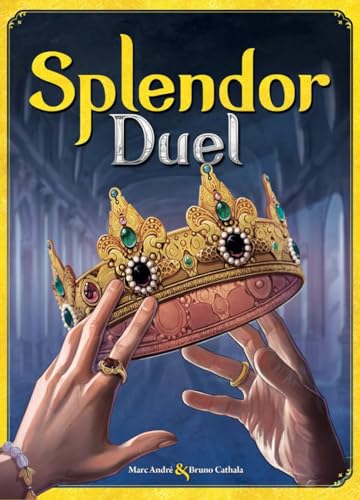
Splendor Duel rebuilds the gem-trading engine of Splendor for exactly two players. Each turn takes gems from a shared board that refills in a fixed pattern, so a token grabbed early can block the card an opponent was saving for. Cards build a discount engine, scrolls grant extra moves, and the game can end three ways: twenty prestige points, ten crowns, or ten points in a single colour. It fits pairs who enjoy watching a plan compound over thirty minutes, with enough shared-board friction that neither engine runs in isolation for long.
Scorpion Masqué Sky Team
- Best for: Partners who prefer teamwork and tension over head-to-head scoring.
- Publisher: Scorpion Masqué
- Players: 2 only, fully cooperative
- Playtime: 20 minutes
- Ages: 14 and up
Partners who prefer teamwork and tension over head-to-head scoring.
The no-talking rule during dice placement frustrates pairs who like to plan every move out loud.
Sky Team is the cooperative entry: two players sit as pilot and co-pilot of an airliner and roll dice in silence, then place them on a shared cockpit board to manage speed, altitude, radio calls and landing gear. Discussion is allowed before the dice roll and forbidden during placement, which turns every approach into a small exercise in trust. Twenty airports of rising difficulty keep the box busy long after the first landing. It suits pairs who would rather beat a scenario together than beat each other, and it won the Spiel des Jahres Game of the Year award in 2024.
Which One Fits Your Situation
You Play With a Partner Most Evenings
Choose between 7 Wonders Duel and Patchwork by temperament. Duel delivers argument, blocking and sudden endings, and it rewards couples who enjoy a running score across the week. Patchwork delivers the same half hour in a quieter register, where each player mostly minds a private quilt. Many pairs end up owning both, because the mood decides which box opens.
Your Games Happen Away From Home
Hive Pocket is the natural pick, since the bag holds the whole game and any flat surface becomes the board. Sky Team also travels well in a compact box, although its screens and strips want a table rather than a train tray. The other three games spread cards or tiles widely enough that they play best at home.
One of You Dislikes Losing Directly
Sky Team removes the loser problem entirely, because the plane lands or it does not, and both players share the result. Patchwork softens defeat in a different way: each player builds a separate quilt, so a loss feels like a puzzle scored higher rather than an attack that landed. Start with one of these two when a pair is still deciding whether game night is fun.
You Are Buying a Gift for a Duo
Match the box to the couple rather than to the occasion. New homeowners with a first flat often enjoy Patchwork and its cosy theme, while competitive couples get more mileage from 7 Wonders Duel or Splendor Duel. Hive Pocket suits the pair who already travel together. When in doubt, the cooperative Sky Team is the safest gift, because nobody has to lose at their own present.
Common Mistakes
- Buying a three to four player game with a two-player variant, then finding the variant uses dummy hands and stripped rules.
- Assuming a friendly theme means a gentle game, when Patchwork scores every empty square against its owner.
- Ignoring the ages on the listing, which matter here because Sky Team is listed at 14 and up while Patchwork starts at 8.
- Forgetting table space: card rows in 7 Wonders Duel and the tile ring in Patchwork both spread wider than the box suggests.
- Treating playtime on the box as the first-game time, when learning any of these adds a slower opening round.
Frequently Asked Questions
Are these games really only for two players?
Yes. Each listing states two players as the full count rather than the bottom of a range, and the designs depend on that limit: one shared display, one opponent, no waiting. None of the five can absorb a third player with a house rule, so households expecting groups should look at family-weight games with wider player ranges instead.
Which of these is easiest to learn first?
Hive Pocket and Patchwork teach fastest. Hive has one goal and a short list of insect movements, while Patchwork asks players to buy a tile, place it and move a marker. Sky Team adds a communication restriction, and the two Duel games carry the most rules, although both still explain cleanly in about fifteen minutes.
Do any of these games rely on luck?
Very little. Hive Pocket and Patchwork contain no dice and no shuffled decks, so results come from decisions alone. 7 Wonders Duel and Splendor Duel shuffle cards and refill a gem board, which changes each game without deciding it. Sky Team rolls dice every round, but placement choices, not the roll itself, usually decide the landing.
What should a complete beginner buy first?
Patchwork is the gentlest starting point: quiet, pretty, and finished in half an hour, with rules a new player grasps in one demonstration round. Couples who already know they enjoy direct competition can skip straight to 7 Wonders Duel. Sky Team suits beginners who prefer cooperating, provided they accept the silent placement rounds.
FAQ
Are these games really only for two players?
Which of these is easiest to learn first?
Do any of these games rely on luck?
What should a complete beginner buy first?
More from Amazon
Programs that pair well with the guide above. Offers and eligibility are set by Amazon and may change.
Free shipping on eligible items, Prime Video and more. Eligible new members can start with a free trial.
Start a Prime free trialAudiobooks and podcasts to listen to on the go. Eligible new members can start with a free trial.
Try Audible freeAd-free music streaming. Eligible new subscribers can start with a free trial.
Try Music Unlimited freeA free business account with business pricing and bulk-buying tools for work, shop or home office.
Create a business accountAs an Amazon Associate we earn from qualifying purchases.