Key takeaways
- 8–12 mm: suitable for yoga, stretching, light cardio and temporary bodyweight workouts. Avoid placing loaded racks on this thickness.
- 15–20 mm: a practical range for mixed home training with dumbbells, kettlebells, benches and moderate cardio.
- 20–30 mm: better for frequent free-weight use, heavier dumbbells and controlled barbell work.
- 30 mm or more: appropriate for higher-impact lifting zones, especially when paired with a rigid platform or separate drop pads.
Best Gym Flooring Tiles for Home Workouts
The best gym flooring tiles depend on what hits the floor: choose dense rubber tiles for weights and high-impact training, EVA foam for low-cost bodyweight workouts, and thicker layered flooring when you need both cushioning and protection for a hard subfloor.
Quick picks by workout situation
| Home workout situation | Best flooring type | Recommended specification | Why it fits |
|---|---|---|---|
| Yoga, stretching and light mobility | Closed-cell EVA foam | 10–15 mm thick, medium density | Comfortable for kneeling and easy to install or remove |
| Bodyweight circuits and cardio | Dense EVA or rubber tile | 15–20 mm thick; textured, non-slip surface | Balances cushioning, grip and stable footwork |
| Dumbbells, kettlebells and adjustable weights | Rubber tiles | 15–20 mm thick, approximately 60–75 kg/m³ density | Resists dents and controls noise better than foam |
| Barbell lifting and repeated deadlifts | High-density rubber or rubber stall-mat style tiles | 20–30 mm thick; 15–25 kg per square metre is typical | Protects the subfloor from routine drops and concentrated impact |
| Apartment or upstairs workout room | Dense rubber over an impact underlay | 15–20 mm rubber plus 5–10 mm isolation layer | Reduces vibration more effectively than simply adding thin foam |
| Temporary or low-budget workout area | Interlocking EVA foam | 10–12 mm tiles, usually 600 × 600 mm | Lowest initial cost and easiest to pack away |
Rubber versus foam: the important difference is density
Rubber tiles for weights and frequent use
Rubber is the safer all-round choice when your training includes dumbbells, kettlebells, barbells, plyometric jumps or exercise equipment with small hard feet. Its higher density distributes force and resists permanent compression. A 15 mm rubber tile can be more protective and stable than a much thicker, soft foam tile.
Our top picks
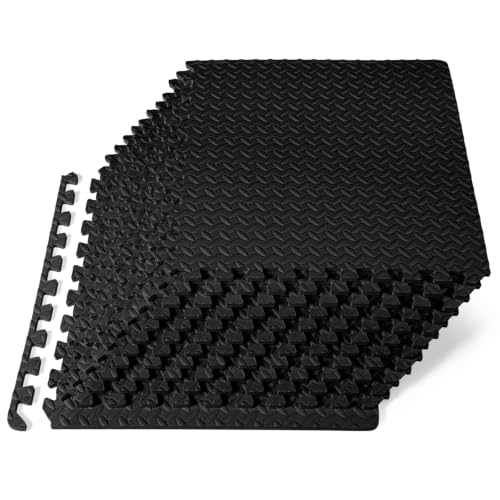


As an Amazon Associate we earn from qualifying purchases at no extra cost to you. Ratings are shown as listed on Amazon.
Look for recycled rubber or virgin rubber with a consistent, non-crumbly surface. Recycled rubber is often less expensive and perfectly suitable for a home gym, although it can have a stronger smell when new. A smooth, solid tile is easier to sweep, while a flecked rubber surface can disguise chalk, dust and small marks.
Rubber will not make every dropped weight harmless. Heavy barbell drops, failed lifts and repeated use of iron plates can still damage a concrete slab, wood subfloor or the equipment itself. For serious Olympic lifting, use a designated lifting platform or thick rubber crash pads rather than relying on ordinary interlocking tiles.
Foam tiles for comfort and occasional workouts
EVA foam is lightweight, inexpensive and comfortable for floor exercises. It works well under a yoga mat, for children’s movement areas, stretching, Pilates-style routines and bodyweight circuits without external weights.
The drawback is compression. Foam can develop dents under a bench, rack or treadmill, and its interlocking edges may separate during lateral movement. Soft foam also creates a less stable base for heavy strength equipment. If a tile feels springy under one foot or leaves a visible mark after furniture is removed, it is better suited to mobility work than lifting.
How thick should home gym flooring be?
Thickness is useful, but it is not a standalone impact rating. Match it to the load, drop height and subfloor beneath it:
- 8–12 mm: suitable for yoga, stretching, light cardio and temporary bodyweight workouts. Avoid placing loaded racks on this thickness.
- 15–20 mm: a practical range for mixed home training with dumbbells, kettlebells, benches and moderate cardio.
- 20–30 mm: better for frequent free-weight use, heavier dumbbells and controlled barbell work.
- 30 mm or more: appropriate for higher-impact lifting zones, especially when paired with a rigid platform or separate drop pads.
For a treadmill or exercise bike, prioritize a firm, level surface over maximum softness. Excessively soft foam can allow equipment feet to rock and may interfere with accurate leveling. Check the machine manufacturer’s clearance and flooring requirements before placing it on a thick surface.
Interlocking design and surface grip
Interlocking tiles are convenient because they need no adhesive and can be replaced individually. Look for cleanly cut teeth, tight seams and enough edge stability that the floor does not pull apart during burpees, lateral shuffles or sled-style movements. A border or ramp edge makes a loose-laid floor safer to step onto and gives the room a finished appearance.
Tiles with straight edges can look neater against walls, but they require more accurate cutting. Puzzle edges hide minor alignment errors and are easier for renters or temporary setups. Either design can move if installed over dust, carpet pile or an uneven subfloor.
Grip should be secure without being abrasive. A heavily textured rubber surface can improve traction but may be uncomfortable during floor exercises. If you train barefoot, check the finish for sharp recycled-rubber particles and choose a smoother top layer or use a separate exercise mat.
Coverage: calculate the real amount before buying
Measure the usable floor area, not merely the room’s wall-to-wall dimensions. Leave enough clearance to walk around equipment and perform movements safely. Then add approximately 5% for trimming and replacement pieces.
For example, a workout zone measuring 10 feet by 8 feet requires:
10 × 8 = 80 squ