Key takeaways
- Unspecified waterproofing when you intend to use the massager in the shower.
- Hard plastic tips, sharp seams, or tips that do not flex under light pressure.
- Very high speeds with no low setting or automatic shutoff.
- Fixed heads that trap hair and cannot be rinsed properly.
- Short battery life combined with a proprietary charger.
- Marketing that promises new hair growth or treats a medical form of hair loss without clinical support.
The best electric scalp massagers for hair growth are gentle, waterproof devices with flexible silicone tips, a comfortable kneading mode, and enough battery life for regular use—not necessarily the fastest or most powerful model.
It is important to set expectations: a scalp massager may help distribute shampoo, loosen surface buildup, and make a relaxing scalp-care routine easier, but it is not a proven treatment for hair loss or a substitute for medical advice. If shedding is sudden, patchy, painful, or accompanied by redness or scaling, consult a dermatologist.
Our top picks
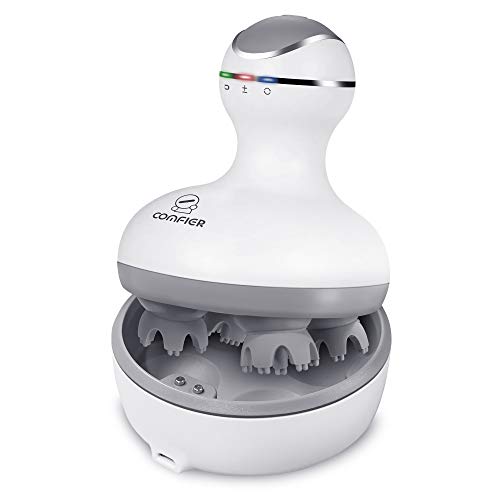
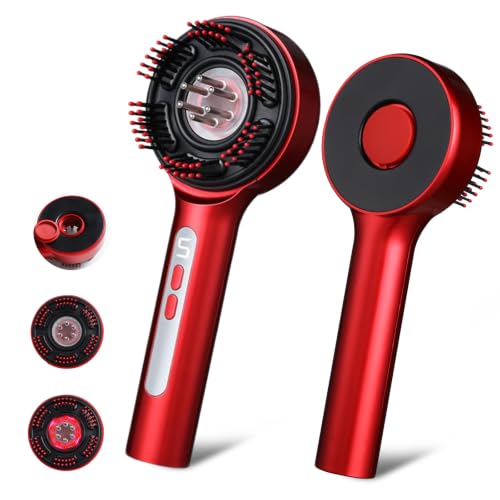

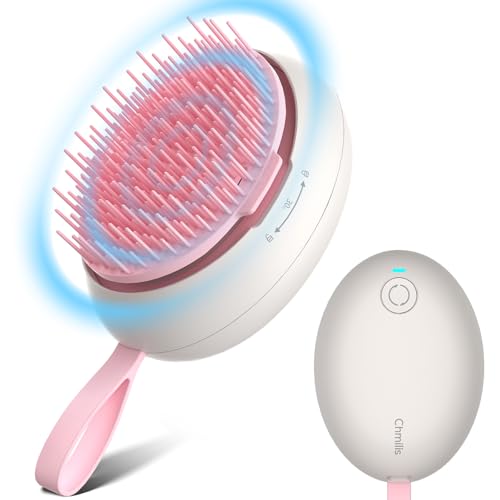
As an Amazon Associate we earn from qualifying purchases at no extra cost to you. Ratings are shown as listed on Amazon.
Best electric scalp massagers by situation
| Situation | Best choice | Specifications to prioritize | Why it fits |
|---|---|---|---|
| First-time buyer | Simple cordless vibrating massager | 2–3 speeds, 100–150 g, silicone tips, 30-minute timer | Easy to control and less likely to overwork a sensitive scalp |
| Frequent shampoo user | Waterproof kneading model | IPX6 or better, removable head, 60–90 minute battery | Can be used with shampoo and rinsed after every session |
| Thick or long hair | Four-head rotating massager | 20–30 mm flexible tips, 4 rotating heads, at least 45 minutes of runtime | Reaches the scalp more effectively than a shallow vibration-only brush |
| Sensitive or dry scalp | Low-intensity vibration brush | One gentle setting, soft tips, 10–15 minute auto-shutoff | Produces less pulling and friction than aggressive kneading |
| Travel or small bathroom | Compact USB-C model | Under 200 g, charging case or cover, 30-minute runtime | Uses less storage space and avoids a proprietary charger |
Vibration versus kneading: which mode is better?
Vibration mode
Vibration uses rapid, shallow movement rather than gripping the scalp. It is usually the better starting point for people with fine hair, a tender scalp, or concerns about tangling. Vibration also works well when applying a pre-shampoo product because it is less likely to drag strands at the roots.
The trade-off is coverage. A vibration-only device may feel pleasant without moving enough to loosen stubborn product residue. It also requires you to move the brush around manually, so a rushed session can leave areas untreated.
Kneading or rotating mode
Kneading heads imitate the circular movement of fingertips. They can provide more noticeable scalp stimulation and distribute shampoo efficiently, particularly on thick hair. A useful design has rounded silicone tips that flex when they meet resistance; rigid tips can pull hair or scratch the skin.
Kneading is not automatically better. High speed, pressing down, or repeatedly staying in one spot can cause soreness and increase tangling. Start on the lowest setting, keep the device moving, and use no more pressure than needed to keep the tips in contact with the scalp.
Key features that matter more than extra speed settings
Waterproofing
For use in the shower, look for a clearly stated rating such as IPX6 or IPX7. IPX6 indicates protection against powerful water jets, while IPX7 refers to temporary immersion under specified test conditions. A device described only as “water resistant” should not automatically be submerged.
Waterproofing does not remove the need for care. Keep the charging port sealed, charge the device only when it is completely dry, and never place a wet massager on its charging base unless the manufacturer specifically permits it.
Brush material and tip shape
Food-grade or body-safe silicone is generally easier to clean than porous foam, fabric, or untreated rubber. Look for tips with rounded ends and moderate flexibility. Very soft tips feel comfortable but may struggle to reach through dense hair; very stiff tips can feel scratchy and create more pulling.
Tip spacing also matters. Closely spaced tips can snag long hair, while wider spacing may glide more easily through curls. If your hair tangles easily, part it into sections and use a slower speed rather than choosing the most aggressive head.
Battery life and charging
A 10-minute session is usually sufficient for a routine, so a 45-minute battery provides approximately four sessions between charges after allowing for charging losses. A 90-minute battery is more convenient for daily use, but battery capacity adds weight and does not necessarily improve massage quality.
USB-C charging is preferable for travel. Some devices use sealed internal batteries, meaning the battery is not intended to be replaced. Expect charging performance to decline after repeated long-term use; avoid leaving the unit permanently connected to power in a hot bathroom.
Head-to-head: compact vibration brush versus rotating shower massager
| Characteristic | Compact vibration brush | Rotating shower massager |
|---|---|---|
| Typical weight | 100–170 g | 180–320 g |
| Typical runtime | 30–60 minutes | 45–90 minutes |
| Movement | Shallow vibration | Mechanical circular kneading |
| Hair-pulling risk | Low when moved gently | Moderate if used on dry, tangled hair |
| Shower suitability | Good if rated IPX6 or higher | Good if the rotating head and seals are washable |
| Best use | Dry scalp relaxation and sensitive scalps | Shampoo distribution and thicker hair |
| Typical market price | About $20–$50 | About $30–$80 |
How to use an electric scalp massager without creating tangles
- Choose the correct starting condition. For thick or curly hair, begin with damp hair and plenty of conditioner or shampoo slip. For fine or easily tangled hair, use the lowest setting and short passes.
- Divide the scalp into zones. Work across the hairline, temples, crown, sides, and back rather than repeatedly circling the same area.
- Use light contact. Let the tips touch the scalp; do not press until the motor slows down. Excess pressure adds friction without providing a reliable benefit.
- Limit the session. Start with five minutes, then increase to 10 minutes if your scalp remains comfortable. Stop if you notice pain, burning, persistent redness, or increased irritation.
- Rinse and dry the device. Remove loose hair, rinse shampoo residue from the tips, shake off water, and leave the massager open to air-dry before charging.
Cleaning, durability, and ownership costs
The silicone tips usually last longer than the battery and the small seals around the charging port. Check the head after each use for cracks, loosened tips, cloudy discoloration, or a sticky surface. These are reasons to replace the head or device rather than continuing to use it on the scalp.
For routine cleaning, rinse with lukewarm water and mild soap, then dry thoroughly. Avoid abrasive brushes, solvents, boiling water, and essential oils unless the manufacturer says they are compatible. Oils can soften some rubber compounds and may work their way into seams.
Consider the cost per use before paying for extra modes. A $40 device used three times weekly for one year gives about 156 sessions, or roughly $0.26 per use before electricity. A $70 device used once a week gives about 52 sessions, or $1.35 per use. The less expensive model is the better value only if its comfort and cleaning routine make you use it consistently.
What to avoid when choosing the best electric scalp massager for hair growth
- Unspecified waterproofing when you intend to use the massager in the shower.
- Hard plastic tips, sharp seams, or tips that do not flex under light pressure.
- Very high speeds with no low setting or automatic shutoff.
- Fixed heads that trap hair and cannot be rinsed properly.
- Short battery life combined with a proprietary charger.
- Marketing that promises new hair growth or treats a medical form of hair loss without clinical support.
Bottom line
Choose a compact vibration model if scalp comfort, light weight, and low tangling risk are your priorities. Choose a waterproof rotating kneading model if you have thick hair and want help distributing shampoo. In either case, flexible silicone tips, a low-speed option, easy rinsing, and a 30-minute or longer battery are more useful than a long list of intensity settings. Treat the device as a scalp-care and relaxation tool, and seek professional advice for persistent hair loss or scalp symptoms.