Key takeaways
- Solid-wood student models: A practical middle ground for regular lessons. Inspect the finish and joints, but give extra attention to setup and playability.
- Laminated or mixed-construction models: Often chosen for lower upfront cost or frequent student use. Ask which parts are solid wood and what repairs the seller can support.
- Advancing-player instruments: Compare how easily the cello speaks across strings and registers, how it responds at different dynamics, and whether a qualified player can assess it in person.
Best Cellos: Choose by Size, Setup and Playing Level
The best cello is a correctly sized instrument with a stable setup—not necessarily the most expensive one: beginners are usually best served by a properly adjusted student outfit, while advancing players may benefit from better wood, fittings and bow response. Before comparing models or prices, confirm the player’s size with a teacher or string specialist, then check that the cello arrives ready to play.
Quick comparison: common cello sizes
Cello sizes are fractional, not a simple measurement of the player’s height. The table gives typical body lengths and approximate age ranges; these are starting points, not fitting rules. Children of the same age can need different sizes, and a comfortable fit matters more than matching an age band.
Our top picks

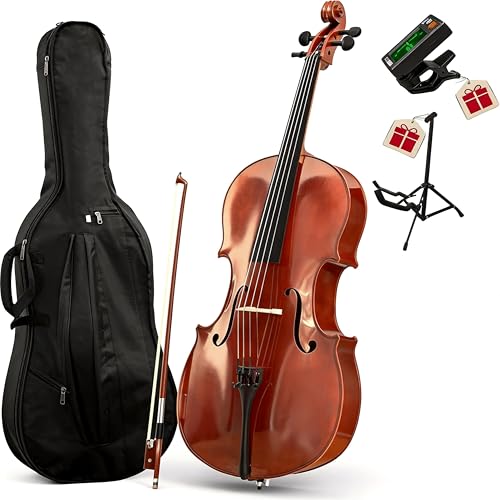

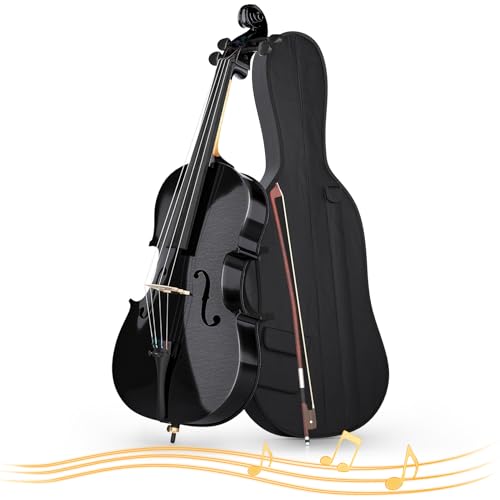
As an Amazon Associate we earn from qualifying purchases at no extra cost to you. Ratings are shown as listed on Amazon.
| Size | Approx. body length | Typical player | Best use |
|---|---|---|---|
| 1/8 | 17–18 in (43–46 cm) | Often ages 4–6 | Young beginners who cannot comfortably manage a larger body |
| 1/4 | 20–22 in (51–56 cm) | Often ages 5–7 | Early lessons; check reach and posture carefully |
| 1/2 | 24–26 in (61–66 cm) | Often ages 7–9 | Growing students who have outgrown a smaller instrument |
| 3/4 | 27–28 in (69–71 cm) | Often ages 9–12 | Many older children and smaller teens or adults |
| 4/4 | About 30 in (76 cm) | Often teens and adults | Full-size playing, provided the player can reach and bow comfortably |
Measurements vary slightly by maker and by how the body is measured. A teacher or shop can assess the player with the cello in playing position: the left hand should reach the fingerboard without strain, and the instrument should sit securely between the knees. Don’t choose a larger size “to grow into”—poor reach can make basic technique harder.
Best cello choice by situation
| Player or priority | What to look for | Why it fits |
|---|---|---|
| First-year student, uncertain commitment | Rental or entry-level outfit in the correct size, with shop setup and a trial or exchange option | Keeps the initial cost manageable and makes it easier to change size as the student grows |
| Committed school-age player | Well-adjusted solid-wood student cello, reliable bow, case and usable rosin | Supports regular practice without paying for features a developing player may not yet need |
| Advancing player | Instrument selected for response and tone, with a well-fitted bridge, soundpost and strings | Setup and individual playing feel become more important as technique and repertoire develop |
| Frequent commuting or school transport | Protective case, secure bow storage and a manageable total outfit weight | Reduces everyday handling risk; the case and instrument together can be heavy |
Materials and construction: what the price buys
Traditional acoustic cellos use a carved spruce top and maple back, sides and neck. Spruce is valued for its soundboard properties, while maple is commonly used for the body and neck. Entry-level instruments may combine solid wood with laminated parts; some budget instruments use more laminate. These construction choices affect cost and can influence sound and repair options, but they do not tell the whole story. A carefully set-up student cello can be a better choice than a more expensive instrument that is difficult to play.
- Solid-wood student models: A practical middle ground for regular lessons. Inspect the finish and joints, but give extra attention to setup and playability.
- Laminated or mixed-construction models: Often chosen for lower upfront cost or frequent student use. Ask which parts are solid wood and what repairs the seller can support.
- Advancing-player instruments: Compare how easily the cello speaks across strings and registers, how it responds at different dynamics, and whether a qualified player can assess it in person.
Wood instruments respond to changes in humidity and temperature. Avoid leaving a cello in a hot car, beside a heater or in direct sun. Sudden environmental changes can contribute to open seams or cracks, which may require professional repair. Wipe rosin dust from the strings and top after playing with a clean, dry cloth; don’t use household cleaners or polish unless a luthier confirms they are suitable.
Accessories and setup: the outfit is only a starting point
Student packages commonly include a bow, case and rosin; some include a stand, tuner or extra strings. Included does not always mean suitable. A bow may need rehairing, a case may offer limited protection, and the rosin may be a basic sample. Compare the complete setup rather than counting accessories.
- Bow: Check that it draws a straight line across the strings and that the hair is evenly tensioned. A teacher can advise whether the bow balances well for the player.
- Case: Look for a secure closure, stable handle, shoulder straps and room to store the bow without pressure. A good case helps protect the instrument during transport but cannot make unsafe storage safe.
- Endpin stopper: A floor anchor helps prevent the endpin from slipping. Make sure it suits the floor surface and is used consistently.
- Rosin and strings: Rosin is a consumable; strings eventually lose clarity or break. Budget for replacements and ask a teacher before changing string brands or tension.
Before the first lesson, have a qualified shop or luthier check the bridge position and alignment, soundpost, string height, pegs, endpin and bow. The bridge is not glued in place; don’t force it upright or adjust the soundpost yourself. High strings can make notes unnecessarily difficult to press, while an incorrectly positioned soundpost can affect response and stability. A basic adjustment at purchase can prevent weeks of frustration.
Buying new, renting or moving up
For a young learner who may change sizes within a few years, compare a rental with purchase costs and exchange terms. For example, if a rental costs $40 per month, a year costs $480 before any fees. That is not automatically cheaper than buying: the rental may include maintenance or a size exchange, while a purchased instrument may retain some resale value but needs upkeep. Ask what the monthly payment covers, whether insurance or repairs are included, and what happens when the player needs the next size.
For an advancing player, avoid upgrading solely because the current cello is inexpensive. First ask a teacher whether a setup adjustment, new strings or a better bow would address the problem. If shopping for another instrument, compare candidates in the same room and have the player try them when possible. A larger price tag is not a reliable substitute for a comfortable response and a useful sound.
Ownership checks that prevent avoidable costs
- Store the cello in its case when it is not being played, away from heat and rapid temperature changes.
- Loosen bow hair after playing; leaving it tightened can strain the bow over time.
- Check the bridge regularly for leaning. If it appears tilted, ask a teacher or repair professional rather than pushing it into place without guidance.
- Expect strings and bow hair to wear. Replacement timing depends on practice frequency, care and the player’s needs.
- Before buying used, have a repair professional inspect cracks, seams, bridge, soundpost, pegs and endpin. Hidden repair needs can outweigh a low asking price.
Bottom line: For most beginners, the best cello is the right fractional size, professionally set up and supplied with a usable bow and protective case. As the player advances, prioritize response, comfort and a knowledgeable setup over an impressive accessory bundle or a label alone.