Key takeaways
- Best cleaning setup: a removable cover with a full-length zipper and machine-washable care instructions.
- Useful protection: a water-resistant fabric or a separate washable throw for snacks, pets, and children.
- Important detail: verify the cover’s maximum wash temperature and drying instructions; heat can shrink fabric or damage coatings.
- Less convenient: spot-clean-only covers, especially on chairs used daily or in a child’s room.
Best Bean Bag Chairs for Every Room
The best bean bag chairs depend on where you will use one: a compact shredded-foam chair suits a bedroom or reading corner, a large memory-foam lounger works better for adults, and a structured gaming bean bag needs side support, a washable cover, and enough height for a screen.
Quick comparison: which bean bag fits your situation?
| Situation | Best type | Typical size | Typical weight | Why it works | Main compromise |
|---|---|---|---|---|---|
| Small bedroom or dorm | Compact foam-filled chair | 3–4 ft diameter | 15–30 lb | Easy to move and fits beside a desk or bed | Less leg room for taller adults |
| Adult reading or lounging | Large memory-foam bean bag | 5–6 ft diameter | 35–70 lb | Deep seating and better body-conforming comfort | Needs a permanent floor position |
| Family room | Oversized lounger | 6–8 ft diameter | 50–100 lb | Can accommodate one adult and a child, or two children | Difficult to carry through narrow doorways |
| Children under regular supervision | Small foam or polystyrene-filled chair | 2.5–4 ft diameter | 8–25 lb | Lower seat height and manageable proportions | Children may outgrow it quickly |
| Console or PC gaming | Structured gaming bean bag | 3–5 ft wide | 15–45 lb | Raised back, firmer sides, and a more upright position | Usually less soft than a traditional lounger |
Best choices by room and use
Best for adults: large shredded-foam bean bags
Adults generally need more than a larger diameter. Look for a chair at least 5 feet across, with a removable outer cover and a dense shredded-memory-foam or mixed-foam fill. Foam gives more stable support than loose beads and is less likely to flatten into a thin layer under repeated use.
Our top picks
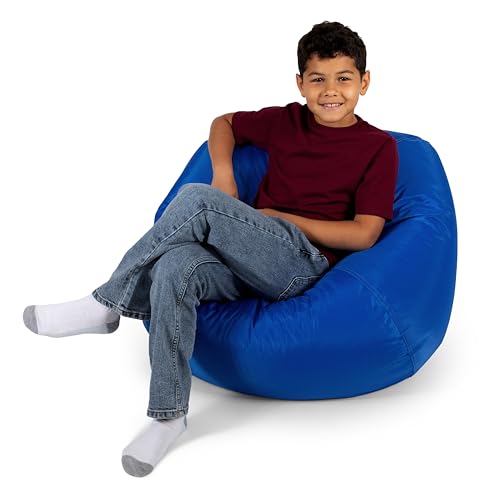

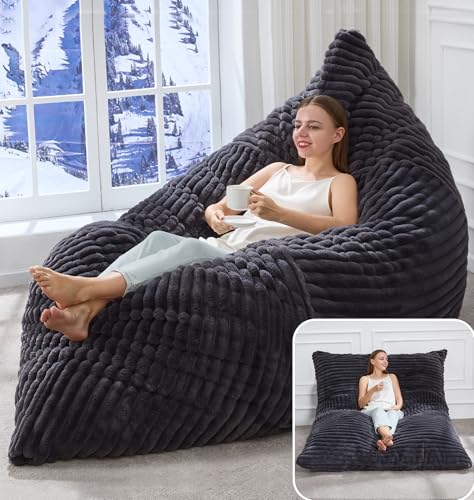

As an Amazon Associate we earn from qualifying purchases at no extra cost to you. Ratings are shown as listed on Amazon.
A 6-foot model is a practical choice for reading, watching television, or reclining. A 7- or 8-foot model offers room to stretch out, but measure the floor area before buying: the advertised diameter describes the approximate footprint, not the extra space needed to walk around it. Large foam chairs can weigh 50 pounds or more once filled, so carrying handles are useful.
Best for children: compact, washable, and supervised
Children’s bean bags should be sized so that the child can sit down and get up without climbing into a deep pit. A 2.5- to 4-foot chair is usually easier to position in a bedroom, playroom, or reading nook than an adult-sized lounger. Prioritize a strong zipper, a separate inner liner, and an outer cover that can be removed for washing.
Loose polystyrene beads are lightweight and inexpensive, but they can escape through a damaged liner or during refilling. Shredded foam is heavier and often costs more, though it tends to feel more substantial. Keep any bean bag with a child according to the manufacturer’s age and safety guidance, and inspect seams and zippers regularly.
Best for gaming: upright support over maximum softness
A conventional round bean bag encourages a reclined posture. That can be comfortable for a film, but it may leave a gamer hunched toward a monitor. Gaming-specific designs use a taller back, firmer side bolsters, or a wedge shape to keep the torso more upright. Some include a headrest or armrests; these features matter more than decorative piping.
For a desk or monitor, check the seat height and the distance from the front edge to the backrest. A low chair may place your eyes below the screen and make a desk keyboard awkward to reach. For console gaming, a lower lounger can work well, especially when the television is positioned at eye level from the floor.
Brands such as Big Joe, Jaxx, Yogibo, Fatboy, Chill Sack, CordaRoy’s, and Comfy Sacks offer different versions of foam, bead, and structured seating. Their product lines vary by model, so compare the individual dimensions, fill, and cover specifications rather than choosing by brand name alone.
Fill materials compared
| Fill | Feel | Support retention | Movement and noise | Best use |
|---|---|---|---|---|
| Shredded memory foam | Conforming and dense | Usually good, but needs occasional fluffing | Heavy; generally quiet | Adult lounging and reading |
| Mixed shredded foam | Supportive with some spring | Varies with foam blend | Heavy; low noise | Everyday family seating |
| Expanded polystyrene beads | Light and moldable | Can compress over time | Light; may rustle | Children’s chairs and low-cost options |
| Polyester fiber | Soft and pillow-like | Often requires frequent refluffing | Light; quiet | Occasional lounging and decorative seating |
Foam is not automatically better. It is harder to move, may arrive compressed, and can retain heat more than breathable bead or fiber fills. Beads create a lighter chair that is easier to reshape, but they can lose volume and are inconvenient to replace if the inner liner fails. For daily adult use, density and refill availability matter more than the word “memory” on the label.
Cover durability and washing options
The outer cover is usually the first part to show wear. Friction from floors, pet claws, belt buckles, and repeated sitting can damage the bottom panel or flatten the nap. A tightly woven polyester or microsuede cover is generally easier to maintain than delicate velvet. A canvas-style cover can be durable, but check whether it is comfortable against bare skin.
- Best cleaning setup: a removable cover with a full-length zipper and machine-washable care instructions.
- Useful protection: a water-resistant fabric or a separate washable throw for snacks, pets, and children.
- Important detail: verify the cover’s maximum wash temperature and drying instructions; heat can shrink fabric or damage coatings.
- Less convenient: spot-clean-only covers, especially on chairs used daily or in a child’s room.
Never put foam or bead filling in a washing machine. Remove the fill or inner liner first, then clean the cover according to its label. For a spill, blot rather than rub, because rubbing can drive liquid deeper into foam or spread the stain across a larger area.
How much space do you really need?
Measure the intended floor rectangle, not just the corner. A 5-foot chair needs about 25 square feet for its footprint, but allowing an additional 18 to 24 inches on the usable side makes it easier to sit down and stand up. For a 6-foot chair, plan for roughly 36 square feet plus clearance.
For example, if a 6-foot bean bag costs $180 and you expect to use it four times a week for three years, the approximate cost per use is:
$180 ÷ (4 uses × 52 weeks × 3 years) = about $0.29 per use.
This calculation favors a durable, washable chair used frequently. A cheaper $90 chair that is uncomfortable and used once a month may have a higher cost per use, even before considering replacement fill or a new cover.
Ownership realities people often miss
Expect the fill to settle
Foam and fiber chairs commonly need redistribution after delivery and occasional fluffing thereafter. Rotate the chair, lift and shake it where practical, and knead dense areas by hand. Do not judge the final shape immediately after unpacking compressed foam; it may take one to three days to expand, depending on the product and room temperature.
Refills can change the feel
Adding too much fill makes a chair hard and unstable, while too little creates a floor-level sag. Refill gradually, in small batches, and close the inner liner before testing the shape. Check whether replacement fill is sold for the exact model; different foam densities and bead sizes do not always combine well.
Plan for stairs and doorways
A large unfilled cover may fit through a doorway while the assembled chair does not. Confirm the package dimensions, stair turns, and elevator capacity. Some oversized chairs are effectively furniture rather than movable seating, particularly after foam expansion.
Final buying recommendations
- Choose a 3- to 4-foot foam or bead chair for a small room, dorm, or occasional seat.
- Choose a 5- to 6-foot shredded-foam chair for an adult who wants reliable everyday lounging.
- Choose a 6- to 8-foot lounger for family-room stretching, provided the floor space and doorway access work.
- Choose a compact washable chair for children, and inspect the liner and zipper regularly.
- Choose a structured gaming model when upright posture, arm support, and screen height matter more than sinking softness.
The strongest all-purpose specification is a medium-to-large shredded-foam bean bag with a durable removable cover, a separate inner liner, a warranty covering seams or filling, and replacement-fill availability. That combination costs more than a basic bead chair, but it usually provides the best balance of comfort, cleanability, support, and long-term ownership.