Every year, more RV and trailer owners discover the hard way that a tire failure on a trailer is not just an inconvenience but a genuine safety emergency. Unlike the tires on your tow vehicle, trailer tires spend long stretches parked, which means the rubber compound ages from the sidewall inward through UV exposure and ozone degradation. Add in the fact that most trailer failures happen because of underinflation or load-range mismatch, and you understand why choosing the right tire is not a decision to leave to chance.
The tire market is crowded, and listings often read like they were generated from the same template. What actually separates a worthwhile trailer tire from a mediocre one comes down to a handful of hard specs: the ply rating and load range relative to your trailer’s gross weight, whether the construction is radial or bias-ply, the sidewall design, and the price you pay per tire versus the confidence that rating gives you. This roundup is built from published specifications, real-world owner feedback, and current pricing to help you sort the field without guessing.
Our top picks
 Free Country Grand Ride Set 4 Trailer
- Set of 4 New Premium Radial Trailer Tires…
- Full cap ply ( nylon overlay cross entire…
- Featured "Scuff Guard" ring on tire wall for…
 Free Country HD Trailer Tires ST205/75R15 10PR
- Premium FREE COUNTRY Heavy Duty 10 ply rated,…
- FULL nylon cap ply overlay cross entire tread…
- Featured "Scuff Guard" ring on tire wall for…
 NAMA NM616 Set of 4 ST205/75R15 Trailer
- Durable Construction: A super-strong nylon-reinforced casing and wear-resistant…
- Stable Performance: The patented five-rib tread design creates…
- Trailer-Specific Design: ST205/75R15 size with Load Range E…
| Product | Key specs | |
|---|---|---|
| Free Country Grand Ride Set 4 Trailer | Set of 4 New Premium Radial Trailer Tires… Full cap ply ( nylon overlay cross entire… Featured "Scuff Guard" ring on tire wall for… | Check price |
| Free Country HD Trailer Tires ST205/75R15 10PR | Premium FREE COUNTRY Heavy Duty 10 ply rated,… FULL nylon cap ply overlay cross entire tread… Featured "Scuff Guard" ring on tire wall for… | Check price |
| NAMA NM616 Set of 4 ST205/75R15 Trailer | Durable Construction: A super-strong nylon-reinforced casing and wear-resistant… Stable Performance: The patented five-rib tread design creates… Trailer-Specific Design: ST205/75R15 size with Load Range E… | Check price |
 Set 4 All Steel ST235/80R16 RV Radial Set 4 All Steel ST235/80R16 RV Radial | Heavy duty ALL STEEL construction, 16 ply rated,… Great for big heavy RV or trailers, to… This tire is designed for the trailer use… | Check price |
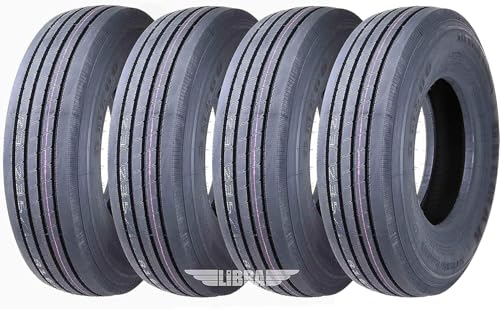 Set 4 Heavy Duty All Steel Trailer Set 4 Heavy Duty All Steel Trailer | Heavy duty ALL STEEL tire, 14 Ply Rated,… Great for big heavy RV or trailers, to… This tire is designed for the trailer use… | Check price |
 Transeagle ST II ST225/75R15 117/112N All Season Transeagle ST II ST225/75R15 117/112N All Season | Product Overview: The Transeagle ST Radial II is… Driving Conditions: All Season Traction Styling and Construction: One Black Sidewall, Radial Construction,… | Check price |
 GREMAX Set 2 All Steel ST235/80R16 14PR GREMAX Set 2 All Steel ST235/80R16 14PR | Check price | |
 Free Country Set 2 Premium Trailer Tires Free Country Set 2 Premium Trailer Tires | et of 2 new Premium ST205/75R14 Radial Tires | Check price |
As an Amazon Associate we earn from qualifying purchases at no extra cost to you.
Quick Picks
| Product | Best for | Price |
|---|---|---|
| Free Country Grand Ride Set 4 | Best overall set of four | under $350 |
| Free Country HD Set 4 | Value in a common size | under $350 |
| NAMA NM616 Set of 4 | Budget radial for 15-inch rims | under $300 |
| All Steel ST235/80R16 Set 4 | Heavy-duty 16-inch trailers | under $700 |
| All Steel 225/75R15 Set 4 | Extra-high load capacity on 15-inch rims | under $600 |
| Transeagle ST II | Single-tire replacement or spares | under $90 |
| GREMAX Set 2 | Axle-pair upgrade on 16-inch trailers | under $350 |
| Free Country Premium Set 2 | Light-duty 14-inch pop-up or utility trailers | under $150 |
How We Picked
We narrowed this list by weighing four factors that matter most for trailer tires specifically. First, load range and ply rating have to exceed your trailer’s gross vehicle weight rating with a healthy margin; a mismatch here is the leading cause of sidewall blowouts. Second, radial construction was favored over bias-ply where available because it runs cooler and resists flat-spotting after extended parking. Third, price per tire was calculated across each set to reveal which options offer the best value at their respective load ratings. Fourth, we looked at recurring themes in owner feedback: tread life expectations, sidewall durability, and whether the tires held pressure through a full camping season without constant topping off.
The 8 Best RV Trailer Tires in 2026
Free Country Grand Ride Set 4
This set targets owners of mid-size travel trailers and fifth wheels running 15-inch wheels who want a four-tire refresh without stretching the budget. The 10-ply steel-belted radial construction with Load Range E gives a solid safety margin on most 5,000 to 6,000 pound trailers. The integrated scuff guard on the sidewall is a practical touch for owners who park on gravel or uneven campsite surfaces. Owners consistently praise the quiet ride compared to older bias-ply setups. The main trade-off is that at 10 plies, this is not the option for anyone running a very heavy fifth wheel that calls for a higher load range. Skip this one if your trailer’s GVWR demands a 12-ply or 14-ply tire.
Free Country HD Trailer Tires Set 4
Same brand, slightly different size profile at ST205/75R15, and a lower price point. This set suits owners of smaller travel trailers, cargo trailers, and lightweight fifth wheels that use the narrower 205-width tire. The 10PR Load Range E rating matches the Grand Ride above, so you are not sacrificing load capacity by going with the narrower profile. Owners report solid value for the money and good pressure retention. The downside is that the narrower footprint offers slightly less stability on wide trailers that were originally spec’d for a 225-width tire. Skip this if your trailer’s factory spec calls for the wider 225 size; going narrower can affect handling at highway speeds.
NAMA NM616 Set of 4
For under $300 for the set, this is the most affordable 10-ply radial option in our lineup for the ST205/75R15 size. It works well for owners of utility trailers, small pop-ups converted for regular road use, or anyone on a tight budget who refuses to drop down to a lower load range. The radial construction is a meaningful upgrade over budget bias-ply alternatives at this price. Owner feedback highlights the price-to-performance ratio as the standout benefit. The trade-off is brand recognition and long-term track record compared to the Free Country options; fewer owners have logged multiple seasons on these. Skip if you prioritize a proven brand history and are willing to pay a modest premium for it.
All Steel ST235/80R16 Set 4
This is the heavy-duty option for owners of large fifth wheels, gooseneck campers, or commercial trailers running 16-inch wheels. The 16-ply construction and Load Range H rating put this in a different class from everything else on this list; it is built for genuinely heavy loads. Owners of large rigs report that the sidewall stiffness inspires confidence on long highway pulls, and the all-steel construction resists the flex that causes heat buildup. The obvious downside is price at nearly $165 per tire. Skip this one if your trailer does not require this load range; overspeccing a tire on a light trailer can result in a harsh, uncomfortable ride.
All Steel 225/75R15 Set 4
For owners who want more load capacity than a standard 10-ply ST225/75R15 tire offers but still run 15-inch wheels, this 14-ply option delivers a meaningful upgrade. The Load Range rating and higher ply count make it suitable for trailers that are at or near the upper limit of what a 10-ply tire can handle comfortably. Owners note that the stiffer sidewall improves tracking on crosswinds, a common complaint on tall campers. The trade-off is ride harshness; the extra plies translate to a firmer feel over rough roads. Skip if your trailer is well under the weight rating of a 10-ply tire, as you will be paying for capacity you do not need.
Transeagle ST II
This listing is for a single tire, which makes it ideal for owners who need one replacement after a blowout or puncture without buying a full set. The ST225/75R15 size with 10-ply Load Range E construction matches the specifications of many mid-size travel trailers. For under $90, it is priced competitively for a single tire versus the per-tire cost of full sets. Owners appreciate the availability for emergency replacement. The limitation is obvious: buying one tire at a time means you will eventually have mismatched wear across your axle. Skip this if your tires are already worn or unevenly aged; a single replacement should only go on a set where the remaining tires have minimal use.
GREMAX Set 2
This two-tire set in ST235/80R16 at 14-ply Load Range G suits owners who need to replace one axle’s worth of tires on a larger trailer without committing to four at once. The price works out to roughly $156 per tire, which is competitive with the 16-ply four-set on a per-tire basis. Owners of tandem-axle trailers who replace tires axle-by-axle find this a practical middle ground. The trade-off is that pairing a new axle with an old one can create slight rolling-diameter differences, which affects handling. Skip if your existing tires on the other axle show significant wear or aging; mixing old and new across axles is a known cause of uneven towing behavior.
Free Country Premium Set 2
The most affordable option on this list, this two-tire set targets owners of 14-inch-wheel pop-up campers, small utility trailers, and lightweight cargo carriers. At 8-ply Load Range D, this is not a heavy-duty tire by any measure, but for the applications it serves it is perfectly adequate. The scuff guard is a nice inclusion at this price. Owners of small trailers report it as a straightforward, no-drama upgrade over the tires that came from the factory. The limitation is capacity; this tire is not built for sustained highway loads near its ceiling. Skip if your trailer’s GVWR is close to what a Load Range D tire can handle; move up to a 10-ply option instead.
Buying Guide
Load Range and Ply Rating
Load range is the single most important number on a trailer tire sidewall. It tells you the maximum weight the tire can carry at its rated pressure, and you need to sum the loads across all four tires to confirm your trailer’s GVWR is covered with a margin of at least fifteen percent. A common mistake is replacing a Load Range D tire with a Load Range C to save money, which is dangerous at highway speeds. Always match or exceed the original load range; never go below it. Higher ply ratings generally indicate stiffer construction, which can mean a rougher ride but better heat resistance on long trips.
Radial versus Bias-Ply Construction
For any trailer you tow regularly on highways, a radial tire should be your default. Radials run cooler because the sidewall flexes less, and they resist the flat-spotting that makes bias-ply tires thump after a week of sitting at a campsite. Bias-ply tires still exist in this size range and can be acceptable for trailers that are towed infrequently at low speeds. The rule of thumb is simple: if your trailer has radial tires from the factory, never mix bias-ply onto the same axle, and ideally replace all four with radials at once.
Size Compatibility and Sidewall Width
Check the size stamped on your existing tire and confirm your wheel rim diameter matches the second number in the size code. A tire that is too wide for your rim will bulge and wear unevenly at the edges. A tire that is too narrow will not seal properly against the bead. The width and aspect ratio affect overall diameter, which changes ground clearance and can cause issues with fender clearance on some trailers. When in doubt, match the factory-specified size exactly rather than substituting a similar width.
Our Verdict
For most RV trailer owners running a mid-size travel trailer on 15-inch wheels, the Free Country Grand Ride Set 4 is the top pick. It offers the best combination of 10-ply steel-belted radial construction, a practical scuff guard, a four-tire set price, and consistent owner satisfaction. For budget-conscious buyers who need a reliable 10-ply radial in the ST205/75R15 size, the NAMA NM616 Set of 4 delivers solid value at the lowest per-tire cost on this list. However, if you tow a large fifth wheel or gooseneck that genuinely requires higher load capacity, the All Steel ST235/80R16 Set 4 is the only tire here that will give you the margin you need.
FAQ
How often should I replace my RV trailer tires?
Most manufacturers recommend replacement after five to seven years regardless of tread depth, because the rubber degrades internally from UV exposure and ozone even when the tire is not in use. If you see visible cracking on the sidewall or have reached the six-year mark, plan a replacement before your next long trip.
Can I use my tow vehicle tires on the trailer?
No. Trailer tires have stiffer sidewalls rated for static load capacity rather than cornering grip. Vehicle tires on a trailer will flex excessively, build heat, and are far more likely to fail during long highway pulls. Always use tires designated ST (Special Trailer) for your trailer.
Should I inflate to the sidewall maximum or lower?
Trailer tires should be inflated to the maximum pressure listed on the sidewall when the tires are cold, before towing. Underinflation is the leading cause of trailer tire blowouts because the sidewall flexes and generates excessive heat. Do not reduce pressure for a smoother ride; that is a trade-off trailer tires are not designed to make.
Is it safe to mix tire brands on the same axle?
While not ideal, mixing brands on the same axle is safer than mixing different load ranges or construction types. If you must mix, ensure the tires are the same size, ply rating, and construction type. Ideally, replace all tires on one axle at the same time and aim to replace all four together for consistent handling and wear.