Key takeaways
- Broad protocol coverage including CAN, works reliably across domestic and import vehicles
- Readable code definitions reduce the need to look up every fault online
- No live data streaming, so it cannot help diagnose intermittent issues while driving
Buying a check-engine light scanner sounds simple until you realize that two tools sitting side by side on a shelf can differ wildly in what they actually read and clear. The core problem every buyer faces is this: you pull into a parts store, they plug in a code reader, and they hand you a P0300 with zero context. A good OBD II scanner gives you the raw data to understand what that code means, lets you erase it after a repair, and tells you whether your vehicle will pass an emissions inspection before you waste a Saturday driving to the testing station. A bad one either fails to connect on certain model years, misreports readiness monitors, or leaves you staring at a screen that only speaks in cryptic five-character codes.
What separates the best from the rest in 2026 comes down to three things: protocol coverage across your vehicle’s make and year, whether the tool reads live data or only frozen codes, and how clearly it communicates results to a non-mechanic. The lineup below spans Bluetooth adapters you pair with a phone, handheld code readers that plug straight into the diagnostic port, and one mid-range tool that adds ABS and transmission modules. Prices range from under sixteen dollars to just under one hundred forty, so there is a clear answer whether you want a single-use emissions checker or a garage staple.
Our top picks
 ANCEL AD310 Classic Enhanced Universal OBD II
- CEL Doctor: The ANCEL AD310 is one of…
- Sturdy and Compact: Equipped with a 2.5 foot…
- Accurate Fast and Easy to Use: The AD310…
 MOTOPOWER MP69033 Car OBD2 Scanner Code Reader
- Multi-Functions - Practical Multi-Functions OBD2 code reader features…
- Wide Capability - Supports 9 protocols compatible with…
- 2.8" LCD Display - Designed with a clear…
 ANCEL AD410 Enhanced OBD2 Scanner
- Understand Your Check Engine Light
- Full OBD2 Diagnostics Made Simple
- Live Date & Real-time Vehicle Insights
| Product | Key specs | |
|---|---|---|
| ANCEL AD310 Classic Enhanced Universal OBD II | CEL Doctor: The ANCEL AD310 is one of… Sturdy and Compact: Equipped with a 2.5 foot… Accurate Fast and Easy to Use: The AD310… | Check price |
| MOTOPOWER MP69033 Car OBD2 Scanner Code Reader | Multi-Functions - Practical Multi-Functions OBD2 code reader features… Wide Capability - Supports 9 protocols compatible with… 2.8" LCD Display - Designed with a clear… | Check price |
| ANCEL AD410 Enhanced OBD2 Scanner | Understand Your Check Engine Light Full OBD2 Diagnostics Made Simple Live Date & Real-time Vehicle Insights | Check price |
 FOXWELL NT301 OBD2 Scanner Live Data Professional FOXWELL NT301 OBD2 Scanner Live Data Professional | 【Diagnose Check Engine Light in Seconds 【Clear & Reset CEL with Confidence】Unlike cheap code… 【Sm-og Check Helper | Check price |
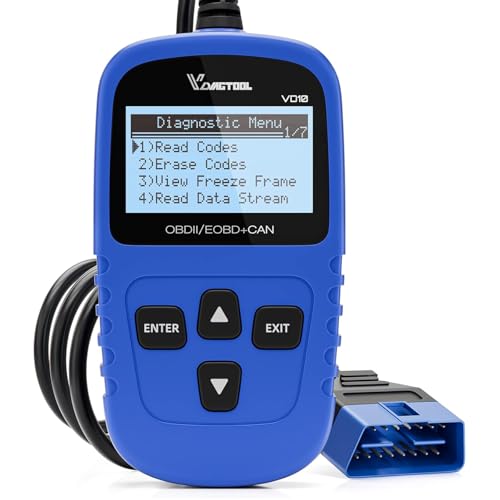 VDIAGTOOL VD10 OBD2 Scanner Code Reader Car VDIAGTOOL VD10 OBD2 Scanner Code Reader Car | 【A MUST-HAVE SCANNER TOOL FOR DIYERS】 - VDIAGTOOL… 【KEEP ENGINE IN GOOD STATUS】 - VDIAGTOOL check… 【READ/CLEAR CODES & DTC LOOKUP】- No search online… | Check price |
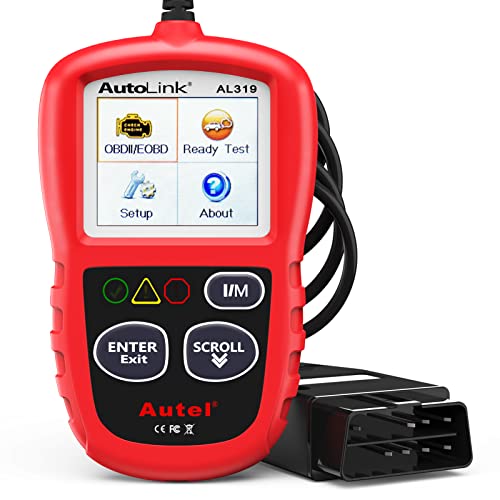 Autel AL319 Professional OBD2 Scanner Autel AL319 Professional OBD2 Scanner | 【TURN OFF CEL】 This AL319 car scanner diagnostic… 【EXTENSIVE APPLICATION】 Autel AL319 Compatible with 7 languages… 【FOR END USER & DIYERS】 This error code… | Check price |
 FOXWELL Car Scanner NT604 Elite OBD2 Scanner FOXWELL Car Scanner NT604 Elite OBD2 Scanner | [Easy to Use—Work Out of the Box] +… [Affordable] + [Reliable Car Health Monitor] Will you… [5 in 1 Car Diagnostic Scanner] Compared with… | Check price |
 Veepeak OBDCheck BLE Bluetooth OBD II Scanner Veepeak OBDCheck BLE Bluetooth OBD II Scanner | It requires a compatible third-party app and is… read & clear trouble codes for check engine… Works with most 1996+ cars and light trucks… | Check price |
As an Amazon Associate we earn from qualifying purchases at no extra cost to you.
Quick Picks
| Product | Best for | Price |
|---|---|---|
| ANCEL AD310 | Reliable everyday code reading and clearing | under $30 |
| MOTOPOWER MP69033 | Lowest-cost entry into OBD II diagnostics | under $20 |
| ANCEL AD410 | Enhanced diagnosis with a slightly larger screen | under $40 |
| FOXWELL NT301 | Live data streams for deeper troubleshooting | under $60 |
| VDIAGTOOL VD10 | I/M readiness checks before emissions testing | under $20 |
| Autel AL319 | Trusted brand code reading at a mid-range price | under $30 |
| FOXWELL NT604 Elite | Four-system coverage including ABS and SRS | under $150 |
| Veepeak OBDCheck BLE | Bluetooth pairing with phone-based apps | under $40 |
How We Picked
We narrowed this category by weighing four criteria: protocol compatibility breadth (does the tool actually communicate with all OBD II vehicles from 1996 onward, including CAN, ISO9141, KWP2000, and J1850), data richness (read and clear only versus live data and freeze frames), ease of use for non-professionals (screen clarity, code definitions, menu logic), and overall value relative to what each tool genuinely does. Owner feedback on connection reliability with specific model years carried significant weight, because a scanner that drops communication on a half-older vehicle fails its primary job regardless of price.
The 8 Best Obd Ii Scanner in 2026
ANCEL AD310 Classic Enhanced Universal OBD II Scanner
The AD310 is the scanner most owners keep in the glove box for years. It reads and clears engine fault codes across all ten OBD II modes, covers vehicles from 1996 onward, and presents results in plain English rather than raw hexadecimal. Owners consistently praise its wide compatibility and the fact that it works the first time they plug in.
- Broad protocol coverage including CAN, works reliably across domestic and import vehicles
- Readable code definitions reduce the need to look up every fault online
- No live data streaming, so it cannot help diagnose intermittent issues while driving
Skip this one if you need real-time sensor readings or want to check emissions readiness monitors; the AD410 or NT301 handle those better.
MOTOPOWER MP69033 Car OBD2 Scanner Code Reader
At under sixteen dollars, the MP69033 undercuts most competitors while still covering all OBD II protocol vehicles from 1996 onward. It reads and clears engine trouble codes, displays I/M readiness status, and fits in a pocket. The yellow housing is easy to spot on a workbench.
- Lowest price in this roundup by a meaningful margin
- Compact and simple enough for a first-time user with zero diagnostic background
- Build quality feels budget; some owners report the connector housing loosening over time
Pass on this tool if your vehicle is a heavy-duty truck or a European model that sometimes requires protocol-specific negotiation; the extra cash buys a more robust interface elsewhere.
ANCEL AD410 Enhanced OBD2 Scanner
The AD410 steps up from the AD310 with enhanced diagnosis that goes beyond simple read-and-clear. It accesses more modes, presents freeze-frame data, and gives a slightly richer picture when a check-engine light triggers. The black-and-yellow housing is compact and the screen is easy to read in sunlight.
- Freeze-frame data helps pinpoint whether a fault occurred under load or at idle
- Still straightforward enough for a non-mechanic to operate without a reference manual
- Priced above the AD310 without adding live data, which limits the upgrade path
If the only difference you care about is freeze-frame versus live data, the NT301 delivers more capability for a comparable jump in cost.
FOXWELL NT301 OBD2 Scanner Live Data
The NT301 is the sweet spot for DIY owners who want actual sensor values rather than just a code letter. It streams live data from the engine control module, displays it on a clear backlit screen, and includes I/M readiness and smog-check functions. Professional mechanics list it as a secondary tool for quick lookups.
- Live data graphing lets you watch parameters change as conditions shift
- One-click smog-readiness summary saves guesswork before emissions inspections
- Limited to the engine system; no ABS, SRS, or transmission module access
Skip this if your check-engine light is the only fault you need to chase; the AD310 or VD10 solve the same problem for less.
VDIAGTOOL VD10 OBD2 Scanner Code Reader
The VD10 earns its spot by combining freeze-frame reporting, I/M readiness checks, and a CEL reset function at a price that undercuts the ANCEL AD410. It handles all OBD II protocol cars and presents fault information in a structured, screen-by-screen format that guides you through the diagnosis without assuming prior knowledge.
- Freeze-frame and I/M readiness bundled at a sub-twenty-dollar price point
- Menu navigation is logical enough for a first-time user to follow without instructions
- Brand recognition and long-term firmware support trail behind ANCEL and FOXWELL
If you want a tool you can rely on for years without thinking about it, a better-known brand may be worth the few extra dollars.
Autel AL319 Professional OBD2 Scanner
Autel has built a reputation in professional diagnostics, and the AL319 carries that credibility into an affordable code-reader format. It reads and clears check-engine codes, displays definitions, and works across all OBD II vehicles. The interface is clean and the build quality matches what you expect from the Autel name.
- Autel’s software heritage translates into accurate, well-defined code explanations
- Durable connector and housing suited to repeated use
- No live data, no freeze frame, no emissions readiness panel
For the same price, the AD310 offers broader mode coverage; choose the AL319 if you already own other Autel tools and want a consistent ecosystem.
FOXWELL NT604 Elite OBD2 Scanner ABS SRS Transmission
The NT604 Elite breaks out of the single-engine-system ceiling by reading and clearing faults in four modules: engine, ABS, airbag (SRS), and transmission. For owners whose vehicle throws a traction-control or airbag light alongside a check-engine warning, this is the only tool in the lineup that addresses the full picture without a shop visit.
- Four-system coverage eliminates the need for multiple specialty scanners
- Clears service lights across modules, reducing trips to the dealer for resets
- Price is nearly triple the NT301, so value depends entirely on whether you need the extra systems
If your problems never extend beyond the check-engine light, the NT301 handles those cases just as well for far less.
Veepeak OBDCheck BLE Bluetooth OBD II Scanner
The Veepeak is not a standalone tool but a Bluetooth adapter that pairs with iOS or Android apps, turning your phone into a diagnostic screen. It streams real-time data, logs trips, and integrates with apps like Torque or Dr. Prius for hybrid-specific monitoring. For owners who prefer a large touchscreen and software updates pushed through the app store, it fills a niche no handheld covers.
- Phone-based interface means larger display, color graphs, and app-store-level usability updates
- Works with multiple third-party apps, giving you software flexibility without hardware changes
- Requires a separate app purchase or free-tier limitation for advanced features, and Bluetooth pairing can glitch in crowded RF environments
Choose a handheld if you want a tool that works instantly with zero pairing steps or phone battery anxiety.
Buying Guide
Protocol Coverage and Vehicle Compatibility
OBD II became mandatory on US vehicles in 1996, but the underlying communication protocols vary by manufacturer and era. A scanner must speak CAN, ISO 9141-2, KWP 2000, and J1850 (both PWM and VPW) to cover every gasoline vehicle from that year onward. Budget tools sometimes drop J1850 VPW support, which quietly excludes many Ford vehicles from the late 1990s. Verify that the product explicitly lists all five protocols, or you may buy a scanner that works on half your household vehicles.
Read-and-Clear Versus Live Data and Freeze Frame
The single biggest functional divide in this category is whether a tool only retrieves a stored code or also streams sensor values in real time. Read-and-clear answers the question “what triggered the light.” Live data answers “what is happening right now as the engine runs,” which matters for intermittent misfires, rough idling under load, or confirming that a repair actually fixed the underlying condition. Freeze frame captures a snapshot of parameters at the moment the code set, bridging the gap between the two approaches.
System Scope Beyond the Engine
Every tool here reads the powertrain control module. Only the NT604 Elite extends into ABS, SRS, and transmission systems. If your vehicle has thrown an airbag or traction-control light and you want to diagnose it at home without a professional scan, that module breadth is the deciding factor. For check-engine-only work, four-system capability is wasted money, so match the scope to your actual problem set.
Our Verdict
The FOXWELL NT301 is the top pick for most owners because it delivers live data streaming, freeze-frame capture, and a one-tap smog-readiness report in a single handheld at a price that remains under sixty dollars. The MOTOPOWER MP69033 is the budget pick, proving that a functional code reader does not require spending more than fifteen dollars. If your diagnostic needs extend past the engine into ABS, airbag, or transmission modules, the NT604 Elite becomes the obvious winner regardless of its higher cost, because no other tool in this comparison reaches those systems.
FAQ
Do all OBD II scanners work on any car?
Any vehicle sold in the US from 1996 onward must support OBD II, but the communication protocol used to talk to the car varies by manufacturer. A scanner that lists all five standard protocols will connect to virtually every gasoline-powered car, while cheaper tools that omit J1850 VPW will silently fail on certain Fords.
Can I clear a code without fixing the problem?
Yes, and the check-engine light will go out, but the underlying fault remains and the code will typically reappear within a few drive cycles once the computer re-runs its self-tests. Clearing a code without addressing the cause also resets readiness monitors, which means your vehicle will fail an emissions inspection until those monitors complete again.
Is a Bluetooth OBD adapter better than a handheld scanner?
They solve different preferences. A handheld works instantly with no pairing, no phone battery dependency, and a dedicated screen designed for gloved use. A Bluetooth adapter gives you a larger display, color graphs, and software flexibility through apps. If you want quick answers in a parking lot, grab the handheld; if you enjoy logging data over time, the adapter path is more capable.
How do I know my scanner supports my specific vehicle year?
Check the product listing for an explicit protocol list and a stated year range. If a tool says “all OBD II vehicles 1996 and newer” and names CAN, ISO9141, KWP2000, J1850 PWM, and J1850 VPW, it should communicate with any US-market gasoline vehicle in that span. Diesel trucks and heavy-duty vehicles use different connector pinouts and protocols that generic OBD II readers often cannot address.