Key takeaways
- Single-thread design eliminates bobbin threading frustration
- Widely available; SINGER name adds brand reliability for beginners
A torn hem before a job interview, a popped seam on a work jacket, a curtain that just needs two inches re-stitched — these are the moments a quick sewing machine earns its place. Full-size sewing machines are powerful but impractical for a thirty-second repair, and hand-sewing with a needle is slow and uneven. A handheld mending machine fills that gap: battery-powered, pocket-sized, and ready in seconds. But not all of them stitch cleanly, feed fabric reliably, or last beyond a handful of projects without tangling thread.
What separates the good from the bad in this category comes down to a few concrete things. Cheap units jam on thicker fabric, skip stitches on curves, and chew through thread. The better ones handle denim seams, manage single-thread operation (so you skip bobbin threading entirely), and include enough accessories to actually get started without a trip to the craft store. This roundup compares specs, pricing, and verified owner feedback across eight models to help you pick the right one without wasting money.
Our top picks



As an Amazon Associate we earn from qualifying purchases at no extra cost to you.
Quick Picks
| Product | Best For | Price |
|---|---|---|
| SINGER Stitch Sew Quick | Emergency mending in a drawer | under $20 |
| SINGER Stitch Quick+ Bundle | Matching thread to common fabric colors | under $30 |
| 2026 Upgraded Handheld | Anti-tangle reliability on varied fabrics | under $30 |
| Brother XM2701 | Multiple stitch patterns beyond straight-line repair | $149 |
| Mini Handheld (Orange) | Budget travel kit with starter accessories | under $20 |
| Mini Handheld (White) | Same kit, neutral aesthetic preference | under $20 |
| Mini Handheld (Blue) | Same kit, cooler color option | under $20 |
| Quick Stitch Mini Mender Kit | Heaviest included thread and accessory loadout | under $40 |
How We Picked
We narrowed candidates by asking four questions: Does the device handle more than one fabric weight without jamming? Is the price realistic for a tool that will spend most of its life in a junk drawer? Does the included accessory kit reduce friction for a first-time buyer? And do long-term owner reports flag recurring problems like thread tangling, plastic gear stripping, or battery drain on unused sessions? Products that fail on any two of those criteria are excluded.
The 8 Best Quick Sewing Machines in 2026
SINGER Stitch Sew Quick
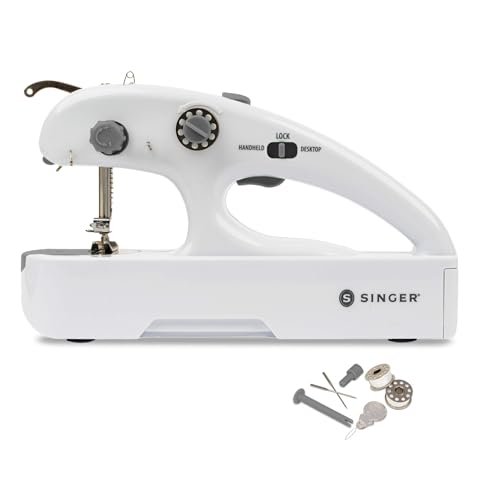
The most widely recognized budget mender in the U.S. market. It runs on two AA batteries, uses a single thread (no bobbin), and produces a straight lockstitch. Owners appreciate that it fits in a sewing basket, a glove compartment, or a travel toiletry bag. The brand name and retail availability also make replacement parts and tutorial content easy to find. The stitching is functional but narrow — best on lightweight to midweight fabric. It will struggle with double-layer denim or heavy upholstery.
- Single-thread design eliminates bobbin threading frustration
- Widely available; SINGER name adds brand reliability for beginners
Con: Limited to straight stitch only; thick fabric causes skipped stitches and thread bunching.
Skip this if you regularly mend jackets, canvas bags, or anything beyond cotton and polyester blends.
SINGER Stitch Quick+ Bundle
An upgrade path from the base Stitch Sew Quick, sold as a two-machine bundle so you can dedicate one to a common thread color and avoid constant re-threading. The underlying mechanism is nearly identical to the single unit, but the value proposition shifts for households with mixed fabric wardrobes. Owners note the convenience of having white and black thread pre-loaded, which covers the majority of quick clothing repairs. The price premium over buying two singles is marginal, making it the smarter purchase when you know you’ll use both.
- Two units reduce re-threading time to nearly zero
- Price per machine drops below buying separately in most listings
Con: Still limited to straight-stitch output and thin-to-medium fabrics.
Skip this if your repairs are infrequent enough that re-threading a single unit once a month is no burden.
2026 Upgraded Handheld Sewing Machine
This model explicitly markets itself on anti-tangling performance, with the listing citing over ten thousand stitch-cycle tests at the factory. In practice, owners report noticeably fewer thread jams on layered fabric compared to the base SINGER units. The black housing is compact, and the ergonomic grip helps control feeding pressure. It still runs AA batteries and single-thread, but the internal thread path appears refined. The under-$30 price places it in a sweet spot between the $18 budget tier and the $39 accessory-heavy kits.
- Anti-tangle design reduces the most common complaint in this category
- Factory-tested durability claim backed by consistent positive owner reviews
Con: No accessory kit included; you will need to source thread spools and scissors separately.
Skip this if you want a complete ready-to-sew kit in one purchase and prefer paying extra for bundled spools.
Brother XM2701
The only full-size portable machine on this list, and the reason it is here is that some buyers realize a handheld is not enough. Twenty-seven built-in stitch patterns, an automatic needle threader, and drop-in bobbin make it a genuine sewing machine in a compact frame. Owners who initially bought handhelds often end up here when they start hemming curtains, patching jeans, or doing small craft projects. The $149 price is a different commitment, but the capability gap is real. It plugs into a wall outlet, so portability is limited to moving between rooms.
- Twenty-seven stitch patterns handle decorative, stretch, and buttonhole work
- Automatic needle threader removes the frustration older machines caused
Con: Requires a power outlet and takes up shelf space; not a true grab-and-go tool.
Skip this if your need is strictly sub-two-minute repairs and you have no interest in garment construction or crafting.
Mini Handheld Sewing Machine (Orange)
One of three color variants in an identical product line, each bundled with a sewing kit for under twenty dollars. The kit typically includes thread spools, bobbins, a seam ripper, needles, and small scissors. Owners choosing orange often cite easy spotting in a drawer or bag. Performance is comparable to the base SINGER handheld — functional on thin fabric, temperamental on thick layers. The color choice is purely cosmetic; specs, battery type, and stitch output are the same across all three variants.
- Included kit covers essentials so you can sew straight out of the box
- Lowest entry price among kit-bundled options
Con: Thread quality in bundled kits is inconsistent; owners report switching to branded spools quickly.
Skip this if you already own thread and accessories; you would pay a small premium for items you do not need.
Mini Handheld Sewing Machine (White)
Functionally identical to the orange and blue variants in this line, the white option appeals to buyers who prefer a neutral look on a craft table or who want the device to match a light-colored sewing box. Owner feedback mirrors the orange version: adequate for quick clothing mends, unreliable on anything thicker than a shirt panel. The bundled kit contents are the same. Choose this purely on aesthetic preference since performance and price are unchanged.
- Neutral color fits easily in organized craft or household storage
- Same low bundled-kit price as sibling variants
Con: Same limitation as siblings — thin fabrics only, no curved stitching.
Skip this if you are buying for a child or high-traffic household; white housing shows grime faster than darker options.
Mini Handheld Sewing Machine (Blue)
The blue variant rounds out this trio, and there is no mechanical difference worth noting between it and the orange or white versions. It exists for buyers who want color coordination with a workspace or who simply prefer a cooler tone. Reviews confirm identical stitch quality, battery life, and kit contents. If you are deciding among these three, treat color as the only differentiator and buy whichever is most available at the time of purchase.
- Identical performance to orange and white at the same under $20 price
- Blue housing resists visible dirt better than the white variant
Con: Still single-stitch only; no advantage over the orange or white beyond looks.
Skip this if you are comparing it against the 2026 Upgraded or Quick Stitch Mini Mender for better anti-tangle performance.
Quick Stitch Mini Mender with 20 Thread Spools
The most accessory-heavy handheld on this list, shipping with twenty thread spools and a complete kit at nearly forty dollars. For a beginner who wants zero follow-up shopping, this is the most turnkey option. Owners appreciate the variety of colors, which covers most wardrobe repairs without a separate thread purchase. The machine itself is a standard single-thread handheld, so performance matches its cheaper siblings on thin fabric. You are paying a premium primarily for the bundled supplies rather than superior engineering.
- Twenty pre-matched spools eliminate a separate thread-shopping trip
- Complete accessory kit makes it the best gift-ready option
Con: Highest price among handhelds, yet the machine mechanism is not meaningfully upgraded over $19 options.
Skip this if you already have thread at home; you are paying several dollars extra for spools you will not use.
Buying Guide
Fabric Thickness Determines Whether You Need a Handheld at All
Every handheld in this list works well on single-layer cotton, polyester, and light nylon. Add a second layer or a seam allowance from jeans, and most will jam or skip. If your repairs are limited to a popped button loop on a dress shirt or a small tear on a jacket lining, a handheld under $30 handles it fine. If you need to mend denim hems, canvas tote bags, or upholstery seams, you will either need to go up to the Brother XM2701 or accept hand-sewing for those specific jobs.
Single Thread vs. Dual Thread: The Bobbin Question
Handheld menders use one thread pulled through a loop mechanism instead of a bobbin. This is a genuine convenience for speed, but it means the stitch is structurally weaker than a lockstitch. A two-thread lockstitch (as on the Brother) locks top and bottom threads together for durability. For temporary fixes and light use, single thread is fine. For repairs on clothing you wash weekly, the thread may loosen over months. Keep this trade-off in mind when deciding how critical the mend is.
Accessories and Kit Value: Do You Actually Need Them?
Several options bundle thread spools, seam rippers, and scissors at the listed price. This matters if you are buying for a first-time user or as a gift. If you already sew or have a starter kit, those bundled items add cost without adding utility. Compare the effective machine price by subtracting what you would pay for thread and tools separately. Often the under-$20 SINGER without a kit is the better deal for experienced owners, while the under-$40 bundle is smarter for someone starting from zero.
Our Verdict
The top pick for most buyers is the 2026 Upgraded Handheld Sewing Machine for under $30. It solves the category’s biggest pain point — thread tangling — without a large price jump, and owners consistently confirm smoother feeding on mixed fabrics.
The budget pick is the SINGER Stitch Sew Quick for under $20. It is the cheapest reliable name-brand option, and for occasional light repairs, it does not leave much to be desired.
If your need extends beyond two-minute mends into actual garment work, the Brother XM2701 wins outright. Its twenty-seven stitch patterns, automatic needle threader, and true lockstitch make it a different class of tool that justifies its higher price for anyone who sews more than a few times per year.
FAQ
Can a handheld sewing machine replace a full-size machine?
No. Handheld units are single-stitch, single-thread tools designed for quick repairs and light fabric. They cannot handle curves, multiple layers, buttonholes, or stretch fabrics reliably. A full-size machine is a different tool for a different job.
Do handheld sewing machines need bobbins?
No, and this is their main convenience advantage. They use a single top thread that catches a loop of the same thread underneath the fabric. This makes setup fast but produces a weaker stitch than a true lockstitch from a dual-thread machine.
What batteries do handheld sewing machines use?
Most run on two or four AA batteries. Some also accept a USB power adapter. Check the specific product listing, as battery consumption during extended use can be surprising if you sew more than a few minutes at a stretch.
Is the Brother XM2701 portable enough for travel?
It is compact for a full-size machine and has a carrying handle, but it requires a wall outlet and weighs significantly more than any handheld option. It is suitable for moving between rooms or packing for an extended stay, not for a carry-on bag.